
How merch stores work for artists: Build revenue and brand
TL;DR:
- Merchandise can generate more revenue than music streams for independent artists.
- Using print-on-demand minimizes risk and operational effort, ideal for starting merch stores.
- A strategic, fan-focused approach transforms merch into a powerful tool for brand loyalty and income.
Selling five t-shirts can generate as much revenue as 18,000 music streams. That single fact reframes everything. For independent musicians, merchandise is not a bonus income stream sitting quietly in the background. It is often the most reliable, scalable, and brand-building revenue source available. Yet most artists are unsure how online merch stores actually work, which platforms suit them, or what margins to expect. This guide walks you through every essential: how merch stores function, how to compare platforms, what drives profit, how to launch, and what pitfalls to sidestep so your store earns while you focus on the music.
Table of Contents
- Merch stores explained: The essentials
- Choosing your platform: Features and comparisons
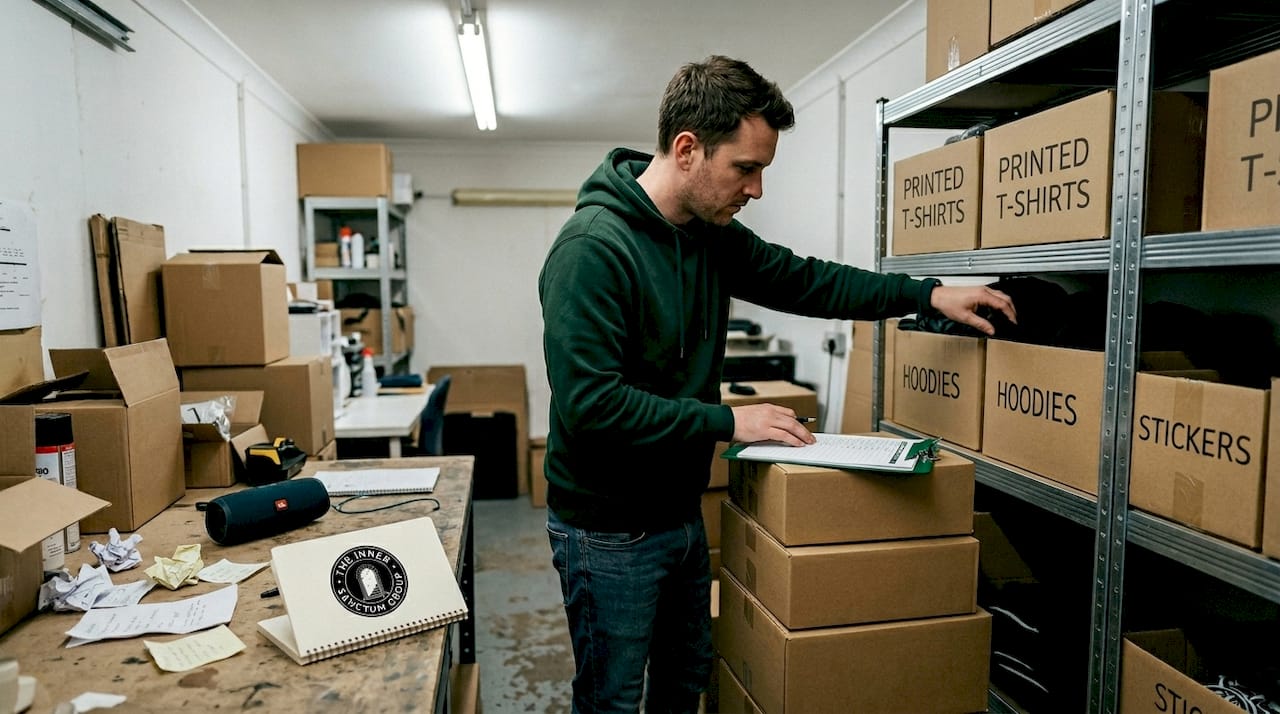
- Profit margins and fulfilment models: POD vs. bulk
- Setting up and promoting your store: Practical steps
- Mistakes to avoid and advanced strategies
- Our perspective: Merch done right is a business, not a side project
- Next steps: Premium artist merch with The Inner Sanctum Group
- Frequently asked questions
Key Takeaways
| Point | Details |
|---|---|
| Low-risk entry | Print-on-demand services let artists launch merch stores with zero inventory and minimal admin. |
| Profit margin awareness | Bulk production has higher margins but more risk, while POD is safer for newcomers. |
| Strategic promotion | Mixing social shopping, bundles, and user-generated content drives merch sales organically. |
| Quality over quantity | Launching fewer, well-branded products achieves sustainable fan engagement and revenue. |
| Business mindset | Approaching your merch store as a proper business—not an afterthought—is key to long-term success. |
Merch stores explained: The essentials
An online merch store is a product page or standalone shop where fans browse, buy, and receive your branded items. Understanding what an online merch store is before you commit to a platform saves a lot of wasted effort. The three main models are print-on-demand (POD), dedicated artist platforms like Bandcamp, and self-hosted stores via Shopify.
POD is the most accessible starting point. You upload a design, set a retail price, and when a fan places an order, the provider prints and ships the item directly. POD services like Printful and Bandcamp handle production and shipping upon orders, meaning you never touch a box or manage stock. The operational lift is minimal.
Here is what a basic POD workflow looks like:
- Upload your artwork or design file
- Choose your products (t-shirts, hoodies, tote bags)
- Set your retail price above the base cost
- Share your store link with fans
- Orders are printed, packed, and shipped automatically
The biggest misconception artists hold is that running a merch store requires constant management. In reality, once your store is live, it can operate largely on its own. The artist e-commerce fundamentals are simpler than most expect, especially with POD handling logistics behind the scenes.
Pro Tip: Before launching, order a sample of each product yourself. Holding the item, checking print quality, and feeling the fabric will tell you far more than any product description.
Choosing your platform: Features and comparisons
Now you know the basics, let’s examine which merch platform aligns best with your vision. Popular platforms include Shopify, Bandcamp, Big Cartel, and POD options, each serving a different type of artist at a different stage.
| Platform | Best for | Control level | Ease of use | Cost |
|---|---|---|---|---|
| Shopify | Scaling artists | Very high | Moderate | Monthly fee |
| Bandcamp | Music-first creators | Medium | Easy | Revenue share |
| Big Cartel | Small catalogues | Medium | Very easy | Free or low cost |
| POD specialists | Beginners | Low to medium | Very easy | Per-item base cost |
Shopify gives you full creative and commercial control, but it requires more setup and a monthly subscription. Bandcamp is beloved by independent artists because it combines music sales and merch in one place, making it natural for fans to explore both. Big Cartel suits artists selling fewer than 50 products who want a clean, simple storefront without technical overhead.
For artists just starting out, the best online platforms for merch tend to be those that reduce friction and cost while you test what your audience actually buys. Integrations matter too. Shopify and certain POD services connect directly to Spotify’s artist profile and Instagram Shopping, which means fans can discover and buy your merch without ever leaving their favourite apps.
Key things to weigh when choosing:
- How much design and technical control do you want?
- Do you need music and merch in one place?
- Are you selling globally or locally?
- Do you plan to scale to dozens of products, or keep it focused?
Pro Tip: Start with one platform and three products. Complexity is the enemy of momentum. A focused merch store setup guide will help you launch faster and learn what works before investing more.
Profit margins and fulfilment models: POD vs. bulk
With a platform in mind, you will need to understand what drives your revenue and the mechanics behind profitable choices. Profit margins range from 30 to 40% for POD and up to 80% for bulk, while streaming royalties sit far below either figure.
| Product | POD base cost | Retail price | POD margin | Bulk margin |
|---|---|---|---|---|
| T-shirt | £12 | £22 | ~45% | ~70% |
| Hoodie | £25 | £45 | ~44% | ~72% |
| Tote bag | £8 | £16 | ~50% | ~75% |
Bulk printing requires upfront investment, storage space, and you to handle or outsource fulfilment. The margin is better, but the risk is real. Ordering 200 hoodies before you know if fans want them is a gamble. POD removes that risk entirely, at the cost of a lower per-unit margin.
“Merch revenue is not passive income. It is active brand equity. Every item a fan wears is a walking advertisement that streaming will never replicate.”
The smartest approach for most independent artists is a hybrid model. Use POD for your online store so it runs automatically with zero inventory. Then, for tours or special events, place a small bulk order of your best-selling designs to maximise merch earnings at the merch table where margins matter most.
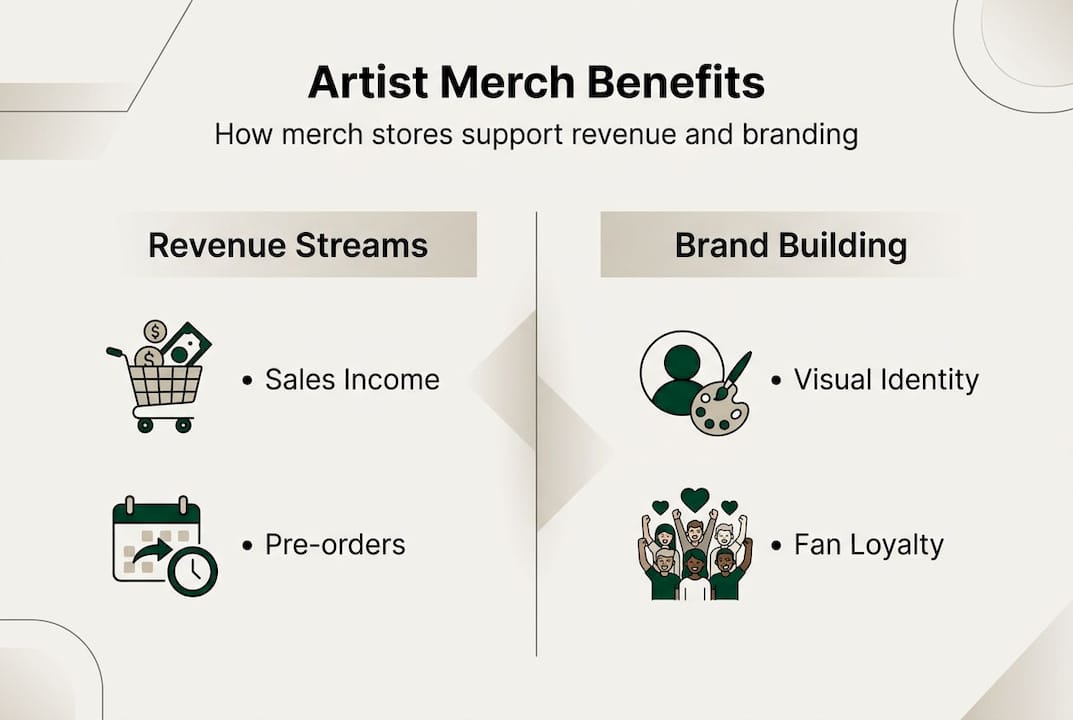
Understanding how merch supports your brand goes beyond profit percentages. Merchandise builds visual identity, deepens fan loyalty, and creates a physical connection to your music that no digital format can replicate.
Pro Tip: Track your best-selling POD items over three months before placing any bulk order. Let real sales data guide your bulk decisions, not gut feeling.
Setting up and promoting your store: Practical steps
Once you have chosen a model and understand your margins, let’s get hands-on with creating and promoting your merch store. The process is more straightforward than most artists expect.
- Choose 2 to 3 core products to start (t-shirt, hoodie, and one accessory work well)
- Create or commission your designs, keeping them bold and print-ready
- Set up your store on your chosen platform and upload your products
- Price each item by adding your desired margin to the base or production cost
- Write clear product descriptions that reflect your brand voice
- Set up payment processing and shipping options
- Test the purchase flow yourself before going live
Start with 2 to 3 core products, test via POD, and promote using social channels and fan engagement. This approach keeps costs low while you learn what resonates.
For promotion, the channels that convert best for independent artists are:
- Instagram and TikTok shops with direct product tagging
- Email newsletters to your existing fan base
- Limited edition drops that create urgency
- Fan-generated content (UGC) by gifting items to engaged followers
- Bundles that pair a digital release with a physical item
Learning about creating and selling fan favourites will sharpen your instinct for what fans actually want to wear and own. Conversion rates for artist merch stores typically sit between 1% and 3%, meaning for every 100 visitors, one to three will buy. Driving traffic consistently is therefore just as important as the products themselves. Pair strong creating merch designs with a clear selling workflow for profit and you build a system, not just a shop.
Mistakes to avoid and advanced strategies
After seeing the setup steps, stay aware of what can go wrong and how experienced artists avoid or overcome these issues. Delays, pre-sales risks, and VAT/IOSS compliance are the edge cases that catch artists off guard.
Common mistakes to watch for:
- POD fulfilment delays: Production times vary, especially during busy periods. Always communicate realistic delivery windows to fans upfront.
- Pre-sale risks: Selling items before they exist can backfire if production is delayed. Only run pre-sales with a confirmed supplier and timeline.
- Refund exposure on bulk runs: Ordering 300 units of a design that does not sell leaves you with stock and no cash. Test first, bulk later.
- Ignoring VAT and IOSS rules: Selling internationally means navigating tax obligations. The EU’s Import One-Stop Shop (IOSS) scheme affects orders shipped to European customers, and non-compliance can lead to packages being held or returned.
- Launching too many products too soon: A store with 20 mediocre items performs worse than one with five excellent ones.
Pro Tip: Use scarcity intentionally. A limited run of 50 signed prints or a one-week drop window creates urgency that a permanent listing never will. Scarcity is a legitimate and effective tool for independent artists.
Advanced strategies worth exploring include fan-generated content campaigns, where you gift items to loyal followers and encourage them to share photos. This creates authentic social proof that paid advertising rarely matches. Bundles, pairing a vinyl or digital download with a physical item, also increase average order value significantly. Building your store around quality and experience rather than volume is what supports your brand and revenue over the long term.
Our perspective: Merch done right is a business, not a side project
Most artists approach merch as an afterthought. They design a t-shirt, upload it somewhere, share a link once, and wonder why nothing sells. The uncomfortable truth is that a merch store without strategy is just a product page. Strategy is what turns it into a revenue stream.
The artists who earn consistently from merch treat it with the same seriousness they give their music. They plan drops around releases. They invest in quality designs. They communicate with fans about what is coming. They track what sells and double down on it. They use a hybrid model, POD online and bulk for live shows, to streamline their merch workflow and protect their margins at every touchpoint.
Here is what most guides will not tell you: your fans do not just buy merch. They buy belonging. A well-made hoodie with your artwork on it is not a product. It is a statement of identity for the person wearing it. When you prioritise quality and fan experience over launching as many items as possible, fans become brand ambassadors. That word-of-mouth reach is worth far more than any single sale.
Treat your merch store like a business and it will behave like one.
Next steps: Premium artist merch with The Inner Sanctum Group
If this guide has shown you anything, it is that a well-run merch store is one of the most powerful tools an independent artist can have. The Inner Sanctum Group makes it straightforward to take that next step without upfront stock costs or complicated logistics.
Whether you are ready to launch your first item or expand an existing range, ISG handles design preparation, printing, fulfilment, and shipping so you can stay focused on your creative work. Explore the customisable ISG Creator 2.0 T-Shirt or the Output Logo T-Shirt to see the quality on offer. Visit The Inner Sanctum Group store to explore the full range and start building a merch presence your fans will love.
Frequently asked questions
How do print-on-demand merch stores work for artists?
Artists upload their designs, set prices, and the provider prints, fulfils, and ships to buyers automatically. POD services like Printful and Bandcamp handle production and shipping upon orders, meaning no inventory risk and less admin for you.
What are typical profit margins from POD and bulk merch?
POD delivers 30 to 40% margins while bulk can reach 70 to 80%, but bulk involves more upfront costs and risks that artists need to weigh carefully before committing.
Which merch platform should independent artists choose?
Shopify, Bandcamp, Big Cartel, and POD options each suit different needs. Shopify offers full control, Bandcamp combines music and merch, and Big Cartel is simple for smaller catalogues. POD specialists fit beginners best.
Are there risks with pre-orders or international sales?
Pre-orders can face delays and refund risks, while international sales require VAT/IOSS compliance to avoid packages being held or returned at the border.
Recommended
- How merch supports independent artists’ brand and revenue – The Inner Sanctum Group
- How merch supports team branding for indie musicians – The Inner Sanctum Group
- What is artist merch? A guide for musicians & creators – The Inner Sanctum Group
- Merch store setup guide for independent artists 2026 – The Inner Sanctum Group