
Streamline your artist merch selling workflow for profit
TL;DR:
- Using print-on-demand allows artists to sell merchandise without upfront inventory costs and risks.
- Focus on core products like T-shirts, hoodies, and stickers for effective starting sales.
- Promote limited drops and bundles to increase urgency and boost immediate merchandise sales.
Making music takes everything you’ve got. Writing, recording, rehearsing, and then someone expects you to run a fully stocked online shop on top of it all. Most independent artists either skip merch entirely or spend money they don’t have on boxes of t-shirts that sit in a spare room for months. There’s a smarter way. Using a structured, print-on-demand workflow, you can sell branded products to fans worldwide without buying a single item upfront. This guide walks you through every stage of setting up, running, and growing a merchandise operation that earns money while you focus on your craft.
Table of Contents
- What you need to start selling merchandise as an independent artist
- Step-by-step guide to your artist merchandise selling workflow
- Choosing and pricing top-selling merchandise products
- Managing fulfilment, shipping, and common pitfalls
- Boosting sales: Effective promotion, drops, and audience engagement
- What most guides miss about profitable artist merch
- Merch made easier with The Inner Sanctum Group
- Frequently asked questions
Key Takeaways
| Point | Details |
|---|---|
| No-risk selling | Print-on-demand platforms let artists sell merch globally with no upfront investment or inventory. |
| Biggest earners | T-shirts and stickers are proven bestsellers with attractive profit margins for beginners. |
| Step-by-step approach | A clear workflow from design to promotion ensures better sales and fewer headaches. |
| Profit above streaming | A single merch sale can out-earn thousands of song streams and build a loyal fan base. |
| Avoid pitfalls | Order samples, plan promotions, and track product data to optimise your revenue. |
What you need to start selling merchandise as an independent artist
Before you launch anything, it helps to understand the basic building blocks. The good news is that the barrier to entry has never been lower. The core workflow for independent artists to sell merchandise without upfront costs uses print-on-demand (POD) platforms, which means products are only printed when a fan places an order. No stock. No risk. No spare room full of unsold hoodies.
The three most popular POD services are Printify, Printful, and Fourthwall. Each has different strengths, and a detailed POD platform comparison is worth reviewing before you commit. Fourthwall is particularly popular with musicians because it includes a built-in storefront. Printify and Printful integrate with external platforms like Shopify or Bandcamp.
Here’s a quick comparison to help you decide:
| Platform | Best for | Storefront included | Key strength |
|---|---|---|---|
| Printify | Low base costs | No | Wide product range |
| Printful | Quality and branding | No | Premium finish options |
| Fourthwall | Creators and musicians | Yes | All-in-one simplicity |
Beyond choosing a platform, you’ll need a few essentials before going live. Check the essential merch requirements to make sure you’re not missing anything critical:
- A logo or brand mark in high resolution
- At least one strong merchandise design ready to upload
- A connected storefront (Shopify, Bandcamp, or Fourthwall)
- Active social media accounts to promote your products
- A clear idea of your target audience and their preferences
Pro Tip: Order a sample of each product before you start promoting it. Print quality varies between providers, and a blurry logo on a £30 hoodie will damage trust faster than no merch at all.
Step-by-step guide to your artist merchandise selling workflow
Once you’ve chosen your tools and platform, it’s time to implement your workflow step by step. The process is more straightforward than most artists expect, and following a clear sequence prevents costly mistakes.
The standard POD workflow runs like this: sign up for an account, create your designs, connect your storefront, set your prices, publish your products, and promote them to your audience. That’s it. The POD fulfilment process handles all printing and shipping automatically once an order comes in.
- Sign up for your chosen POD platform and complete your seller profile
- Upload your designs using the platform’s product builder, checking placement and sizing carefully
- Connect your storefront via Shopify, Bandcamp, or use a built-in option like Fourthwall
- Set your pricing by calculating base cost plus your desired margin
- Publish your products with compelling descriptions and clear product photos
- Promote your store across social media, email lists, and at live shows
Here’s a workflow summary to keep things organised:
| Task | Tool | Tip |
|---|---|---|
| Design creation | Canva, Adobe, or Figma | Keep it simple and bold |
| Store setup | Fourthwall or Shopify | Use a clean layout |
| Pricing | POD calculator | Aim for 30-40% margin |
| Promotion | Instagram, TikTok, email | Post before and during launch |
| Fulfilment | POD provider | Automates after order |
“Start simple. One tee design can earn you more than 18,000 Spotify streams in comparable revenue, and it requires far less ongoing effort.”
Once you understand selling merch online, you’ll realise the workflow runs largely on autopilot. For a thorough walkthrough of the technical side, the artist store setup guide covers every configuration step in detail.
Pro Tip: After your first month of sales, check which sizes sold most. Medium and large typically dominate. Use that data to inform future product decisions and avoid over-promoting slow movers.
Choosing and pricing top-selling merchandise products
With the process in motion, now decide what to sell and how to price it for maximum benefit. Product selection is where many artists go wrong, either offering too much too soon or choosing items that don’t resonate with their audience.
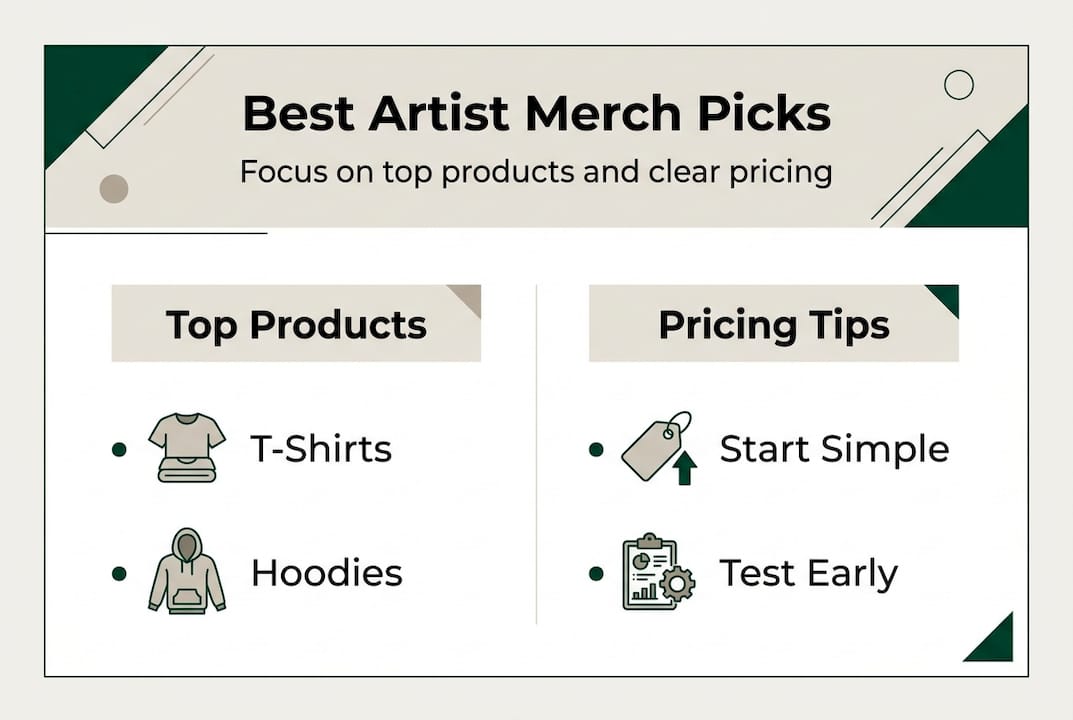
T-shirts make up 38% of Bandcamp bestsellers, with a median price of around £25. That’s a meaningful data point. Fans expect to buy tees, and they’re comfortable spending on them. Start there.
The most popular product categories for independent artists are:
- T-shirts (consistently the top seller across all genres)
- Hoodies (higher price point, strong margins in colder months)
- Stickers (low cost, great for early audience testing)
- Posters (low production cost, high perceived value)
- Vinyl records (niche but extremely loyal buyer base)
On pricing, the numbers matter. Selling a tee via POD typically earns around £14 to £18 profit per unit after base costs. Compare that to streaming revenue per play, where you’d need tens of thousands of streams to match a single week of modest merch sales. Merch wins, especially early in a career.
Starting with one to three core products is the smartest approach. It keeps your store clean, makes decisions easier for fans, and gives you clear data on what actually sells before you expand. Trying to launch fifteen products at once dilutes your focus and confuses your audience.
Building brand value through merch is a long game, but it starts with the right products. Use early sales to understand your audience better and grow fan engagement over time.
Pro Tip: Launch a low-cost sticker pack first. It’s a low-risk way to test your designs, build buyer confidence, and get your first few orders rolling in before committing to bigger items.
Managing fulfilment, shipping, and common pitfalls
You’ve picked your products. Next, ensure customers receive them reliably and you don’t lose money to avoidable mistakes. Fulfilment is where the best-laid plans often fall apart, so understanding the risks upfront saves you a lot of headaches.
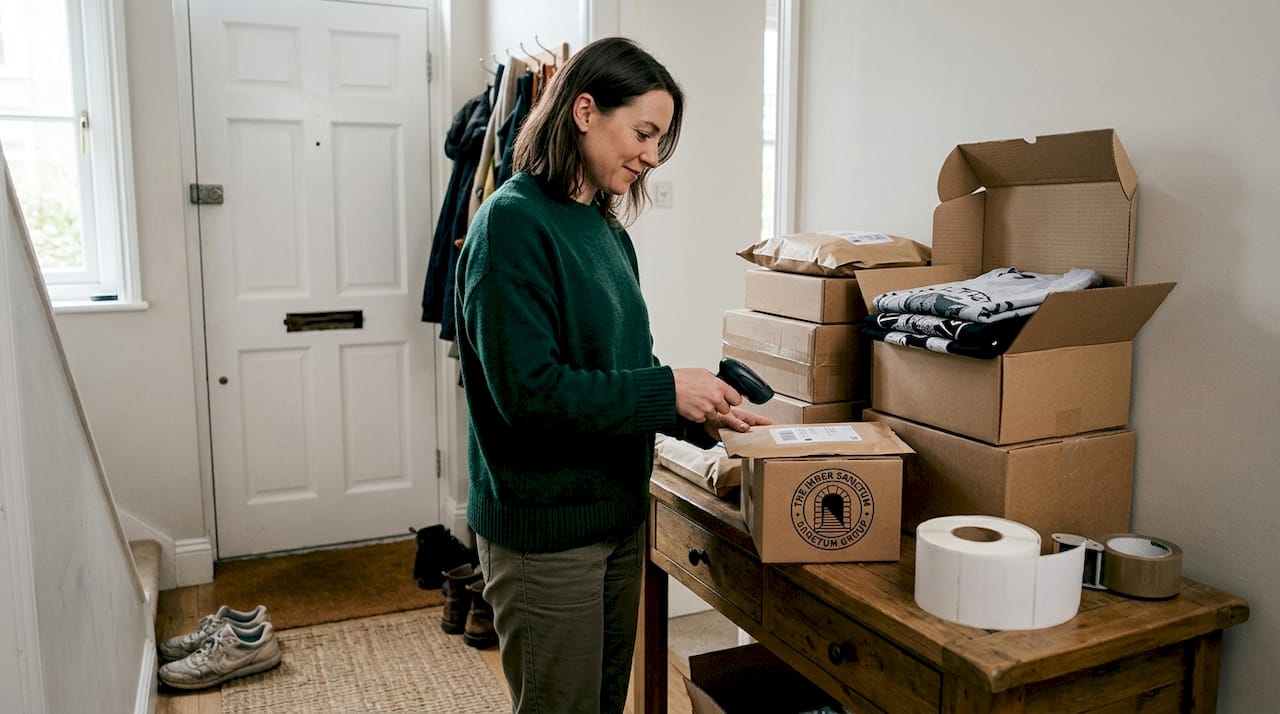
Quality varies significantly between POD providers, and per-unit costs are higher than bulk printing. Shipping delays are also a real concern, particularly for international orders. Venue fees at live shows can eat 15 to 30 per cent of your takings if you’re not prepared.
The most common pitfalls to watch for:
- Skipping samples before launch, leading to quality complaints
- Ignoring international shipping times, which can stretch to three or four weeks
- Underpricing products and wiping out your margin after fees
- Launching too close to an event without accounting for production and delivery time
- Neglecting customer service, which damages your reputation more than a delayed order
Plan any event-specific merch drop at least 8 to 12 weeks in advance. Production, quality checks, and shipping all take time, and rushing the process almost always results in errors that cost more to fix than the drop earned.
A hybrid model, where you use POD for your online store and order a small bulk run for live shows, can reduce per-unit costs once you have proof of demand. But start with POD. The merch earnings guide explains when and how to make that transition sensibly. For a broader look at fulfilment logistics, the detail is worth reading before you scale.
Boosting sales: Effective promotion, drops, and audience engagement
Beyond strong fulfilment, smart sales strategies transform a store into a steady income stream. Opening a store is not enough. You need to actively drive traffic and create reasons for fans to buy now rather than later.
Limited drops create urgency, bundles increase average order value, and live shows convert 10 to 15 per cent of attendees into buyers. Crucially, most drop sales happen within the first 48 to 72 hours, so your launch promotion needs to be concentrated and intentional.
Here are the most effective tactics for driving consistent merch sales:
- Build an email list and send a dedicated launch email before your drop goes live
- Create limited editions tied to album releases, tour dates, or milestones
- Offer bundles that pair a tee with a digital download or sticker pack
- Post behind-the-scenes content showing the design process to build anticipation
- Promote at live shows with a visible merch table and a QR code linking to your online store
- Collaborate with other artists for cross-promotion to reach new audiences
The e-commerce strategies that work best for independent artists focus on community rather than hard selling. Fans buy merch because they want to support you and feel connected to your work. Make that connection obvious in everything you post.
For a broader look at effective promotion tactics, there’s solid guidance on timing and platform-specific approaches worth bookmarking.
Pro Tip: Choose a platform that handles automated tax calculations and customer support queries. The time you save on admin is time you can spend creating, which is where your real value lies.
What most guides miss about profitable artist merch
Here’s the thing most articles won’t say plainly: the biggest barrier to merch success isn’t logistics or design. It’s the belief that you need a large audience before it’s worth starting. That’s simply not true.
With POD, you can start earning from a single design with zero stock. One well-designed tee sold to 50 dedicated fans generates more revenue than most artists earn from fan-favourite strategies applied to streaming alone. The maths consistently favours merch.
Most artists also assume their entire catalogue of products will sell equally. It won’t. In practice, a small number of items, often just two or three, will account for the vast majority of your revenue. Track your own data from the very first sale. That information tells you exactly where to focus your energy and investment.
The question of when to move from POD to bulk printing is simpler than it sounds. When a specific product consistently sells out or you’re ordering more than 50 units a month, bulk becomes financially worthwhile. Until then, POD protects your cash flow and gives you the freedom to experiment.
Treat merch as a core part of your creative business, not a side project you’ll get to eventually. The artists who earn consistently from merchandise are the ones who plan drops with the same intention they bring to a release.
Merch made easier with The Inner Sanctum Group
If you’re ready to move from planning to action, The Inner Sanctum Group makes the entire process straightforward for independent creators. From design to delivery, everything is handled so you can focus on your music.
Explore customisable artist t-shirts built specifically for creators who want professional results without the complexity. If you’re looking for something more refined, the quality merch printing range delivers a premium finish your fans will notice. For the full picture of what’s available, browse all artist merch solutions and find the right starting point for your store today.
Frequently asked questions
What are the best platforms for selling artist merchandise with no upfront costs?
Print-on-demand providers such as Printify, Printful, and Fourthwall let artists sell products risk-free by handling fulfilment automatically. Each platform integrates with popular storefronts, so setup is quick and straightforward.
How much profit can you expect from selling t-shirts?
Selling one t-shirt via POD typically earns around £14 to £18 profit, with POD margins sitting between 30 and 40 per cent depending on your pricing. Bulk printing can push margins higher once you have consistent demand.
What are the most popular items to start with?
T-shirts account for 38% of Bandcamp bestsellers, making them the safest starting point alongside hoodies and stickers. These three products cover a wide range of price points and buyer preferences.
How do you avoid quality issues with print-on-demand merchandise?
Always order samples before promoting any product to ensure the print quality and fabric meet your standards. A single poor-quality item returned by a fan costs far more in reputation than the sample fee.
What is the advantage of limited drops and bundles?
Limited drops create urgency and bundles increase average order value, with most campaign sales concentrated in the first 48 to 72 hours. Both tactics are straightforward to implement and consistently outperform passive store listings.
Recommended
- What is artist merch? A guide for musicians & creators – The Inner Sanctum Group
- What is artist e-commerce and how to sell merch online – The Inner Sanctum Group
- Master the design process for indie artist merch in 2026 – The Inner Sanctum Group
- How merch supports independent artists’ brand and revenue – The Inner Sanctum Group