
Master the design process for indie artist merch in 2026
Creating merchandise that your fans actually want to buy is one of the biggest challenges you’ll face as an independent artist. The difference between merch that sits in boxes and designs that sell out comes down to understanding your audience and following a clear, strategic design process. This guide walks you through every step, from researching your fanbase to launching products that strengthen your brand and generate real income.
Table of Contents
- Understanding Merch Design: Preparation And Essentials
- Executing Your Merch Design: From Concept To Creation
- Launching And Selling Your Merch Effectively
- Get Help With Designing And Selling Your Merch
Key takeaways
| Point | Details |
|---|---|
| Know your audience | Research fan preferences and genre trends before designing any products |
| Start strategically | Begin with t-shirts and expand based on actual sales data and feedback |
| Choose production wisely | Weigh print-on-demand’s low risk against bulk printing’s higher margins |
| Design for impact | Use bold, simple graphics and consider limited editions to create urgency |
| Optimise everything | Streamline your online store experience and use fan data for targeted marketing |
Understanding merch design: preparation and essentials
Merchandise isn’t a casual side project. It’s a serious product business that demands thoughtful design and economic planning. T-shirts account for the majority of merch revenue for most artists, but you need to consider genre-specific trends too. Hip-hop artists often see strong vinyl sales, while rock bands might find success with tour posters and patches.
Understanding your audience is crucial when deciding on merchandise. You need to know what your fans actually wear, what fits their lifestyle, and what price points work for them. A metal band’s audience might embrace aggressive graphics on black hoodies, whilst an indie folk artist’s fans could prefer minimalist tote bags and earth-tone apparel.
Before investing heavily in production, gather real data. Poll your fans on social media about colour preferences, product types, and design directions. Check what similar artists in your genre are selling successfully. Look at fan photos from your gigs to see what they already wear.
Consider expanding beyond the basics once you’ve established demand:
- Hoodies offer higher profit margins and year-round appeal
- Tote bags provide practical value and mobile advertising
- Limited-edition signed posters create collectability and urgency
- Accessories like enamel pins and patches allow low-cost experimentation
Pro Tip: Create a simple Google Form or Instagram story poll asking fans to rank their top three merch items from a curated list. This gives you quantifiable data before committing to designs or inventory.
Your merch choices should reflect both your artistic identity and your fans’ practical needs. Explore creative merch ideas that align with your brand, and understand how merch supports team branding for independent musicians building a cohesive visual identity.
Executing your merch design: from concept to creation
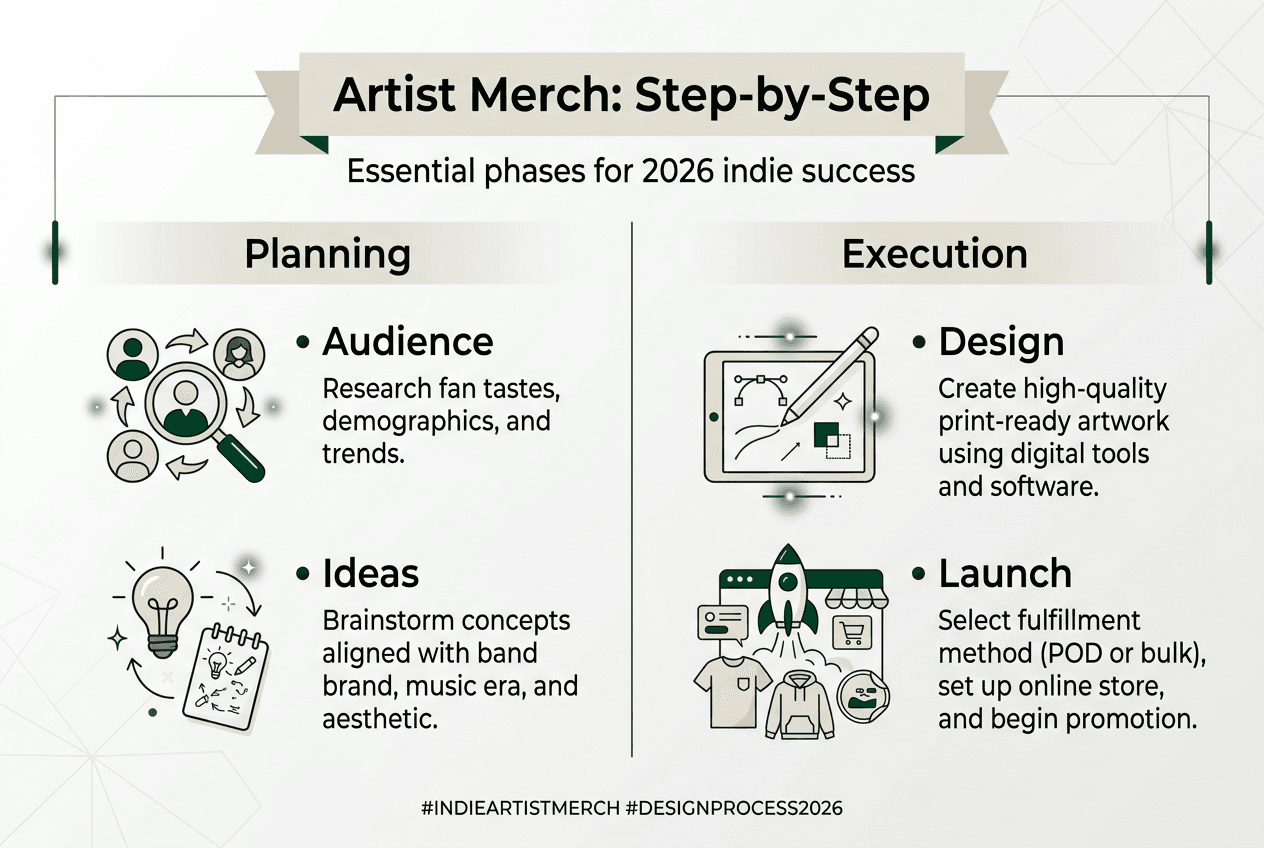
Once you’ve researched your audience, follow a structured design process to bring your merch to life:
- Research visual references from your genre and identify design trends that resonate with your fanbase
- Create initial concepts using design software or work with a graphic designer who understands your aesthetic
- Develop prototypes or mockups to visualise how designs appear on actual products
- Gather feedback from trusted fans, bandmates, or a focus group before finalising
- Refine designs based on feedback and prepare production-ready files
Keep your apparel designs simple and bold. Complex graphics with fine details often lose impact when printed on fabric, especially at smaller sizes. High-contrast designs in two or three colours typically perform better than intricate multi-colour artwork. Your logo or band name should be immediately recognisable from across a room.
Now you face a critical production decision. Margins on merch can be substantial, with t-shirts potentially yielding 70-80% margin and hoodies 30-40% even with print-on-demand. However, print-on-demand services offer a low-risk entry point, but creators must manage quality control and shipping logistics.
| Production Method | Pros | Cons | Typical Margin | Upfront Investment |
|---|---|---|---|---|
| Print-on-demand | No inventory risk, easy testing, automated fulfilment | Lower margins, quality inconsistency, limited control | 30-50% | £0-£100 |
| Bulk printing | Higher margins, quality control, professional finish | Inventory storage, upfront costs, unsold stock risk | 60-80% | £500-£2000+ |
Quality control becomes paramount with print-on-demand. Order samples of every design before listing them publicly. Check colour accuracy, print placement, and fabric quality. Poor quality products lead to returns, which damage your store’s visibility and reputation on most platforms.
Pro Tip: Create a quality checklist for every new design covering print clarity, colour matching, placement accuracy, and fabric feel. Reject any samples that don’t meet your standards, even if it delays your launch.
Consult a comprehensive merch design guide for technical specifications and best practices. Research print-on-demand vs bulk printing thoroughly before committing to either approach, as your choice significantly impacts both profit margins and operational complexity.
Launching and selling your merch effectively
Timing your merch launch strategically multiplies its impact. Coordinate releases with album drops, tour announcements, or significant milestones to capitalise on existing fan excitement. Limited edition designs create urgency and exclusivity, driving faster purchasing decisions than evergreen catalogue items.
Merchandise sales can significantly boost income for indie artists, often doubling gig earnings. Beyond revenue, merch serves as mobile advertising when fans wear your designs in public, expanding your reach organically. Each person wearing your t-shirt becomes a walking billboard for your brand.
Your online store’s user experience directly impacts conversion rates. Mobile load times and checkout processes are critical bottlenecks for online merch sales. Optimise images to load quickly, simplify navigation to three clicks or fewer, and offer guest checkout to reduce friction. Every additional second of load time costs you sales.
Leverage fan data to personalise your marketing:
- Segment your email list by purchase history and engagement level
- Send behaviour-triggered emails when fans browse but don’t buy
- Use SMS for time-sensitive flash sales and restock notifications
- Retarget website visitors with social media ads featuring products they viewed
| Marketing Tactic | Best For | Conversion Rate | Cost | Engagement |
|---|---|---|---|---|
| Email campaigns | Existing fans, new releases | 2-5% | Low | Medium |
| Social media posts | Brand awareness, community building | 0.5-1.5% | Free-Medium | High |
| SMS marketing | Flash sales, urgent updates | 8-15% | Medium | Very High |
Email works brilliantly for storytelling around new designs and building anticipation for launches. Social media excels at visual showcasing and community engagement but typically converts lower. SMS delivers the highest conversion rates for time-sensitive offers but requires careful frequency management to avoid unsubscribes.
Pro Tip: Create a VIP text list offering early access to new designs and exclusive discounts. This builds a core group of enthusiastic buyers who generate initial sales momentum and social proof.
Follow a detailed merch store setup guide to optimise your platform for conversions. Understanding creator merch management helps you streamline operations as your merch business scales beyond initial launches.
Get help with designing and selling your merch
Navigating the entire design and production process alone can feel overwhelming, especially when you’re trying to focus on your music or art. Professional tools streamline the technical aspects whilst you maintain creative control.
Use our Product Customizer DesignLab to visualise your designs on actual products before committing to production. This interactive tool lets you experiment with placement, sizing, and colour combinations in real time. Explore quality customisable options like the ISG Creator 2.0 T-Shirt or the premium ISG E220 Oversized T-Shirt to offer your fans recognisable, high-quality merch. These established apparel products are specifically tailored for creators, ensuring consistent quality and healthy profit margins without the complexity of managing multiple suppliers.
FAQ
How long does the merch design process take?
The complete design process typically takes three to six weeks, depending on complexity and feedback rounds. This includes initial concept development, creating mockups, gathering fan input, refining designs, and setting up production. Using print-on-demand can significantly speed up your time to market compared to bulk printing, as you skip the manufacturing lead time and inventory management phases.
What is the best way to test merch designs with fans?
Run polls and surveys among your fans on social media platforms or through email newsletters to gauge genuine interest before investing. Instagram stories with voting features provide quick, visual feedback on design options. Offer limited pre-orders or sample giveaways to collect detailed feedback whilst simultaneously creating hype and validating demand. This approach minimises financial risk and ensures you’re creating products fans actually want. Discover more creative merch ideas to test with your audience.
How do I choose between print-on-demand and bulk printing?
Print-on-demand reduces upfront costs and eliminates inventory risk, making it ideal for testing new designs or starting with limited capital. However, it typically offers lower profit margins and presents quality control challenges since you don’t handle products directly. Bulk printing requires significant investment and inventory management but delivers higher margins and better quality control. The choice between these methods can significantly impact an artist’s business. Consider your available budget, realistic sales projections, and quality standards when deciding. Review a comprehensive merch design guide to understand technical requirements for both approaches.
Should I create limited edition merch or evergreen designs?
Both strategies serve different purposes in a balanced merch strategy. Limited editions create urgency, exclusivity, and collectability, driving faster purchasing decisions and higher perceived value. They work brilliantly for tour-specific items, anniversary releases, or seasonal designs. Evergreen designs provide consistent revenue streams and allow fans who discover you later to still purchase core brand items. Most successful artists maintain a catalogue of classic designs whilst periodically releasing limited drops to generate excitement and reward loyal fans.
How do I price my merchandise competitively?
Research comparable artists in your genre and note their pricing structures for similar products. Factor in your production costs, desired profit margin, and your audience’s spending capacity. T-shirts typically range from £15 to £30, whilst hoodies sit between £30 and £50, depending on quality and brand positioning. Price too low and you undervalue your work whilst leaving money on the table. Price too high and you risk alienating fans who want to support you but have budget constraints. Test different price points with small batches and monitor conversion rates to find your optimal pricing sweet spot.
Recommended
- How merch supports team branding for indie musicians – The Inner Sanctum Group
- Boost your personal brand with creative merch ideas in 2026 – The Inner Sanctum Group
- What is an online merch store? A guide for artists in 2026 – The Inner Sanctum Group
- Fitness merch design guide 2026: create custom gear – The Inner Sanctum Group
- Step by Step Custom Jewelry Design for Unique Pieces – Eternal Carat