
Fitness merch design guide 2026: create custom gear
Launching your own fitness merchandise line sounds exciting until you realise most of it sits unworn in drawers. The problem isn’t your brand or your clients’ loyalty. It’s that too many fitness coaches design merch they’d wear, not what their clients actually need. Effective merchandise solves real problems for your audience, whether that’s moisture control during HIIT sessions or durable fabrics for daily gym wear. This guide walks you through designing custom branded gear that your clients will genuinely love, wear, and recommend to others.
Table of Contents
- Define Your Merch’s Purpose And Customer Needs
- Gather The Right Materials And Create A Detailed Tech Pack
- Design Process: From Sketches To Prototypes To Production
- Common Pitfalls And How To Avoid Them In Fitness Merch Design
- Take Your Fitness Merch To The Next Level With The Inner Sanctum Group
Key takeaways
| Point | Details |
|---|---|
| Customer needs first | Design merch that solves specific client problems, not just reflects your personal style preferences. |
| Material matters | Fabric choice, weight, and finishing dramatically affect performance, durability, and customer satisfaction. |
| Tech packs prevent errors | Detailed specifications reduce manufacturer guesswork and ensure your vision translates to the final product. |
| Prototype rigorously | Test samples under real use conditions and gather client feedback before committing to bulk production. |
Define your merch’s purpose and customer needs
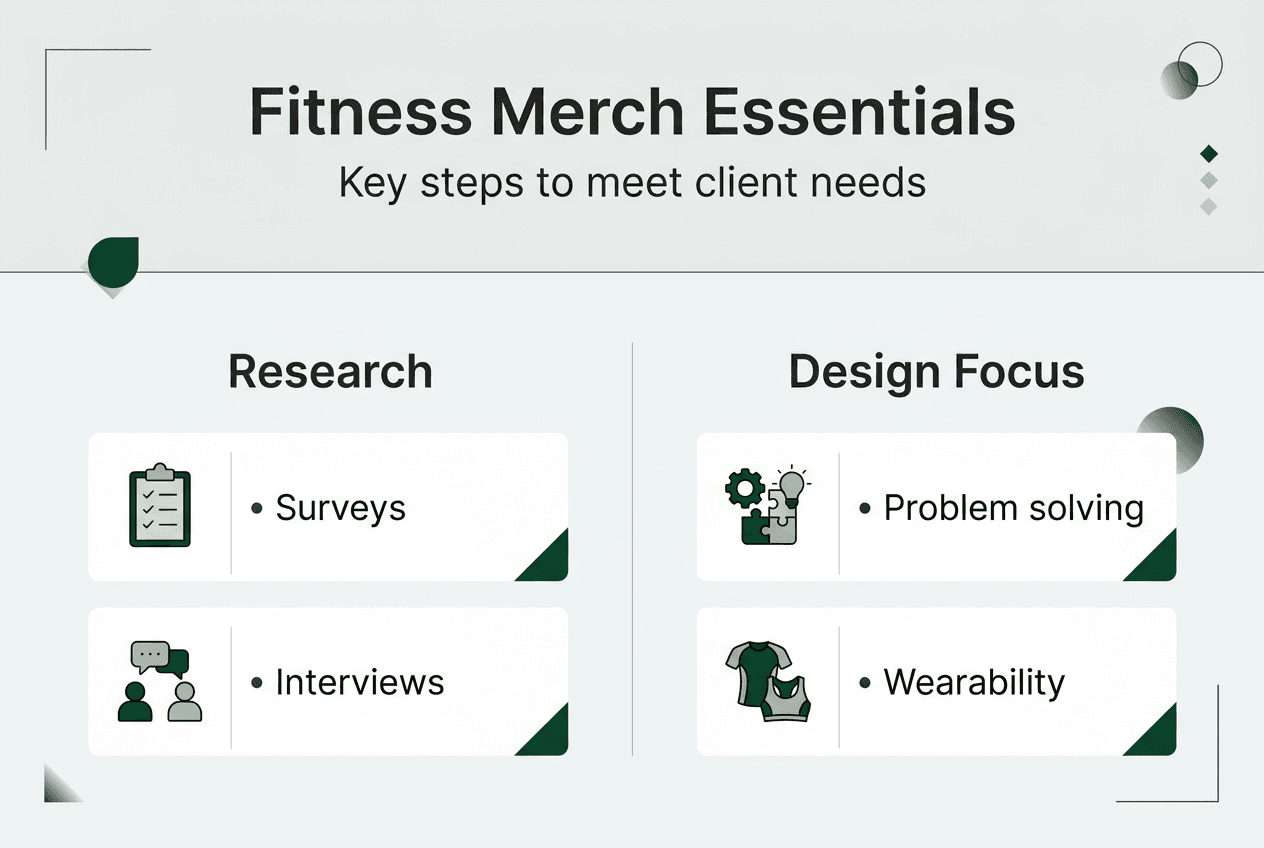
Before sketching a single design, you need clarity on who you’re creating for and what problem your merchandise solves. Many fitness professionals fall into the trap of designing collections around their own wardrobe preferences rather than addressing client needs. Your favourite oversized hoodie might look great on you, but does it serve someone training five days a week who needs quick-drying, compact gear?
Start by mapping your customer’s lifestyle and priorities. Are they training outdoors in variable weather? Do they transition straight from the gym to errands? Understanding context shapes every design decision. A better starting point is to define the job your product solves: what customers will compromise on, which performance features matter most, and when they’ll actually wear the garment.
Consider these essential questions before finalising any design:
- What performance priorities matter most to your clients: stretch, opacity, moisture management, compression, warmth?
- Where and when will they wear this: training sessions, travel, casual wear, outdoor activities?
- What are they willing to compromise on: price point, care requirements, durability?
- Which garment features are non-negotiable for their training style and environment?
Pro Tip: Survey your existing clients about their current activewear frustrations. The answers reveal gaps your merch can fill better than any trend report.
This foundation prevents the costly mistake of producing beautiful merchandise that nobody actually wears. Focus on solving real problems, and your clients become walking advertisements for your brand. Explore creative merch ideas that balance function with brand identity to inspire your approach.
Gather the right materials and create a detailed tech pack
Vague design notes and inspirational sketches leave manufacturers guessing about dozens of critical decisions. If you send a manufacturer an inspirational drawing and a few notes, you’re essentially asking them to interpret your vision without proper guidance. The result? Products that miss the mark on fit, feel, or function.
A tech pack is your blueprint for production success. It documents every specification a manufacturer needs: measurements, materials, stitching details, label placement, colour codes, and finishing requirements. This single document eliminates ambiguity and ensures what you envision matches what gets produced. At minimum, you want a tech pack before bulk production to avoid expensive mistakes and delays.
Your tech pack should include these essential elements:
- Detailed flat sketches showing front, back, and side views with callouts for specific features
- Complete measurement specifications for each size, including tolerances
- Material specifications: fibre content, weight (GSM), knit structure, stretch percentage, finishing treatments
- Colour references using Pantone codes or approved swatches
- Construction details: stitch types, seam allowances, reinforcement areas
- Trim and hardware specifications: zips, buttons, drawcords, labels
- Packaging and labelling requirements
Material selection deserves particular attention for fitness apparel. A 180 GSM cotton blend performs completely differently from a 180 GSM polyester technical fabric. Consider moisture-wicking properties, stretch and recovery, opacity during movement, and how the fabric behaves after repeated washing. Check out this customisable tech pack example to see professional specifications in action.
Pro Tip: Request fabric swatches and wash them multiple times before committing. Performance fabrics can behave unpredictably after laundering, and you need to know how they’ll hold up to real-world use.
For heavier items like sweatshirts, weight and construction become even more critical. A custom sweatshirt tech pack demonstrates how detailed specifications ensure consistent quality across production runs. The time invested in creating thorough documentation pays dividends in reduced errors and faster production cycles.
Design process: from sketches to prototypes to production
With your tech pack complete, you’re ready to transform specifications into tangible products. This phase moves from documentation to physical samples, where you can evaluate whether your design decisions actually deliver the performance and aesthetic you envisioned.
Follow this systematic approach to move from concept to market-ready merchandise:
- Create detailed sketches based on your tech pack, showing all design elements and proportions clearly.
- Order prototype samples from your manufacturer using exact specifications from your tech pack.
- Conduct rigorous testing under real-world conditions that mirror how clients will use the garment.
- Gather feedback from a small group of trusted clients who represent your target audience.
- Document any issues with fit, comfort, durability, or performance during testing.
- Revise your tech pack based on prototype findings and order revised samples if needed.
- Approve final samples only when they meet all performance and quality standards.
- Proceed to bulk production with confidence in your refined specifications.
The prototype phase reveals truths that no amount of planning can predict. The same garment pattern behaves completely differently depending on fibre, knit structure, GSM, stretch and recovery, and finishing treatments. A design that looks perfect on paper might ride up during squats or become transparent when stretched.
Test your prototypes thoroughly:
- Wear them during actual training sessions that match your clients’ activities
- Wash and dry them multiple times to check for shrinkage, colour fade, or shape loss
- Evaluate comfort during extended wear, not just initial try-on
- Check durability at stress points: seams, hems, areas of high friction
- Assess how the garment performs in different temperatures and humidity levels
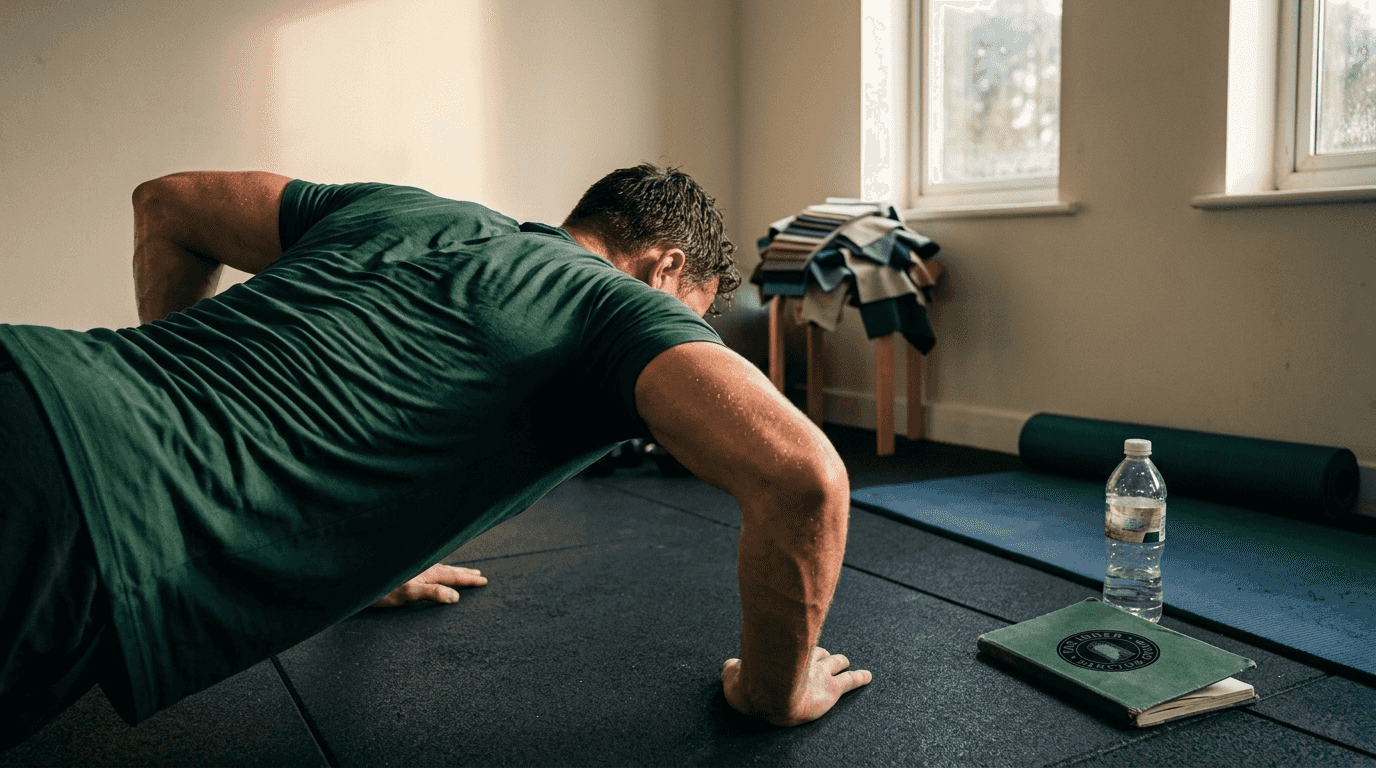
An active t-shirt prototype example shows how lighter-weight technical fabrics perform in high-intensity settings. Compare this against your clients’ specific needs to determine if the weight and construction align with their training demands.
Pro Tip: Order prototypes in multiple sizes, not just your own. Fit issues often appear at size extremes, and you need to ensure your entire client base is served well.
Don’t rush this phase. The cost of fixing problems after bulk production far exceeds the investment in thorough prototype testing. Each iteration brings you closer to merchandise that truly serves your clients and strengthens your brand reputation.
Common pitfalls and how to avoid them in fitness merch design
Even experienced fitness professionals make predictable mistakes when entering the merchandise space. Recognising these pitfalls early saves time, money, and brand reputation. Let’s examine the most common errors and how to sidestep them entirely.
Many first collections are built around what the founder would wear, not what the customer needs. This founder-centric approach ignores the diversity of body types, training styles, and lifestyle needs within your client base. Your personal aesthetic matters far less than solving real problems for the people who’ll actually buy and wear your merch.
Here are the critical mistakes to avoid:
- Skipping customer research and designing based solely on personal preference
- Underestimating the importance of detailed tech packs and clear manufacturer communication
- Choosing fabrics based on price alone without considering performance requirements
- Ordering bulk production without thorough prototype testing and client feedback
- Ignoring care requirements that don’t align with your clients’ lifestyles
- Overlooking size range inclusivity that excludes potential customers
- Failing to account for how garments perform when wet, stretched, or worn repeatedly
The difference between founder-focused and customer-focused design becomes clear when you compare outcomes:
| Approach | Result | Customer response |
|---|---|---|
| Founder preference | Aesthetically pleasing but impractical for training | Low repeat purchases, items rarely worn |
| Customer needs | Function-first with brand identity integrated | High satisfaction, organic word-of-mouth promotion |
| Price-driven materials | Cost savings undermined by quality complaints | Returns, negative reviews, damaged reputation |
| Performance-focused fabrics | Higher initial cost, superior user experience | Brand loyalty, willingness to pay premium prices |
Poor communication with manufacturers creates entirely avoidable problems. Vague instructions lead to misinterpreted designs, incorrect materials, and production delays. Invest time in creating crystal-clear specifications and maintain regular communication throughout the production process. Ask questions, request progress photos, and confirm understanding at each milestone.
Pro Tip: Build a relationship with your manufacturer beyond transactional emails. Understanding their capabilities and constraints helps you design within realistic parameters and avoid costly revisions.
Ignoring fabric functionality in favour of aesthetics produces merch that looks good on the hanger but fails during use. A beautiful design in a fabric that pills after three washes or loses shape after one training session damages your brand more than having no merch at all. Prioritise performance characteristics that match your clients’ actual needs, then layer in visual appeal. Review personal brand merch mistakes to learn from others’ experiences before launching your line.
Take your fitness merch to the next level with the Inner Sanctum Group
Creating professional-quality fitness merchandise requires expertise, time, and resources that many independent coaches and gym owners simply don’t have. That’s where partnering with specialists transforms your vision into reality without the steep learning curve.
The Inner Sanctum Group handles the entire merch process, from design preparation to printing, fulfilment, and shipping. You focus on your clients and coaching whilst ISG manages production complexities. Explore customisable fitness t-shirts with detailed tech specs already optimised for performance. Ready-to-customise options let you launch faster whilst maintaining quality standards. Check out merch bundles for fitness brands that simplify your offering and increase client appeal through curated product combinations.
FAQ
What fabric features are essential for fitness merch?
Moisture-wicking properties, adequate stretch and recovery, opacity during movement, and durability through repeated washing are non-negotiable for fitness apparel. Choose fabrics with appropriate GSM for the intended use and verify performance characteristics through prototype testing before bulk production.
How detailed should my tech pack be before production?
Your tech pack should include complete measurements for all sizes, exact material specifications with fibre content and weight, construction details with stitch types, colour codes, trim specifications, and clear visual references. The more detailed your tech pack, the fewer surprises you’ll encounter during production.
What is the best way to test prototypes?
Wear prototypes during actual training sessions that mirror your clients’ activities, wash them multiple times to check durability, and gather feedback from clients who represent your target audience. Test across multiple sizes and document any issues with fit, comfort, or performance before approving bulk production.
How can I ensure my merch appeals to clients, not just myself?
Conduct customer research before designing, focus on solving specific problems your clients face, and involve them in prototype testing. Ask about their current activewear frustrations and design solutions rather than imposing your personal aesthetic preferences onto their needs.
What are key mistakes to avoid in fitness merch design?
Avoid designing solely around founder preference, skipping detailed tech packs, choosing materials based on price alone, ordering bulk production without prototype testing, and ignoring how fabrics perform under real training conditions. Prioritise customer needs and performance requirements over aesthetics to create merch people actually wear.
Recommended
- Boost your personal brand with creative merch ideas in 2026 – The Inner Sanctum Group
- Merch store setup guide for independent artists 2026 – The Inner Sanctum Group
- What is an online merch store? A guide for artists in 2026 – The Inner Sanctum Group
- How merch supports team branding for indie musicians – The Inner Sanctum Group
- Role of Hats in Sports Fashion: Premium Style Guide 2026