
What is an online merch store? A guide for artists in 2026
The print-on-demand market is projected to reach $100 billion by 2034, fundamentally reshaping how independent artists sell custom merchandise. Yet many creators still think launching a merch store requires huge inventory investments or complicated logistics. An online merch store powered by print-on-demand changes everything, letting you design, list, and sell products whilst a production partner handles printing and shipping. This guide explains what online merch stores are, how the POD model works, and practical strategies for building a profitable merch business in 2026.
Table of Contents
- What Is An Online Merch Store And How Does Print-On-Demand Work?
- Choosing The Right Print-On-Demand Platform In 2026
- Designing Your Merch Range: Key Products, Pricing, And Margins
- Strategies To Maximise Sales And Brand Growth Using Multiple Platforms
- How The Inner Sanctum Group Supports Your Online Merch Journey
Key takeaways
| Point | Details |
|---|---|
| What is an online merch store? | A digital storefront where artists sell custom-designed products produced only after customers order, eliminating inventory risk. |
| Print-on-demand benefits | Zero upfront inventory costs, automated production and fulfilment, flexibility to test designs without financial commitment. |
| Platform selection criteria | Evaluate product range, print quality, store integrations, transparent pricing, and sustainability credentials before choosing. |
| Product mix strategy | Start with a core t-shirt, an impulse item like stickers, and one premium product to balance margins and appeal. |
| Multi-platform approach | Successful artists use 2 to 4 platforms simultaneously to maximise reach, diversify risk, and boost overall revenue. |
What is an online merch store and how does print-on-demand work?
An online merch store is your digital shopfront for selling artist-designed products directly to fans and customers. Unlike traditional retail, you never purchase inventory upfront. Instead, POD providers handle production, printing, and shipping tasks automatically after each sale.
The print-on-demand model works brilliantly for independent creators. When a customer orders your design on a hoodie or tote bag, the POD partner receives the order details, prints your artwork onto the blank product, packages it, and ships directly to your buyer. You focus entirely on creating designs and marketing whilst the production partner manages fulfilment logistics.
Key benefits of POD for artists:
- Zero inventory investment means you can launch immediately without financial risk
- Test multiple designs quickly to discover what resonates with your audience
- Scale effortlessly as demand grows without warehouse complications
- Offer diverse product types from apparel to home goods without managing stock
Typical merch products include t-shirts, hoodies, sweatshirts, tote bags, mugs, phone cases, stickers, and prints. The variety lets you cater to different price points and customer preferences. Some fans want affordable impulse purchases whilst others seek premium quality items.
“The POD model democratises merchandise creation. You no longer need thousands of pounds or warehouse space to sell professional merch bearing your designs.”
This fundamental shift explains why how the ISG merch stand works has become so valuable for bands and artists. Production partners absorb the operational complexity, leaving creators free to focus on art and audience building.
Choosing the right print-on-demand platform in 2026
Selecting your POD partner determines your merch quality, profit margins, and scalability potential. The wrong choice creates frustration with poor prints or unreliable shipping. The right platform becomes a growth engine for your creative business.
Critical evaluation criteria:
- Product catalogue breadth: Does the platform offer the specific items your audience wants?
- Print quality standards: Request samples to verify colour accuracy and durability before committing
- Store integrations: Seamless connection to Shopify, Etsy, WooCommerce, or Amazon simplifies management
- Transparent pricing: Clear base costs let you calculate realistic margins without hidden fees
- Fulfilment reliability: Consistent production times and shipping speeds protect your brand reputation
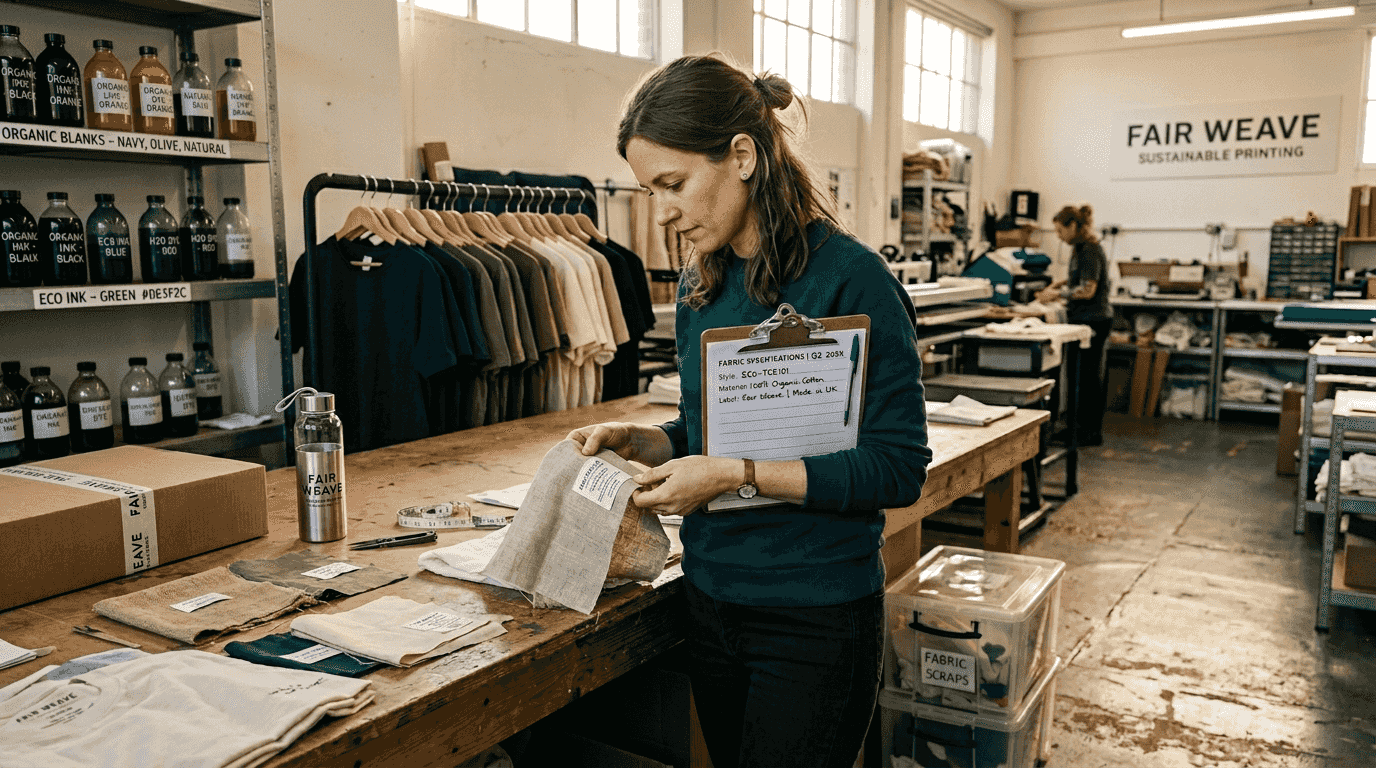
Sustainable production and ethical practices increasingly influence customer loyalty. Platforms using eco-friendly inks, recycled packaging, and ethical manufacturing appeal to conscious consumers who want to support responsible creators.
Platform feature comparison:
| Feature | Why it matters | What to look for |
|---|---|---|
| Product range | Variety attracts different customers | 50+ product types minimum |
| Print methods | Quality and durability vary | DTG, sublimation, embroidery options |
| Base costs | Directly impacts your margins | Transparent pricing without surprises |
| Shipping speed | Affects customer satisfaction | 3 to 7 day fulfilment standard |
| Sustainability | Builds brand values alignment | Organic materials, carbon-neutral shipping |
Platforms like The Inner Sanctum Group prioritise quality and sustainability. Their ISG Organic E150 T-Shirt uses certified organic cotton, appealing to environmentally conscious fans. Meanwhile, designs like the Output logo t-shirt demonstrate professional print standards that reflect well on your brand.
Pro tip: Evaluate platforms for long-term growth potential, not just launch ease. A slightly higher learning curve with better margins and quality pays dividends as your merch sales scale over months and years.
Testing multiple providers with small orders reveals real-world quality before you commit to one primary partner. This upfront investment prevents costly mistakes when you scale production.
Designing your merch range: key products, pricing, and margins
Building a profitable product mix requires understanding production costs, market pricing, and your audience’s purchasing behaviour. Random product selection leads to poor margins or items that never sell.
Typical merch categories and their roles:
- Core apparel: T-shirts and hoodies form your primary revenue stream with strong margins
- Impulse items: Stickers, pins, and keyrings offer low-price entry points for new fans
- Premium products: Limited edition prints or embroidered items command higher prices for dedicated supporters
- Accessories: Tote bags, phone cases, and mugs diversify your catalogue appeal
Understanding cost structures helps you price intelligently. T-shirts deliver 70 to 80% margins when base costs range from £5 to £8 and retail prices sit at £25 to £35. Hoodies cost more to produce but sell at premium prices, maintaining healthy profits.
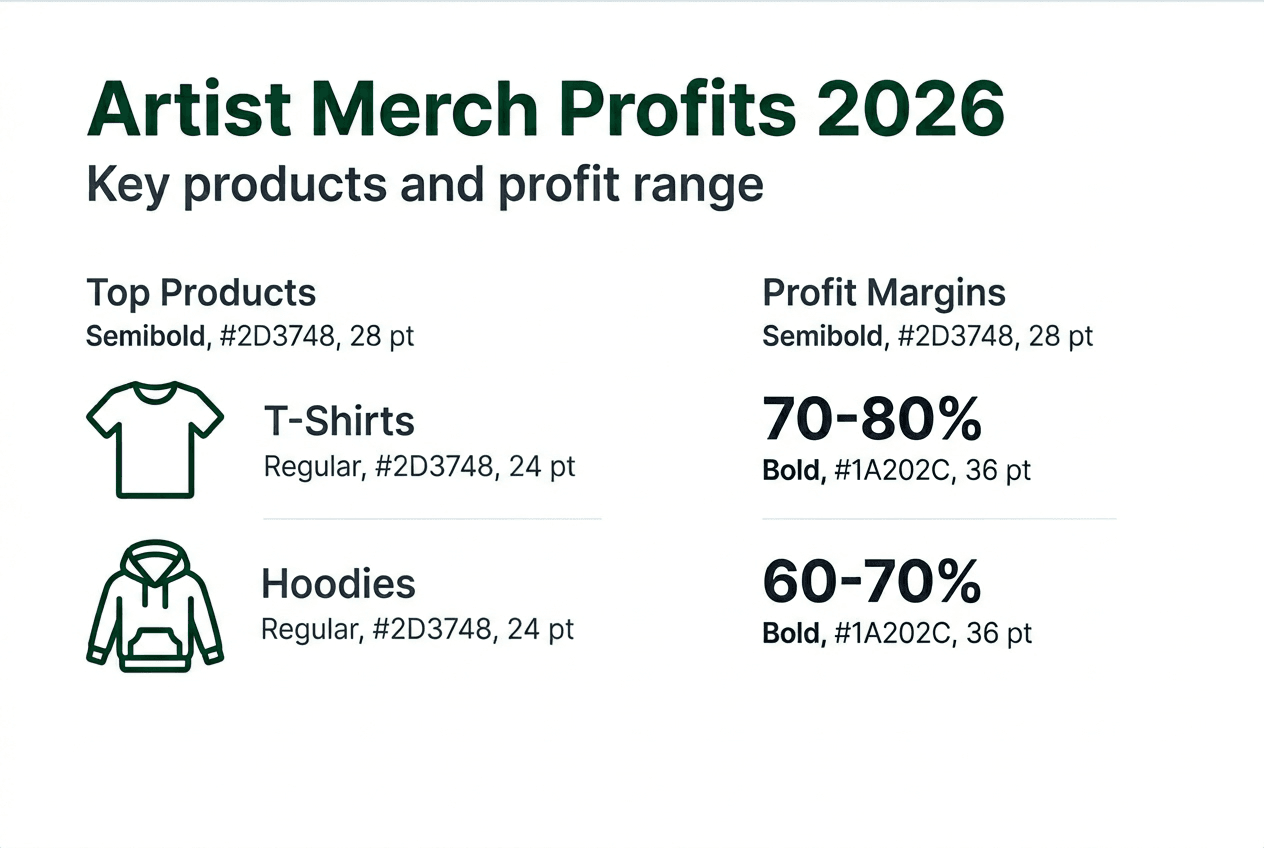
Product pricing and margin analysis:
| Product type | Base cost | Retail price | Profit margin | Sales volume |
|---|---|---|---|---|
| T-shirt | £6 to £8 | £25 to £30 | 70 to 75% | High |
| Hoodie | £15 to £20 | £45 to £55 | 60 to 65% | Medium |
| Tote bag | £4 to £6 | £18 to £22 | 70 to 75% | Medium |
| Sticker pack | £2 to £3 | £8 to £10 | 70 to 80% | Very high |
| Mug | £5 to £7 | £18 to £22 | 65 to 70% | Low to medium |
Step-by-step starting range selection:
- Choose one core t-shirt design that represents your brand identity strongly
- Add an affordable impulse item like stickers to encourage first-time purchases
- Include one premium product such as a hoodie or limited print for dedicated fans
- Test this trio for 30 to 60 days before expanding further
- Analyse sales data to identify which products resonate most with your audience
This reliable starting lineup minimises complexity whilst covering different price points. You avoid overwhelming yourself or customers with too many choices initially.
Pro tip: Balance your product mix to match your audience’s price sensitivity. If your following skews younger, emphasise affordable items. Established artists with dedicated fans can lean into premium offerings with confidence.
The ISG merch stand pricing guide provides detailed cost breakdowns to help you calculate realistic margins across product types. Transparent costing eliminates guesswork and protects your profitability as you scale.
Strategies to maximise sales and brand growth using multiple platforms
Relying on a single platform creates vulnerability. Algorithm changes, policy updates, or technical issues could instantly disrupt your entire merch revenue stream.
Successful artists use 2 to 4 platforms simultaneously to spread risk and maximise audience reach. Each marketplace attracts different demographics and shopping behaviours. Etsy draws craft-conscious buyers, Amazon captures impulse purchases, and Shopify gives you full brand control.
Popular platform combinations:
- Etsy + Shopify: Marketplace exposure plus owned brand presence
- Amazon + dedicated website: Volume sales plus direct customer relationships
- Multiple POD integrations: Printful on Shopify, Printify on Etsy for optimised costs per platform
- Social commerce: Instagram Shopping or TikTok Shop as discovery channels
Running multiple stores seems complicated initially, but most POD platforms offer centralised dashboards. You manage designs and orders from one interface whilst products sync across connected storefronts automatically.
Pro tip: Track performance metrics separately for each platform to identify where your audience converts best. Double down on high-performing channels whilst maintaining presence elsewhere for discovery.
Don’t treat merch as an afterthought or passive income experiment. Successful creators view it as a core revenue stream deserving strategic attention. Regular design releases, seasonal collections, and limited drops keep your catalogue fresh and encourage repeat purchases.
Understanding how to sell your merch on the ISG platform shows how integrated solutions simplify multi-channel selling. When production partners handle fulfilment complexity, you focus energy on creating compelling designs and connecting with your audience authentically.
How the Inner Sanctum Group supports your online merch journey
Launching an online merch store becomes significantly easier when you partner with a production company that understands independent artists’ needs. The Inner Sanctum Group specialises in helping creators design, produce, and sell high-quality merchandise without upfront inventory costs.
ISG handles the entire production process, from design preparation through printing, packaging, and shipping. You upload your artwork, set your prices, and earn commission on every sale whilst ISG manages operational details.
Key advantages of the ISG platform:
- Customisable organic and premium apparel options that reflect quality brand values
- High print standards ensuring your designs look professional on every product
- Sustainable materials and ethical production practices your fans will appreciate
- Seamless integration so you can focus on creating rather than logistics
Explore products like the ISG Organic E150 T-Shirt for eco-conscious basics or the MONKA original design hoodie for premium offerings. Visit The Inner Sanctum Group to discover the full range and start building your merch store with confidence today.
What is an online merch store?
What types of products can I sell in an online merch store?
You can sell virtually any customisable product through POD platforms, including apparel like t-shirts and hoodies, accessories such as tote bags and phone cases, home goods like mugs and cushions, and paper products including stickers and prints. The key is choosing items that align with your brand identity and audience preferences.
How does print-on-demand reduce upfront costs?
POD eliminates traditional inventory expenses by producing items only after customers place orders. You never purchase stock upfront, pay for warehouse storage, or risk unsold inventory. This zero-inventory model lets you launch and test designs immediately without financial commitment.
Can I run merch stores on several platforms at once?
Absolutely. Most successful artists maintain presence on multiple platforms simultaneously to maximise reach and diversify risk. Modern POD tools offer centralised dashboards where you manage designs and orders across Etsy, Shopify, Amazon, and other channels from one interface.
What are typical profit margins on artist merch?
T-shirts typically deliver 70 to 80% profit margins when base costs range from £5 to £8 and retail prices sit at £25 to £30. Hoodies and premium items maintain 60 to 65% margins despite higher production costs. Impulse items like stickers often achieve 75 to 80% margins with high sales volumes.
How do I start designing merch if I’m new to it?
Begin with simple, bold designs that represent your brand clearly. Use free tools like Canva for basic graphics or hire freelance designers on Fiverr for professional artwork. Start with one strong design rather than launching dozens of mediocre options. Test audience response before expanding your catalogue, and study ISG merch stand details to understand technical requirements for print-ready files.