
What is creator merch management? A 2026 guide for artists
Managing merchandise as an independent creator often feels overwhelming. You want to sell branded products to your fans, but the thought of buying stock upfront, storing inventory, and handling shipping creates immediate barriers. Many artists assume merch management requires significant capital and logistical expertise they simply don’t have. This guide clarifies what creator merch management actually involves, how it works without upfront costs, and practical steps to monetise your brand through merchandise in 2026.
Table of Contents
- Understanding Creator Merch Management
- How Creator Merch Management Works: Models And Platforms
- Strategies For Successful Creator Merch Management And Monetisation
- Challenges And Solutions In Creator Merch Management
- Explore Merch Solutions Designed For Creators
- Frequently Asked Questions
Key takeaways
| Point | Details |
|---|---|
| Creator merch management defined | A system allowing artists to oversee and sell merchandise without purchasing inventory upfront, using third-party platforms for production and fulfilment. |
| Print-on-demand versus fulfilment models | Print-on-demand creates items per order, whilst fulfilment services handle storage and shipping, each offering different cost and control trade-offs. |
| Monetisation strategies | Aligning merch with your brand, promoting effectively on social channels, and pricing strategically ensures profitability and audience engagement. |
| Common challenges addressed | Quality control, shipping delays, and communication issues can be resolved by selecting reliable partners and requesting regular customer feedback. |
Understanding creator merch management
Creator merch management refers to the systems and processes that enable independent artists, musicians, and content creators to design, produce, and sell branded merchandise without investing in upfront inventory. Unlike traditional retail models requiring bulk purchases and warehouse storage, creator merch management allows artists to oversee and monetise their merchandise through third-party platforms handling production, fulfilment, and shipping.
This approach fundamentally differs from conventional merch strategies. Traditional methods demand significant capital for inventory purchases, physical storage space, and dedicated staff for packing and posting orders. Creators using modern merch management platforms bypass these requirements entirely. When a fan purchases a hoodie or tote bag, the platform receives the order, prints the design, packs the item, and ships directly to the customer. You maintain creative control and brand ownership whilst the platform manages operational logistics.
Typical services included in creator merch management encompass:
- Custom product design tools and templates
- Automated order processing and production
- Quality control and printing services
- Packaging and shipping logistics
- Online store integration with existing websites or social channels
- Customer service support for order queries
Avoiding upfront costs matters tremendously to independent creators operating on tight budgets. You can test product designs, gauge audience interest, and build revenue streams without financial risk. If a particular design doesn’t resonate with fans, you haven’t lost money on unsold stock sitting in your garage. This flexibility allows experimentation and rapid iteration based on real sales data rather than guesswork.
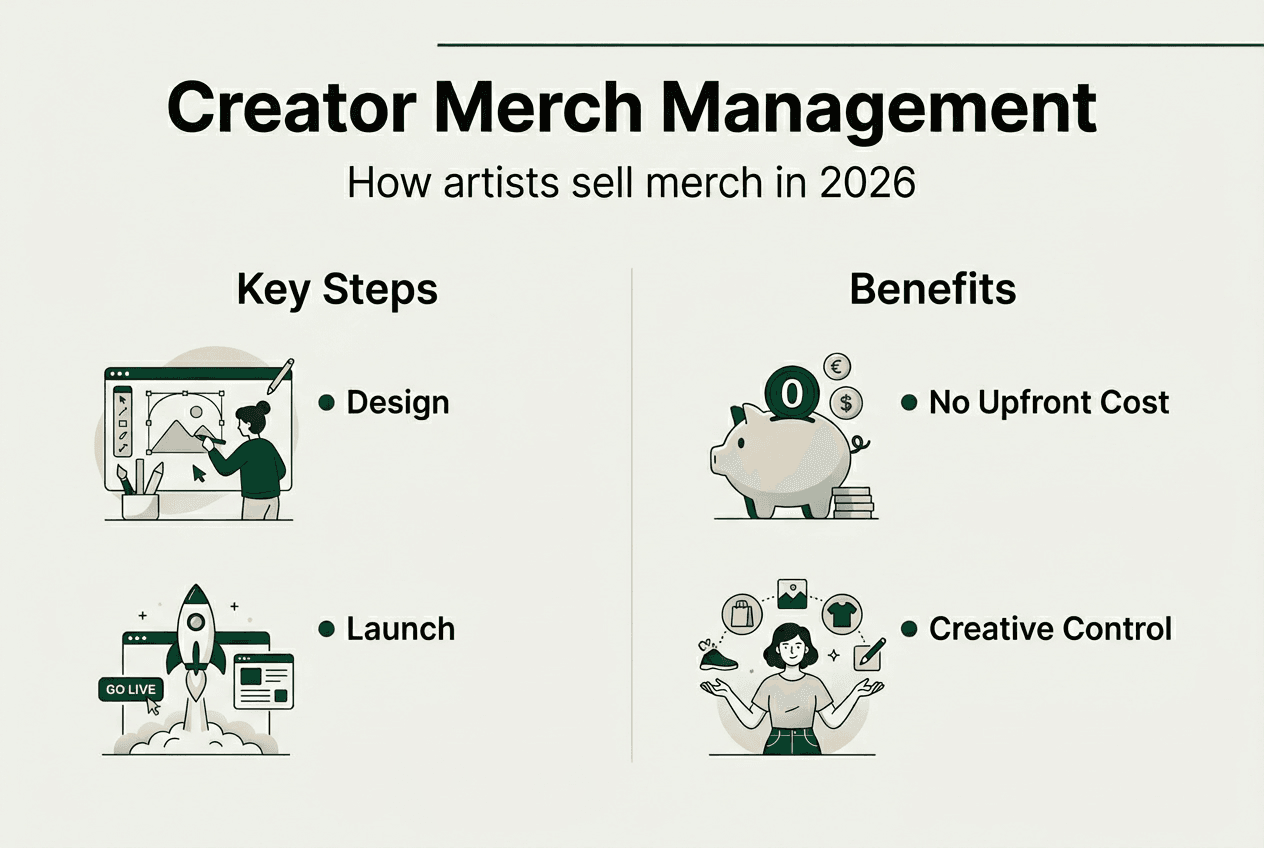
Key benefits extend beyond cost savings. You maintain complete creative control over designs, pricing, and product selection. Merch becomes a genuine revenue stream rather than a costly side project. Your brand grows as fans wear and share your products, creating organic marketing opportunities. Most importantly, you focus energy on creating music, content, or art whilst professionals handle the tedious logistics of printing, packing, and posting.
How creator merch management works: models and platforms
Print-on-demand and third-party fulfilment represent popular models enabling creators to sell merchandise without holding inventory. Understanding the operational differences helps you select the right approach for your specific needs and audience expectations.
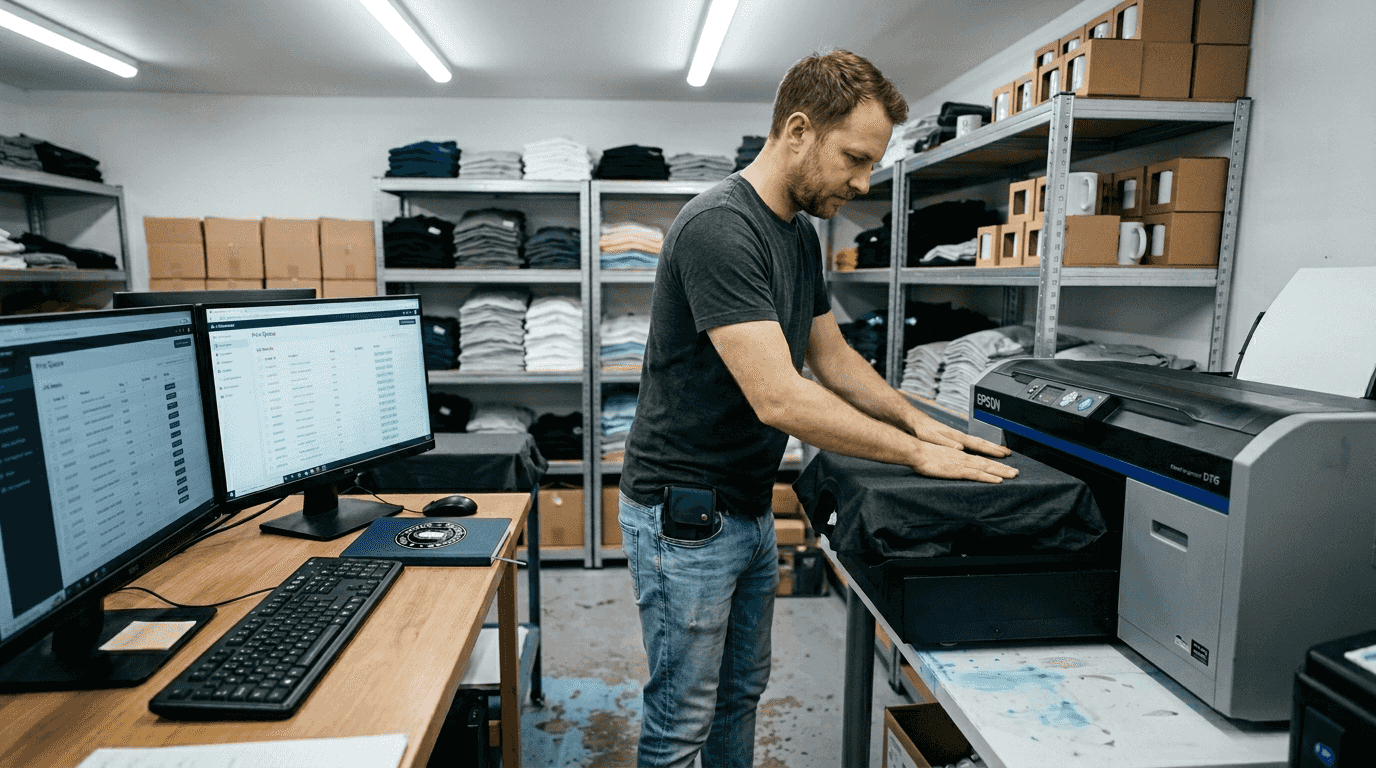
Print-on-demand operates on a per-order basis. When a customer purchases a product, the platform receives the order details, prints your design onto the selected item, and ships directly to the buyer. You upload designs once, set your profit margin, and the platform handles everything else. Popular print-on-demand providers in 2026 include Printful, Printify, and specialised creator platforms offering integrated storefronts. These services typically charge base production costs plus shipping, with you setting the retail price to include your desired profit.
Third-party fulfilment services function differently. Some platforms manage the entire process from design preparation through shipping, whilst others focus specifically on warehousing and order fulfilment if you’ve already produced inventory. For creators wanting zero upfront investment, integrated platforms combining design, production, and fulfilment offer the most straightforward solution.
Comparing these models reveals distinct advantages and limitations:
| Model | Cost Structure | Control Level | Quality Consistency | Shipping Speed |
|---|---|---|---|---|
| Print-on-demand | Pay per order, no upfront costs | High design control, limited production oversight | Varies by provider, generally reliable | 5-10 business days typical |
| Integrated fulfilment platforms | Commission-based or per-order fees | Full creative control, platform manages operations | Consistent when using reputable providers | 7-14 business days average |
| Traditional bulk purchasing | High upfront inventory costs | Complete control over all aspects | Depends on manufacturer selection | Fastest if self-managed, 2-5 days possible |
Platform integration capabilities matter significantly. Modern creator merch systems connect seamlessly with:
- Social media shops on Instagram, Facebook, and TikTok
- Existing websites through embeddable widgets or plugins
- Email marketing platforms for promotional campaigns
- Analytics tools tracking sales, popular products, and customer demographics
When evaluating providers, examine their product catalogue, base costs, shipping rates to your primary audience locations, and design upload requirements. Some platforms excel at apparel whilst others offer broader product ranges including accessories, home goods, and stationery. Understanding advertising strategies and promotion becomes crucial once your store launches, as simply listing products rarely generates sales without active marketing.
Pro Tip: Request product samples before launching your store publicly. Seeing and feeling the actual quality helps you confidently promote items and set appropriate pricing reflecting true value.
Strategies for successful creator merch management and monetisation
Generating meaningful revenue from merchandise requires deliberate strategy beyond simply uploading designs and hoping for sales. Effective promotion and understanding pricing strategies are key to monetising creator merchandise successfully.
Aligning merch with your brand identity creates authentic connections with your audience. Your products should reflect your artistic style, values, and the aesthetic your fans already associate with your work. A minimalist electronic music producer selling elaborate, colourful designs creates cognitive dissonance. Consistency builds trust and makes purchasing decisions easier for supporters wanting to represent your brand.
Follow these steps for effective merch promotion:
- Announce new products with behind-the-scenes content showing design processes or inspiration stories
- Feature merch naturally in your regular content, wearing or using items during videos, performances, or photoshoots
- Create limited edition releases generating urgency and exclusivity
- Encourage user-generated content by reposting fans wearing or using your products
- Bundle merch with digital products, event tickets, or exclusive experiences
- Collaborate with other creators for cross-promotional opportunities reaching new audiences
Pricing requires balancing profitability with accessibility. Calculate your costs including platform fees, production expenses, and shipping, then add your desired profit margin. Research comparable products from similar creators to gauge market expectations. Fans generally understand supporting independent artists costs more than mass-produced alternatives, but prices must still feel reasonable for the perceived value.
Customer service directly impacts repeat purchases and word-of-mouth recommendations. When using third-party platforms, clarify who handles customer queries about orders, shipping delays, or quality issues. Maintain transparent communication about production timelines, especially during busy periods. Set realistic expectations in product descriptions regarding colours, sizing, and delivery windows.
Pro Tip: Use analytics data to identify your best-selling products and peak purchasing periods. Double down on successful designs whilst phasing out underperformers. Track which promotional channels drive actual sales versus mere engagement, focusing energy where it converts to revenue.
Learning how to sell your merch through established platforms often provides faster results than building completely independent systems from scratch. Established platforms offer built-in audiences, trusted payment processing, and proven operational workflows you can leverage immediately.
Challenges and solutions in creator merch management
Creators often struggle with quality control and shipping delays when outsourcing merch fulfilment. Understanding common difficulties and implementing proactive solutions prevents disappointed customers and protects your reputation.
Quality inconsistency represents the most frequent complaint. Print colours may appear different from digital mockups due to fabric variations and printing methods. Sizing can run smaller or larger than standard retail expectations. Stitching quality varies between production batches. These issues damage trust when fans receive products not matching their expectations based on your promotional images.
Shipping delays frustrate customers, especially during gift-giving seasons or when purchasing for specific events. International orders face additional complications with customs processing and carrier handoffs between countries. Customers blame you, the creator, even when delays stem from third-party logistics beyond your direct control.
Communication gaps create confusion and anxiety. Customers expect order confirmations, shipping notifications, and tracking information. When platforms fail to provide timely updates or when information gets lost between systems, customers contact you seeking answers you may not immediately have.
Common problems with practical solutions:
| Challenge | Impact | Solution |
|---|---|---|
| Colour variation between mockup and printed product | Customer disappointment, returns, negative reviews | Order samples, include disclaimer about slight variations, use colour-accurate mockups |
| Longer production times than fast-fashion retail | Impatient customers, abandoned carts | Clearly display production timelines, offer rush options at premium pricing |
| Limited product customisation options | Difficulty standing out, generic offerings | Work with platforms offering extensive catalogues, create unique designs rather than relying on product variety |
| Higher per-unit costs than bulk manufacturing | Lower profit margins, higher retail prices | Focus on quality and exclusivity rather than competing on price, educate audience about supporting independent creators |
Selecting reliable partners requires research and testing. Read creator reviews focusing on production quality, shipping reliability, and customer service responsiveness. Start with small product ranges rather than launching extensive catalogues immediately. This allows you to evaluate quality and customer satisfaction before expanding offerings.
Managing expectations begins with transparent communication. Product descriptions should include accurate sizing charts, material compositions, care instructions, and realistic production timelines. Use actual product photos alongside digital mockups when possible. Explain your fulfilment process briefly so customers understand why orders take longer than Amazon Prime.
Pro Tip: Regularly request feedback through post-purchase surveys or direct messages to customers. Ask specific questions about quality, sizing accuracy, and shipping experience. This data identifies recurring issues requiring attention and demonstrates you value customer opinions, building loyalty even when problems occur.
Building contingency plans helps manage crises. Identify backup suppliers if your primary platform experiences outages or quality problems. Maintain emergency funds for offering refunds or replacements when necessary. Develop template responses for common customer service scenarios, ensuring consistent, professional communication even during stressful situations.
Explore merch solutions designed for creators
Managing merchandise independently whilst focusing on your creative work requires partners who understand artist needs. The Inner Sanctum Group specialises in helping bands, artists, and content creators design, produce, and sell merchandise without upfront inventory investments. Their platform handles design preparation, printing, packaging, fulfilment, and shipping, allowing you to earn commission on each sale whilst maintaining complete creative control.
Whether you’re launching your first merch offerings or expanding existing product lines, exploring specialised solutions designed specifically for independent creators streamlines the entire process. Check out options like the ISG Influence hoodie customisable edition or bundled offerings such as The Public Eye merch bundle to see how professional merch management transforms your brand monetisation in 2026.
Frequently asked questions
What exactly is creator merch management?
Creator merch management encompasses the systems, platforms, and processes enabling independent artists to design, produce, and sell branded merchandise without purchasing inventory upfront. Third-party platforms handle production, fulfilment, and shipping whilst creators maintain creative control and earn profits from each sale.
How much does creator merch management cost to start?
Most modern creator merch platforms require zero upfront investment. You pay only when products sell, with costs deducted from the retail price you set. Platforms charge base production costs plus shipping, with you determining your profit margin above those expenses.
Which platform should I choose for managing my merch?
Select platforms based on your product preferences, target audience location, and integration needs. Evaluate product catalogues, base costs, shipping rates, quality reviews from other creators, and compatibility with your existing website or social channels before committing.
How long does production and shipping typically take?
Print-on-demand orders generally require 5-10 business days for production and shipping combined, though timelines vary by product type, destination, and platform. Always communicate realistic expectations to customers and display estimated delivery windows clearly in your store.
Can I really make meaningful income from merchandise?
Yes, but success requires strategic effort beyond simply listing products. Align merch with your brand, promote consistently across channels, price appropriately, and deliver quality products with excellent customer service. Many independent creators generate substantial supplementary income through well-managed merchandise operations.
What if customers receive poor quality products?
Address quality issues immediately by offering replacements or refunds, then work with your platform to identify the problem source. Request samples regularly, monitor customer feedback closely, and switch providers if quality problems persist despite your efforts to resolve them.
Recommended
- Merch store setup guide for independent artists 2026 – The Inner Sanctum Group
- What is an online merch store? A guide for artists in 2026 – The Inner Sanctum Group
- How the ISG Merch Stand Works – The Inner Sanctum Group
- ISG Merch Stand Pricing Guide (2026) – The Inner Sanctum Group
- What is AI ad creation? A 2026 guide to smarter marketing - Palmador Blog