
Inspiring fan engagement merch ideas for indie musicians
Choosing the right merchandise is one of the most underrated decisions an independent musician can make. It is not simply about slapping your band logo on a t-shirt and hoping fans bite. The merch you create tells a story, signals your values, and gives fans a tangible piece of the world you have built. Done well, it deepens loyalty, generates sustainable income, and turns casual listeners into devoted community members. This guide walks you through proven strategies, real artist examples, and concrete benchmarks so you can build a merch range that genuinely connects.
Table of Contents
- How to choose engaging merch: key criteria for indie creators
- 1. Limited edition bundles: exclusivity in action
- 2. Campaign-tied releases: creating event-driven excitement
- 3. Merch ladders: accessible, mid-tier, and collector options
- Fan engagement merch by the numbers: margins and conversion rates
- Standout case studies: real indie artists, innovative merch
- Pro tips and common pitfalls in merch engagement
- Customise your fan engagement merch with ISG
- Frequently asked questions
Key Takeaways
| Point | Details |
|---|---|
| Merch strategy matters | Linking merchandise to your music story or milestones boosts fan loyalty and sales. |
| Tiered options work | Offering a range of merch from affordable items to rare collectibles meets every fan where they are. |
| Scarcity drives demand | Limited editions and campaign-tied drops reliably encourage fast sales and community buzz. |
| Know your numbers | Understanding profits and conversion rates helps you choose items that grow your revenue sustainably. |
| Test, don’t overproduce | Small-run launches let you spot winners and avoid waste, especially with eco-friendly fans. |
How to choose engaging merch: key criteria for indie creators
Before you start browsing product catalogues, you need a framework. The best merch decisions are not gut feelings. They are informed by your audience, your brand story, and your budget. Here are the core criteria every indie creator should apply.
- Fan-first thinking: Match products to your audience’s lifestyle. A folk artist’s fanbase may love tote bags and enamel mugs. A metal band’s crowd might want heavyweight hoodies and patches.
- Built-in story: Tie items to album themes, tour moments, or exclusive content. Merch with narrative context sells faster and means more.
- Scarcity and authenticity: Limited runs and hand-signed details feel genuinely special. Scarcity, bundling, and tech integration drive urgency and repeat engagement when used honestly.
- Tiering: Offer accessible items (stickers, badges), mid-tier products (tees, totes), and collector pieces (signed vinyl, bespoke jackets) to suit different levels of fan commitment.
- Tech integration: NFC chips and QR codes can unlock exclusive content, making physical merch feel interactive and modern.
- Sustainability: Eco-friendly materials resonate with environmentally conscious fans, particularly in folk, indie, and alternative scenes.
Pro Tip: Before ordering any product, ask yourself whether a fan would proudly use or wear it in their daily life. If the answer is uncertain, rethink the design or the product choice entirely.
Exploring creative merch ideas tailored to your genre is a smart starting point, and reviewing artist merch best practices can sharpen your approach further.
With your evaluation criteria in mind, let us explore inventive and actionable fan engagement merch ideas illustrated through real-life artist examples.
1. Limited edition bundles: exclusivity in action
Few strategies generate as much excitement as a well-crafted limited edition bundle. When fans know only 100 exist, the decision to buy becomes urgent rather than casual.
“Limited edition bundles create exclusivity for true fans, as seen in Lera Lynn’s TRUE FANS BUNDLE and Harry Mack’s signed memorabilia collection.”
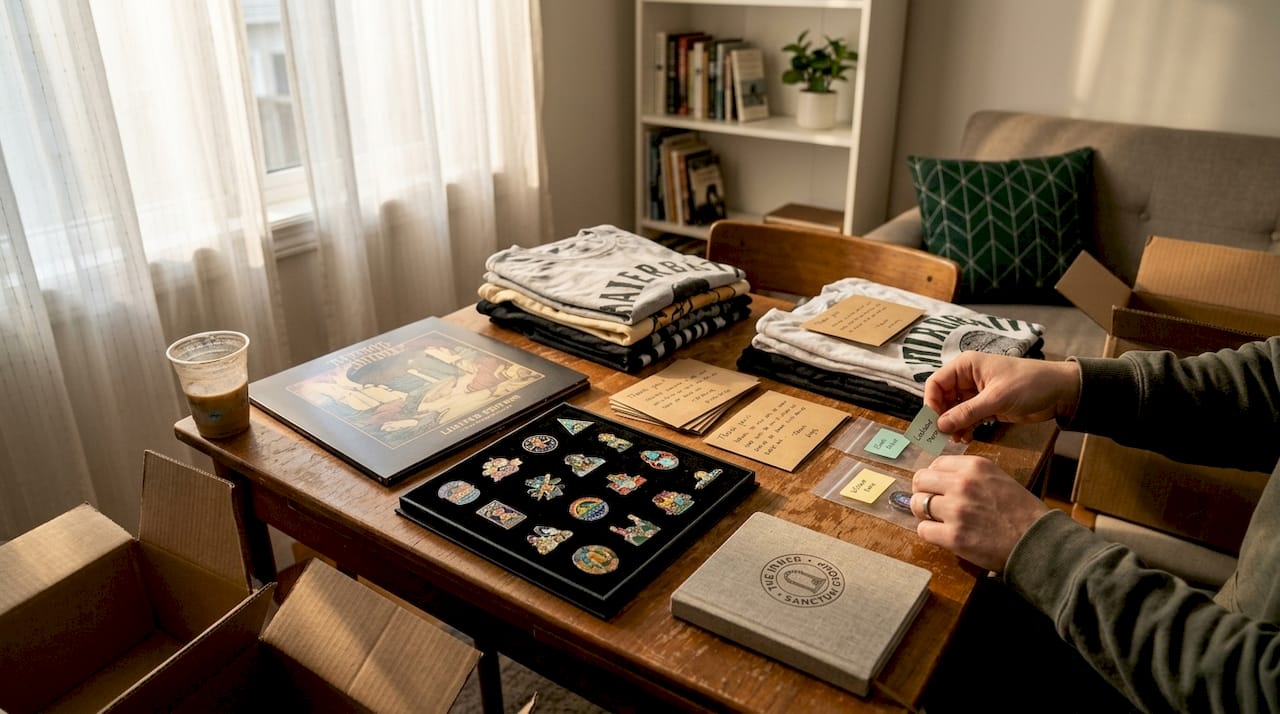
Lera Lynn’s TRUE FANS BUNDLE combines signed vinyl, custom lyric sheets, and exclusive apparel into a single purchase that rewards her most devoted supporters. Harry Mack’s signed bundle takes a similar approach, pairing memorabilia with personal touches that streaming simply cannot replicate.
Here is what makes bundles work:
- Combine physical and digital elements (signed vinyl plus a private stream link)
- Promote a clear end date or unit cap to reinforce scarcity
- Include something handwritten or one-of-a-kind to justify the premium price
- Announce bundles to your email list first, rewarding your most engaged fans
Exploring fan favourite bundles can give you further inspiration for structuring your own exclusive offerings.
Once you have considered exclusivity, another high-impact approach is using campaign-tied drops that harness specific events and fan milestones.
2. Campaign-tied releases: creating event-driven excitement
Tying a merch drop to a specific moment transforms a routine product launch into a cultural event for your fanbase. Album anniversaries, tour announcements, and livestream premieres all create natural hooks.
- Identify your anchor event: Album birthday, single release, or tour kickoff.
- Design exclusive items: Anniversary vinyl pressings, limited posters, or event-specific apparel that cannot be bought any other time.
- Bundle in access: Include a pay-per-view concert film, a private Q&A, or an acoustic session as part of the merch package.
- Tell the backstory: Share the story behind the record or the campaign. Emotional context drives purchases.
Carina Round’s 20-year album campaign sold out posters and exclusive vinyl through a pay-per-view concert film, proving that a well-told story around a release can generate sellout results even decades after the original launch.
Pro Tip: Set a campaign window of seven to ten days rather than leaving items available indefinitely. A clear deadline pushes fans who are on the fence to commit.
Understanding brand-building with merch and getting your merch store setup right are both essential before launching any campaign-tied drop.
After event-driven campaigns, the next level is designing a merch ladder, ensuring your store has something for every type of fan.
3. Merch ladders: accessible, mid-tier, and collector options
A merch ladder is a structured range of products at different price points and exclusivity levels. It ensures that a first-time listener can afford something, while a superfan can invest significantly.
| Tier | Examples | Price range | Fan type |
|---|---|---|---|
| Accessible | Stickers, badges, digital downloads | £2 to £10 | New or casual fans |
| Mid-tier | T-shirts, lyric tote bags, posters | £15 to £40 | Regular supporters |
| Collector | Signed vinyl, bespoke jackets, art prints | £60 to £150+ | Superfans and collectors |
Themed merch ladders aligned with album narratives boost engagement and sales significantly. The Damned’s punk artefacts and Mitski’s horror-influenced motifs are strong examples of how visual identity and emotional storytelling can make every tier feel cohesive and desirable.
- Align each tier’s launch with your album cycle for maximum relevance
- Use album artwork, colour palettes, and lyric references across all tiers
- Promote the collector tier sparingly to preserve its prestige
Pro Tip: Introduce your accessible tier first to build momentum, then reveal mid-tier and collector items progressively. This creates a sense of escalating excitement rather than overwhelming fans with everything at once.
Beyond creative structure, it is essential to know the business case for each item. Here is what you should know about profit margins and bestsellers.
Fan engagement merch by the numbers: margins and conversion rates
Knowing your numbers is not optional. It is the difference between a merch range that sustains your career and one that quietly drains your budget.
| Product | Typical margin | Notes |
|---|---|---|
| T-shirts | 50 to 70% | Consistent bestseller at live shows |
| Hoodies | 60 to 65% | Higher price point, strong perceived value |
| Pins and patches | 80 to 85% | Highest margin, easy impulse purchase |
| Signed vinyl | Variable | Premium pricing offsets lower volume |
Merch margins for musicians confirm that t-shirts return 50 to 70%, hoodies 60 to 65%, and pins an impressive 80 to 85%. These figures make small items an excellent entry point for any new merch range.
At live events, 10 to 15% of attendees typically purchase merch, and NFC-enabled products yield up to 37% interaction rates. Long-tail sales, where products continue selling steadily months after release, are particularly valuable for independent artists without major label marketing budgets.
“Consistent merch presence and long-tail word-of-mouth helped The Anchoress achieve 20,000 physical album sales without mainstream radio support.”
Reviewing fan favourite merch performance data and understanding the merch process explained will help you plan production runs that match realistic demand. You can also explore the merch design process to ensure your artwork is production-ready from the start. For broader merch margin benchmarks, independent resources offer useful comparisons across product categories.
Taking the numbers to heart, let us study artist-led case studies showing creative approaches and real results.
Standout case studies: real indie artists, innovative merch
Theory is useful. Proof is better. These artists demonstrate what is possible when merch strategy is treated as seriously as the music itself.
Noah Kahan’s limited drops, including his Stick Season flannel and signed vinyl releases, sell out rapidly and generate genuine resale culture. His approach combines thematic authenticity with charity tie-ins, which deepens the emotional connection fans feel when they purchase. It is not just a hoodie. It is a piece of a story they believe in.
“Independent artist The Anchoress achieved 20,000 physical album sales via long-tail word-of-mouth and a consistent, thoughtful merch presence.”
- Noah Kahan: Album-themed drops with charity components create community and urgency simultaneously
- The Anchoress: Sustained physical sales through consistent presence, proving merch can outperform streaming revenue over time
- Lera Lynn and Harry Mack: Signed bundles reward superfans and create a direct artist-to-fan financial relationship
Exploring merch for team branding can also inspire how you present your artist identity cohesively across every product in your range.
Now you have a toolbox of ideas. Let us summarise some practical tips to help you maximise results and avoid common pitfalls.
Pro tips and common pitfalls in merch engagement
Even the best merch strategy can unravel through avoidable mistakes. Here is what to watch for.
- Do not overuse “limited edition”: Overuse of the “limited” label dilutes urgency. Reserve it for genuinely scarce runs, or fans will stop believing it.
- Keep sets focused: Shorter, well-structured performance sets with clear merch calls to action can boost sales by up to 28%.
- Use NFC and QR codes wisely: Non-shareable links ensure exclusivity and make engagement measurable. Fans appreciate content that feels made just for them.
- Test before scaling: Always run a small batch of any new product before committing to a large order. Demand is rarely what you expect on the first attempt.
- Respect eco-impact: Avoid overproduction. Fans, particularly in indie and folk communities, value ethical practices and will notice if you are wasteful.
Pro Tip: Build a simple pre-order or interest list before any new drop. Even 50 responses tells you whether a product is worth producing, and it creates anticipation before the item even exists.
Reading the indie merch production guide will help you understand the full production process, while NFC exclusivity tools can add a tech-forward layer to your physical products.
Customise your fan engagement merch with ISG
You now have the strategy. The next step is finding a production partner that can bring it to life without requiring you to buy stock upfront or manage fulfilment yourself.
The Inner Sanctum Group handles everything from design preparation through to printing, packing, and shipping, so you can focus on your music. Whether you are starting with a customisable creator t-shirt for your accessible tier, exploring logo t-shirt options for your core range, or going bold with an oversized t-shirt range for collector appeal, ISG offers flexible, small-batch solutions built for independent creators. Your fans are ready. Your merch should be too.
Frequently asked questions
What makes fan engagement merch successful?
Narrative and album-themed merch consistently outperforms generic logo products for emotional connection. Successful merch ties into your story, uses genuine scarcity or tech unlocks, and resonates with what your fanbase actually cares about.
How do limited edition drops encourage fans to buy?
Limited edition drops create urgency and a sense of belonging, often resulting in faster sellouts and stronger community buzz. Exclusivity for true fans is a proven driver of both purchase decisions and long-term loyalty.
Are eco-friendly merch options popular with indie fans?
Yes, particularly in folk, indie, and alternative communities. Sustainable materials appeal strongly to these audiences, though production costs are typically higher than standard options, so factor that into your pricing.
What are realistic merch conversion rates at live shows?
Based on current industry data, 10 to 15% of attendees at live events will purchase merch. Positioning your table well, using clear signage, and mentioning merch from the stage all help push that figure towards the higher end.
Recommended
- Merchandising for independent musicians: create and sell fan favourite – The Inner Sanctum Group
- How merch supports team branding for indie musicians – The Inner Sanctum Group
- Boost your personal brand with creative merch ideas in 2026 – The Inner Sanctum Group
- How merch boosts student engagement and community spirit – The Inner Sanctum Group