
The merch process explained for independent creators 2026
Merchandising feels like a luxury reserved for creators with deep pockets, right? Wrong. The barrier to entry has collapsed thanks to print-on-demand technology that eliminates upfront inventory costs entirely. Independent musicians, artists, and influencers can now design, produce, and sell custom merchandise without risking a penny on unsold stock. This article walks you through the complete merch process step by step, from design creation to fulfilment, revealing how you can launch a profitable merch line in 2026 with minimal financial risk and maximum creative control.
Table of Contents
- Understanding The Merch Process For Independent Creators
- Comparing Print-On-Demand And Bulk Production For Merch
- Key Considerations And Common Pitfalls In The Merch Process
- Maximising Merch Success: Practical Tips For 2026 Independent Creators
- Discover Unique Customisable Merch At The Inner Sanctum Group
Key takeaways
| Point | Details |
|---|---|
| Zero upfront costs | Print-on-demand platforms eliminate inventory investment, producing items only after purchase |
| Five core steps | Design creation, product selection, store setup, marketing execution, and automated fulfilment |
| Profit margins vary | POD typically offers 20-40% margins, whilst bulk buying can reach 70-80% but carries inventory risk |
| Marketing drives success | Niche targeting and active social media engagement matter more than passive product listings |
| Hybrid approach works | Test designs with POD, then bulk produce bestsellers for live events and higher margins |
Understanding the merch process for independent creators
The merch process for independent creators using print-on-demand involves designing custom products, integrating with POD platforms like Printful or Printify for production and fulfilment, and selling via integrated e-commerce stores like Shopify or Etsy without upfront inventory costs. This model transforms how indies monetise their fanbase, removing the traditional barriers that kept merch exclusive to established acts with capital.
Here’s the complete framework:
-
Create original designs that reflect your brand identity whilst respecting copyright and trademark laws. Your artwork must be entirely your own or properly licenced, avoiding recognisable logos, characters, or phrases that could trigger legal action.
-
Select products that align with your audience preferences. T-shirts and hoodies dominate sales, but mugs, phone cases, and tote bags offer higher profit margins per item and appeal to fans seeking variety.
-
Set up your e-commerce store by connecting a POD platform to Shopify, Etsy, or your existing website. The integration handles product listings, inventory tracking, and order routing automatically, requiring minimal technical knowledge.
-
Market actively through social media channels where your audience already engages. Passive listings rarely generate sales. You need consistent promotion, behind-the-scenes content, and direct calls to action that make purchasing feel like supporting your creative journey.
-
Let POD handle fulfilment once orders arrive. The platform prints your design, packs the item, and ships directly to customers under your brand name. You never touch physical inventory or manage logistics.
Your profit comes from the difference between your retail price and the platform’s base cost plus fees. Most creators start with 3-5 products to test market response before expanding their catalogue. The merch store setup guide offers detailed technical steps for launching your first store.
Common platforms include Printful and Printify for production, Shopify for dedicated stores, and Etsy for marketplace visibility. Each charges different fees and offers varying product quality, so research matters. The indie artist merch design process explores how to create designs that convert browsers into buyers.
Pro Tip: Order samples of every product before listing them for sale. Print quality, fabric feel, and colour accuracy vary dramatically between platforms and can make or break your brand reputation. Spending £30-50 on samples saves you from customer complaints and returns later.
Comparing print-on-demand and bulk production for merch
POD offers zero upfront costs and low risk for testing designs, whilst bulk production delivers higher margins of 70-80% but requires inventory investment and carries obsolescence risk. Understanding these trade-offs helps you choose the right approach for your current stage and goals.
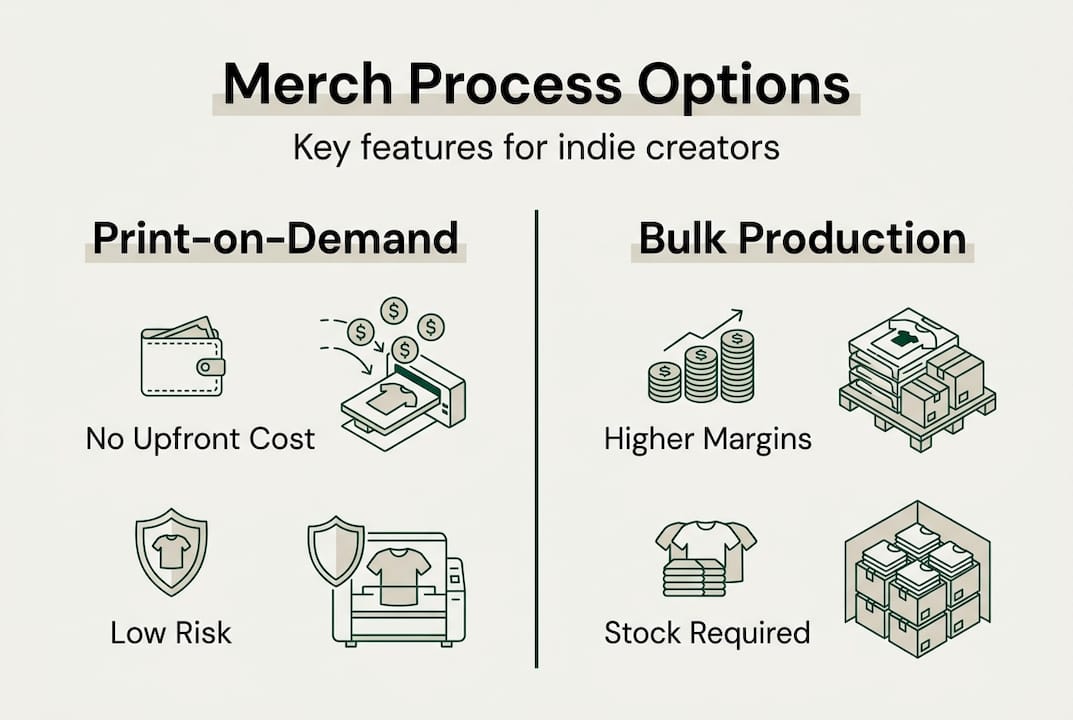
| Factor | Print-on-Demand | Bulk Production |
|---|---|---|
| Upfront cost | £0 | £200-2,000+ depending on quantity |
| Profit margin | 20-40% | 70-80% |
| Risk level | Minimal | High (unsold stock) |
| Best for | Online sales, testing | Live events, proven designs |
| Fulfilment time | 3-7 days | Immediate (you stock it) |
Print-on-demand advantages include immediate market entry, product variety without risk, and freedom to experiment with designs. You can list 50 different designs across 10 product types without spending anything. If a design flops, you simply remove it. This flexibility proves invaluable for new creators still discovering what resonates with their audience.

Bulk production shines when you’ve validated demand and need better margins for in-person sales. Buying 100 t-shirts at £5 each and selling them for £20 yields £15 profit per unit, compared to £6-8 with POD. For touring musicians or creators attending conventions, this difference adds up quickly. Physical inventory also enables immediate gratification, no waiting for shipping.
The risks with bulk buying include capital tied up in stock, storage costs, and the painful reality of boxes filled with unsold medium-sized shirts in colours nobody wanted. Fashion trends shift, your design aesthetic evolves, and that inventory becomes dead weight. Many creators learned this lesson the expensive way.
A hybrid approach combines both methods strategically. Launch new designs through POD to gauge interest without risk. Once a design consistently sells 20-30 units, bulk produce it for live shows whilst keeping it available via POD for online customers. This strategy maximises margins where it matters whilst maintaining comprehensive online catalogues.
The creator merch management guide explores inventory strategies and when to transition between models. Consider your selling channels, audience buying patterns, and available capital before committing to either approach exclusively.
Pro Tip: Start with POD exclusively for your first 6-12 months. Collect sales data, identify bestsellers, and understand your audience’s size preferences and product interests before investing in bulk inventory. Patience here prevents costly mistakes.
Key considerations and common pitfalls in the merch process
Variable print quality, shipping delays, and copyright risks plague 70% of EU and UK POD sellers who fail compliance checks, whilst design errors below 300 DPI resolution and missing bleed areas cause production rejections. These operational hazards can derail your merch business before it gains traction.
Copyright and trademark compliance represents the biggest legal landmine. Using recognisable brand names, logos, song lyrics, or character likenesses without permission triggers intellectual property strikes that can permanently ban your account. Platforms like Etsy and Redbubble actively scan listings, and rights holders aggressively protect their assets. Create original work or licenced designs only.
Print quality varies wildly between POD providers and even between production facilities within the same network. Colours shift, prints crack after washing, and fabric weights differ from specifications. This inconsistency damages your reputation when customers receive subpar products. Always order samples before launching, and reorder periodically to catch quality drift.
Shipping delays frustrate customers accustomed to Amazon Prime speeds. POD typically requires 3-7 days for production plus shipping time, meaning 1-2 weeks total delivery in the UK. International orders stretch longer. Set clear expectations on product pages and confirmation emails to prevent complaints and negative reviews.
Design technical requirements trip up beginners:
- Minimum 300 DPI resolution for sharp prints
- Proper bleed area extending 3-5mm beyond trim lines
- CMYK colour mode for accurate reproduction
- Vector formats for scalability across product sizes
Common pitfalls beyond technical issues include choosing oversaturated niches, underpricing products to compete rather than reflect value, neglecting SEO optimisation for discoverability, and using poor quality mockup images that fail to showcase designs effectively. The creative merch ideas guide helps you stand out in crowded markets.
Marketing represents the difference between success and failure. Passive listings generate minimal sales. You must actively promote through social media, email lists, and content that connects your merch to your creative identity. Fans buy to support you and display affiliation, not because they need another t-shirt.
Pricing must account for all costs: platform fees, payment processing, advertising spend, and your time. Many creators price at cost plus 50% and wonder why they’re not profitable after accounting for marketing expenses. Calculate backwards from a realistic profit margin to ensure sustainability.
“Intellectual property violations result in immediate account suspension on major platforms, with no appeals process and forfeiture of pending payments. One strike often means permanent removal, destroying months of work instantly.” – POD compliance expert
Pro Tip: Run every design through reverse image searches and trademark databases before listing. Spend 10 minutes checking rather than risking your entire store over an innocent similarity to existing intellectual property.
Maximising merch success: practical tips for 2026 independent creators
POD proves ideal for indies because low barriers enable quick launch and monetisation of existing audiences, with success depending on niche design focus and marketing execution over operational complexity. Smart creators concentrate energy on creativity and promotion rather than logistics.
Start with a focused product range of 2-3 items rather than overwhelming customers with choices. Analysis shows t-shirts generate 70-80% of merch revenue for independent creators, making them the essential foundation. Add one complementary product like hoodies for cold weather fans or mugs for year-round appeal.
| Product Type | Typical Margin | Revenue Share | Best For |
|---|---|---|---|
| T-shirts | 25-35% | 70-80% | Core offering, broad appeal |
| Hoodies | 30-40% | 10-15% | Higher price point, seasonal |
| Mugs | 40-50% | 5-8% | High margin, gift purchases |
| Phone cases | 45-55% | 3-5% | Accessories, impulse buys |
Platforms like Printify offer no-cost pop-up stores that let you test the market without committing to monthly Shopify fees. Launch here, validate with 20+ sales demonstrating genuine demand, then consider upgrading to a dedicated store with custom branding if growth justifies the investment.
Scaling your merch business follows these steps:
- Launch 3-5 designs across 2-3 product types via POD
- Promote consistently through your existing channels for 90 days
- Analyse sales data to identify bestselling designs and products
- Expand successful designs to additional product types
- Consider bulk production for proven winners if doing live events
- Continuously test new designs whilst maintaining core catalogue
Marketing essentials that drive merch sales:
- Niche targeting that speaks directly to your specific audience’s identity and values
- Behind-the-scenes content showing design process and creative inspiration
- User-generated content from fans wearing or using your merch
- Limited edition releases creating urgency and exclusivity
- Bundling merch with digital products or experiences for added value
Track metrics beyond just sales volume. Monitor which traffic sources convert best, what times of day generate purchases, and how different price points affect conversion rates. This data informs smarter decisions about where to focus promotional energy. The brand revenue support guide explores financial strategy for sustainable growth.
Sample every product before selling it, even if you’ve used the platform before. Production facilities change, suppliers rotate, and quality drifts over time. Discovering problems after customers complain costs more in refunds and reputation damage than the £20-30 sampling investment.
Pro Tip: Prioritise high-margin accessories like mugs and phone cases in your marketing even though t-shirts sell more volume. The superior margins per unit make them disproportionately valuable to your bottom line, and they appeal to fans who already own your shirts.
Discover unique customisable merch at The Inner Sanctum Group
Now that you understand the complete merch process, seeing quality examples helps visualise what’s possible for your own line. The Inner Sanctum Group offers professionally designed customisable products that demonstrate the standard independent creators should aim for when building their merch catalogues.
Explore options like the ISG Creator 2.0 T-Shirt in 180 GSM weight, the minimalist Output logo T-Shirt for understated branding, or the premium ISG E220 oversized T-Shirt in 220 GSM for superior quality feel. Each product showcases the attention to fabric weight, print placement, and design execution that separates professional merch from amateur efforts. Whether you’re sourcing inspiration for your own designs or seeking reliable merch partners, examining established quality standards elevates your entire approach to merchandise creation and helps you deliver products your fans will actually wear and use proudly.
FAQ
What is print-on-demand and how does it benefit independent creators?
Print-on-demand means products are manufactured only after a customer purchases them, eliminating the need to buy and store inventory upfront. This removes financial risk for independent creators who can test designs and build merch catalogues without capital investment. You only pay production costs when you’ve already collected payment from customers, making it a zero-risk way to monetise your audience.
Which products typically perform best for indie merch lines?
T-shirts generate 70-80% of revenue for most independent creators, making them the essential foundation of any merch line. Hoodies perform well as premium offerings, whilst mugs and phone cases deliver higher profit margins per unit despite lower sales volume. Start with t-shirts and one high-margin accessory, then expand based on actual sales data rather than assumptions about what fans want.
How can I avoid common pitfalls like copyright issues and poor quality?
Create entirely original designs or use properly licenced artwork, avoiding any recognisable brands, characters, or phrases that could trigger intellectual property strikes. Order samples of every product before listing it for sale to verify print quality, colour accuracy, and material feel meet your standards. Use transparent pricing that accounts for all fees and actively market your merch rather than relying on passive discovery to generate sales.
Is it better to start with print-on-demand or bulk merch production?
Print-on-demand offers the best starting point because it requires zero upfront investment and lets you test designs without risk. Bulk production delivers 70-80% profit margins compared to POD’s 20-40%, but demands capital investment and carries the risk of unsold inventory. Many successful creators use a hybrid approach, testing designs via POD then bulk producing proven bestsellers for live events where higher margins matter most.
Recommended
- How merch supports independent artists’ brand and revenue – The Inner Sanctum Group
- Merch store setup guide for independent artists 2026 – The Inner Sanctum Group
- Master the design process for indie artist merch in 2026 – The Inner Sanctum Group
- What is creator merch management? A 2026 guide for artists – The Inner Sanctum Group