
What is merch production: a guide for indie creators
Many independent creators believe selling merch means investing thousands upfront in stock, managing inventory, and risking unsold products gathering dust. That misconception keeps talented musicians, podcasters, and artists from tapping into a revenue stream that could fund their next project. Modern merch production methods have demolished those barriers entirely. Print-on-demand services now let you design, list, and sell custom products with zero upfront cost or inventory risk. This guide walks you through production methods, popular products, profit realities, and strategies to launch successful merch sales that support your creative work without draining your bank account.
Table of Contents
- Key takeaways
- Understanding merch production methods
- Popular merch products and pricing for indie creators
- Profit margins, challenges, and quality considerations
- Strategies for successful merch production and sales
- Explore premium merch and customisable products at The Inner Sanctum Group
- Frequently asked questions
Key Takeaways
| Point | Details |
|---|---|
| No upfront cost | Print on demand enables design and sale of products without any upfront costs or inventory risk. |
| Multiple production methods | Different methods suit various order volumes and budgets, ranging from POD to small batches and bulk printing. |
| Popular merch items | T shirts and hoodies dominate sales with impulse items such as stickers performing well for quick wins. |
| Branding and testing | Success hinges on branding, marketing and testing designs to identify winning products and optimise margins. |
Understanding merch production methods
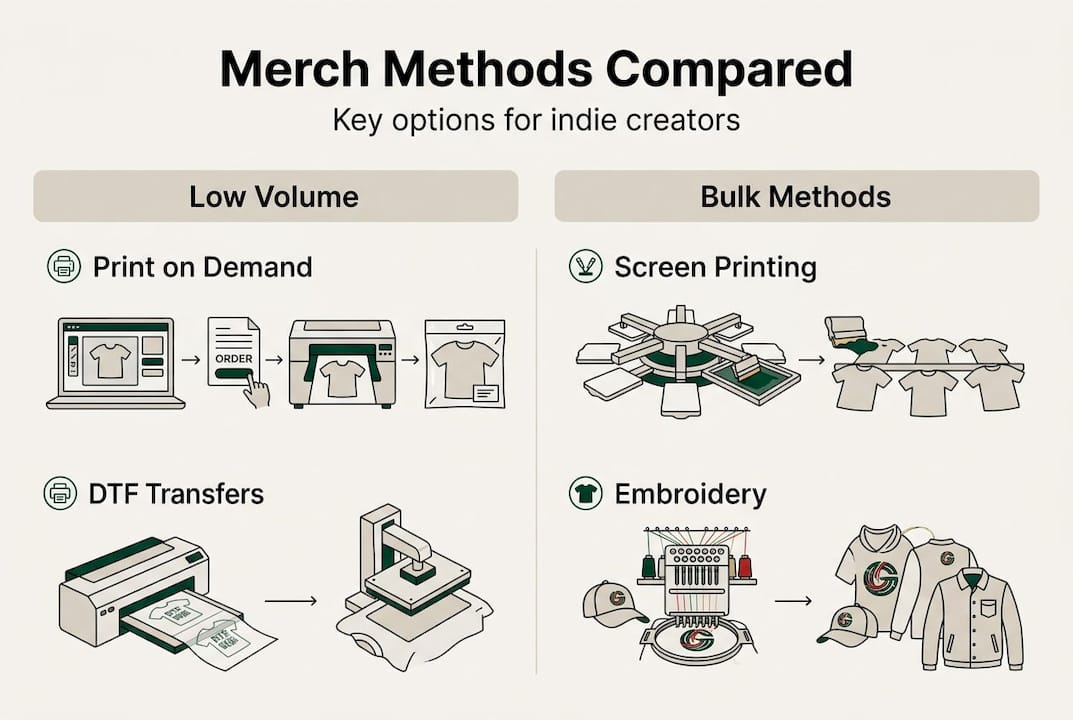
Three main production approaches serve independent creators, each with distinct workflows and trade-offs. Print-on-demand services like Printful, Printify, and Spring handle everything after a customer clicks buy. You upload designs to their platform, integrate with your store, and they print, pack, and ship each order individually. No inventory sits in your garage. No money leaves your account until a fan purchases something. This model revolutionised merch for creators without capital or storage space.
Bulk screen printing takes the opposite approach. You pay a printer upfront to produce 50, 100, or 500 identical items at significantly lower per-unit costs. Screen printing excels for live events where you sell directly to audiences, or when you’ve validated a design through POD and want better margins. The catch? You’re responsible for storing inventory, managing stock levels, and absorbing losses if items don’t sell. Bulk printing economics favour established creators with predictable demand and cash reserves.
Small-batch methods like direct-to-film (DTF) transfers bridge the gap, producing 25-100 units at moderate costs. These techniques suit creators planning small tours, limited releases, or testing multiple designs without committing to massive print runs. Quality typically matches or exceeds POD, and you gain inventory control without the financial exposure of large bulk orders.
| Method | Order volume | Cost per unit | Upfront payment | Inventory risk | Best for |
|---|---|---|---|---|---|
| Print-on-demand | Single items | £15-25 | None | Zero | Testing designs, ongoing sales |
| Small-batch printing | 25-100 units | £8-15 | Moderate | Low | Tours, limited releases |
| Bulk screen printing | 100+ units | £5-10 | High | Significant | Proven designs, live events |
Choosing the right method depends on where you are in your creative journey. New to merch? POD lets you experiment without financial risk. Building an audience? Small batches give you inventory for shows without breaking the bank. Established with proven sellers? Bulk printing maximises profit margins on your hits.
Pro Tip: Start with POD to test 5-10 designs over three months. Track which products and designs sell consistently, then transition those winners to small-batch or bulk production whilst keeping experimental designs on POD. This hybrid approach minimises risk whilst optimising margins on validated products.
The production method you choose shapes everything from pricing strategy to marketing approach. POD’s flexibility supports independent artists’ brand and revenue growth by removing barriers to entry, whilst bulk methods reward creators who’ve already built demand.
Popular merch products and pricing for indie creators
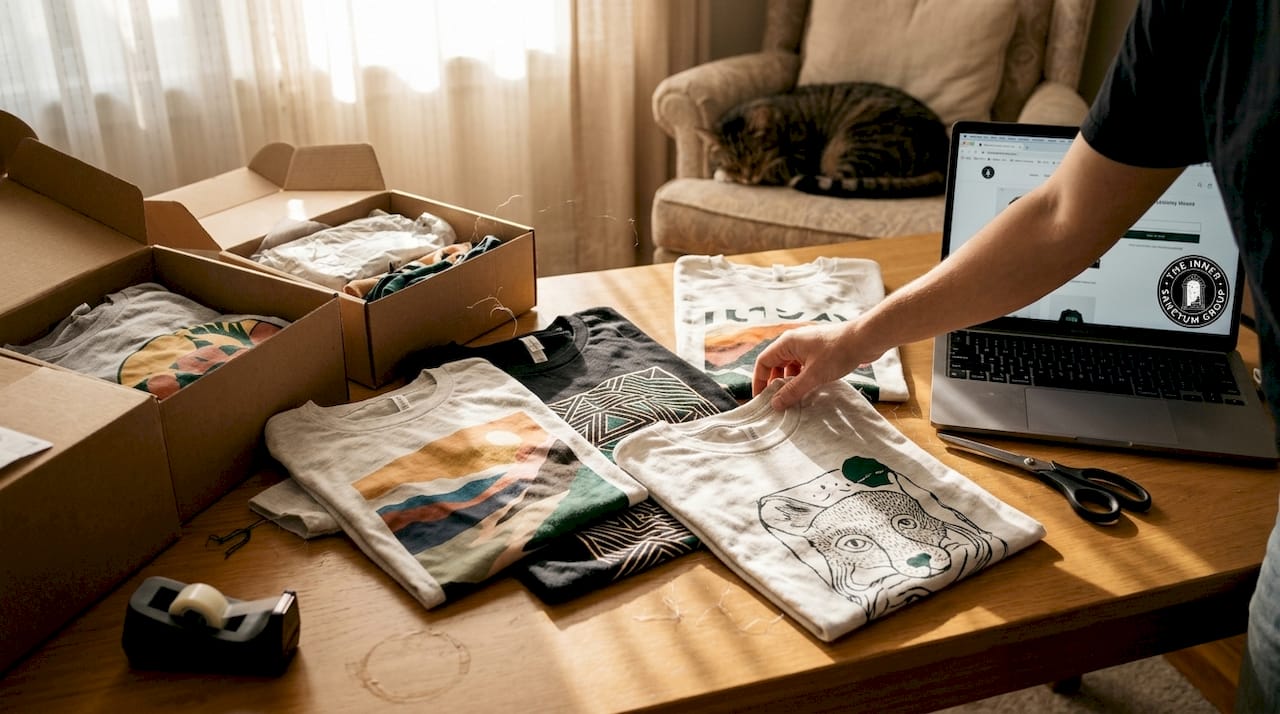
T-shirts dominate merch sales for good reason. They’re affordable to produce, universally worn, and serve as walking advertisements for your brand. Research shows t-shirts generate over 70% of revenue for most independent creators. A basic tee costs £12-15 to produce via POD and retails for £20-28, delivering healthy margins without pricing out fans. Offer both fitted and unisex cuts to maximise appeal across your audience.
Hoodies rank second in popularity, particularly for creators in music and podcasting where fans seek deeper connection. Production costs run £20-28 through POD, with retail prices typically £35-50. The higher price point means fewer total sales than tees, but profit per item often exceeds budget products. Hoodies work especially well for autumn and winter releases, or as premium offerings for dedicated supporters.
Impulse items like stickers transform browsing fans into buyers. At £2-5 retail with £0.50-1.50 production costs, stickers require minimal commitment from customers. Many creators report sticker purchases leading to larger orders later as fans test quality before investing in apparel. Keyrings, badges, and coasters occupy similar price points and serve the same psychological function.
| Product | POD cost | Retail price | Profit margin | Sales volume |
|---|---|---|---|---|
| Basic t-shirt | £12-15 | £20-28 | 30-45% | High |
| Premium hoodie | £20-28 | £35-50 | 25-40% | Moderate |
| Sticker pack | £0.50-1.50 | £2-5 | 60-70% | Very high |
| Tote bag | £8-12 | £15-22 | 30-40% | Moderate |
| Mug | £7-10 | £12-18 | 25-35% | Low |
Start your merch line with three items covering different price points: a core t-shirt design at £22-25, a premium hoodie at £38-45, and an impulse item like stickers at £3-4. This range lets fans engage at their comfort level whilst you gather data on what resonates. Avoid spreading too thin with ten products at launch. Focus beats variety when you’re building initial momentum.
Hats appeal to specific audiences but rarely match t-shirt volumes. Mugs and drinkware face practical shipping challenges and higher damage rates. Generic items like plain sleepwear or basic accessories struggle because fans want merch that represents your unique brand. Every product should feature distinctive designs that fans can’t get elsewhere.
Pro Tip: Include one impulse item under £5 in every product line. Fans hesitant about a £25 t-shirt often grab a £3 sticker, giving you a customer relationship and data point. Many return later for bigger purchases once they’ve experienced your quality and branding firsthand.
Pricing strategy matters as much as product selection. Research competitor pricing in your niche, factor in your production costs, and position yourself where quality meets affordability. Underpricing signals low quality. Overpricing alienates emerging fans. Find the sweet spot where margins sustain your creative work without pricing out the audience you’re building. For more product ideas that strengthen your brand, explore creative merch ideas tailored to independent creators.
Profit margins, challenges, and quality considerations
Realistic profit expectations prevent disappointment and guide smart decisions. POD margins typically range from 20-50% depending on product type and retail pricing. Beginners often earn £0-500 monthly in their first six months as they build audience and refine designs. Intermediate creators with established followings generate £500-2,000 monthly. The top 3.8% of POD sellers exceed £50,000 monthly, but reaching that level demands significant audience size, marketing skill, and proven product-market fit.
Bulk printing improves per-unit margins to 50-70% but introduces inventory risk. Printing 100 hoodies at £12 each costs £1,200 upfront. Sell them at £40 and you’ve made £2,800 profit. Sell only 30 and you’ve lost money whilst storing 70 hoodies. The math works brilliantly for proven designs and guaranteed sales opportunities like tours. It punishes speculation and unvalidated products.
Quality issues plague POD services with frustrating regularity. Common problems include colour misalignment where prints don’t match your digital files, fading after a few washes, wrong items shipped to customers, and delays stretching 3-7 days beyond promised delivery. Printful operates in-house facilities, delivering more consistent quality but at premium prices. Printify connects you to a network of suppliers, offering cheaper options with variable quality depending on which facility fulfils your order.
Mitigating quality problems requires active management:
- Order samples of every product and design before listing them for sale
- Inspect print quality, colour accuracy, and garment construction firsthand
- Choose premium blank garments when POD platforms offer quality tiers
- Read recent reviews of specific POD suppliers and avoid those with recurring complaints
- Respond immediately to customer quality issues with replacements or refunds
- Build quality expectations into your pricing so occasional reships don’t destroy margins
Pro Tip: Budget 5-8% of revenue for quality issues, reships, and customer service. POD isn’t passive income despite marketing claims. Successful creators actively monitor orders, address problems quickly, and maintain communication with both suppliers and customers to protect their reputation.
The harsh reality? Most creators earn little from merch initially. Building profitable sales requires design skills, marketing effort, audience development, and persistence through slow months. POD removes financial barriers but creates time and skill barriers instead. You’re trading money risk for effort investment. For comprehensive guidance on setting up your operation, review this merch store setup guide covering technical and strategic foundations.
Quality separates creators who build sustainable merch income from those who damage their brand with subpar products. Every disappointed customer tells others. Every delighted customer becomes a walking advertisement and potential repeat buyer. Invest time in quality control even when it feels tedious. Your reputation depends on it.
Strategies for successful merch production and sales
Launching merch successfully demands more than uploading designs to a POD platform. Start with your own store using Shopify, Bandcamp, or similar platforms that let you control customer data and branding. Marketplaces like Redbubble or Society6 seem easier but claim your customer relationships and limit brand control. Owning your store costs slightly more upfront but pays dividends as you build an audience you can market to directly.
Follow this sequence to minimise risk whilst gathering crucial data:
- Create 3-5 initial designs reflecting your unique style and brand identity
- List them on your store using POD fulfilment with no inventory investment
- Drive traffic through your existing audience: social media, email list, live events
- Track sales data for 8-12 weeks to identify which designs and products resonate
- Transition proven sellers to small-batch or bulk production for better margins
- Continue testing new designs through POD whilst scaling winners
Timing merch releases strategically amplifies results. Launch new designs alongside content releases, tour announcements, or significant milestones when audience attention peaks. A podcast episode about a specific topic pairs perfectly with related merch. An album release creates natural demand for commemorative products. Coordinate your merch calendar with your content calendar for maximum impact.
Strong branding differentiates your merch from generic products. Fans buy merch to display identity and affiliation, not just because they need another t-shirt. Your designs should communicate something specific about your brand, message, or community. Inside jokes, memorable quotes, distinctive visual styles, and niche references create products fans genuinely want to own and display.
Pro Tip: Use analytics to track which traffic sources convert to sales, which products sell together, and which designs generate repeat customers. Google Analytics and your store platform provide this data. Review it monthly and adjust your product mix, marketing focus, and design direction based on actual behaviour, not assumptions.
Marketing tactics that drive merch sales:
- Share behind-the-scenes content showing design process and product creation
- Feature fans wearing your merch on social media to build social proof
- Offer exclusive designs or early access to email subscribers
- Create limited releases with specific end dates to generate urgency
- Collaborate with other creators for cross-promotion and expanded reach
- Include merch links in video descriptions, podcast show notes, and social bios
Avoid these common pitfalls that sabotage merch success:
- Launching too many products initially instead of focusing on core items
- Copying trending designs instead of developing unique brand aesthetics
- Neglecting product photography and relying on generic mockups
- Ignoring customer service and letting quality issues damage your reputation
- Expecting passive income without active marketing and audience building
- Pricing too low and training your audience to expect bargain-basement rates
Consider how merch fits your broader creative business. It’s one revenue stream alongside others like performances, content monetisation, sponsorships, and direct fan support. Successful creators integrate merch naturally into their overall brand rather than treating it as a separate profit centre. For guidance on building your online presence, explore this online merch store guide covering platform selection and optimisation.
Merch also strengthens community identity. Fans wearing your products signal belonging to something larger than themselves. That psychological element drives purchases beyond simple product utility. When you understand merch as community building rather than just product sales, your design and marketing decisions shift accordingly. Learn how merch supports team branding for musicians building collective identity.
Explore premium merch and customisable products at The Inner Sanctum Group
Quality merch transforms fans into walking ambassadors for your creative work. The Inner Sanctum Group specialises in premium, customisable products designed specifically for independent creators who refuse to compromise on quality.
Our black tote bag collection combines durability with distinctive design, whilst our core logo hoodies deliver premium comfort that fans actually want to wear repeatedly. Every product supports your brand identity whilst maintaining the quality standards your audience expects. Explore our personalisation options to create truly unique merch that reflects your creative vision without the complexity of managing production yourself.
Frequently asked questions
What is merch production?
Merch production encompasses the entire process of creating physical products featuring your brand, from initial design through manufacturing and delivery to customers. For independent creators, it typically involves either print-on-demand services that produce items individually after purchase, or bulk manufacturing where you order inventory upfront. The goal is generating revenue and building brand visibility through products fans want to own and display.
How does print-on-demand work for independent creators?
You upload designs to a POD platform like Printful or Printify, which integrates with your online store. When customers purchase products, the POD service automatically receives the order, prints your design on the selected item, packs it, and ships directly to your customer. You pay only the production cost per item, keeping the difference between that and your retail price as profit. No inventory, no upfront costs, no shipping logistics on your end.
What are the most profitable merch products for indie artists?
T-shirts generate over 70% of merch revenue for most independent creators due to universal appeal and affordable production costs. Hoodies rank second, offering higher profit per item despite lower sales volumes. Impulse items like stickers, keyrings, and badges deliver excellent margins and convert hesitant browsers into customers. Start with these core products before expanding into niche items.
How can I ensure good quality when using print-on-demand?
Order samples of every product and design before listing them for sale, examining print quality and colour accuracy firsthand. Choose reputable providers like Printful for consistent quality, even if costs run slightly higher than alternatives. Respond immediately to customer quality issues with replacements or refunds to protect your reputation. Budget 5-8% of revenue for quality problems and reships, accepting that occasional issues are inherent to POD models.
Which platform is best for indie creators to sell merch online?
Own-store solutions like Shopify or Bandcamp give you complete control over customer data, branding, and the shopping experience. These platforms cost more initially but let you build direct relationships with fans and market to them over time. Avoid marketplaces like Redbubble that claim customer data and limit your brand control, even though they seem easier initially. Owning your platform pays dividends as your audience grows.
Recommended
- How merch supports team branding for indie musicians – The Inner Sanctum Group
- How merch supports independent artists’ brand and revenue – The Inner Sanctum Group
- Master the design process for indie artist merch in 2026 – The Inner Sanctum Group
- What is creator merch management? A 2026 guide for artists – The Inner Sanctum Group
- 7 Essential Music Marketing Tips 2025 for Indie Labels - Blog - Music24.com
- Sublimation for Promotional Items: Boosting Customisation and Value – SubliBlanks Ltd