
Merchandising for independent musicians: create and sell fan favourites
Many independent musicians believe merchandising is only for established acts with large budgets and dedicated teams. This misconception prevents countless talented artists from tapping into one of the most powerful tools for fan engagement and revenue generation. The truth is, with the right approach and modern platforms, creating and selling merchandise has never been more accessible. This guide reveals practical strategies for designing compelling merch, choosing effective sales channels, promoting your products authentically, and building a sustainable merchandising operation that strengthens your brand whilst generating meaningful income.
Table of Contents
- Key takeaways
- Why merchandising matters for independent musicians
- Choosing and designing merch that resonates with fans
- Effective sales channels for indie artist merchandise
- Promoting your merchandise to engage and grow your fanbase
- Explore customisable merch options at The Inner Sanctum Group
- Frequently asked questions about merchandising for independent musicians
Key Takeaways
| Point | Details |
|---|---|
| Fan loyalty through merch | Merchandise creates a tangible link that strengthens fan loyalty and broadens brand visibility, turning fans into walking ambassadors. |
| Direct revenue and branding | Merchandising provides a direct revenue stream independent of streaming platforms while reinforcing your branding and funding tours and creative projects. |
| Audience driven designs | Understanding what your audience values and surveying engaged followers helps you create must have items that fans genuinely want to own. |
| Sales channels maximise reach | Using multiple sales channels extends reach and increases profit opportunities for merchandise. |
Why merchandising matters for independent musicians
Merchandise creates a tangible bridge between you and your audience that streaming platforms simply cannot replicate. When fans wear your T-shirt or carry your tote bag, they become walking ambassadors for your music, sparking conversations and expanding your reach organically. This physical connection transforms passive listeners into active community members who feel personally invested in your success.
Beyond emotional engagement, merchandising supports brand development and creates additional income for independent musicians navigating an industry where streaming royalties alone rarely sustain a career. Merch sales at gigs can cover petrol costs for your next tour. Online store revenue funds studio time for your next release. These aren’t trivial amounts when managed strategically.
Your merchandise also serves as a powerful branding tool in an oversaturated marketplace. Distinctive designs that reflect your musical identity help audiences remember you amongst thousands of competing artists. A well-designed logo on quality apparel communicates professionalism and commitment to your craft.
Consider these fundamental benefits:
- Direct revenue stream independent of streaming platforms or label deals
- Physical reminder of live show experiences that strengthens emotional bonds
- Marketing tool that extends your visual identity into daily life
- Community builder that helps fans identify fellow supporters
- Funding mechanism for tours, recordings, and creative projects
Successful merchandising requires understanding what your specific fanbase values. Survey your most engaged followers about their preferences. Notice what they already wear to your shows. Pay attention to which social media posts generate the most excitement. This intelligence transforms generic products into must-have items that fans genuinely want to own and display proudly.
“The best merchandise doesn’t just display your logo. It tells a story that resonates with the values and identity your fans see in themselves when they support your music.”
Choosing and designing merch that resonates with fans
Selecting the right products begins with analysing your audience demographics and lifestyle. University students might prefer affordable T-shirts and tote bags for daily use. Older fans with disposable income may invest in premium hoodies or limited edition vinyl packages. Your genre influences expectations too. Punk fans expect bold, provocative designs whilst folk audiences might appreciate subtle, artistic imagery.
Popular merchandise categories include:
- T-shirts in various cuts and colours to suit different preferences
- Hoodies and jumpers for colder climates and higher price points
- Tote bags that combine practicality with visible branding
- Hats and beanies for compact, affordable options
- Enamel pins and patches for collectors and customisation enthusiasts
- Posters and prints for bedroom and studio decoration
Your design process should start with your existing visual identity. If you have recognisable album artwork, band logos, or lyrical phrases that fans quote regularly, these become natural starting points. Authenticity matters more than polish. A hand-drawn design that captures your genuine aesthetic will outperform slick corporate graphics that feel disconnected from your music.

Aligning merch design with your brand and fan interests maximises engagement and sales by creating products people actually want to wear and use. Quality considerations extend beyond aesthetics. Uncomfortable fabrics or poorly printed designs damage your reputation and waste money. Research garment weights, printing methods, and durability before committing to production.
Collaboration expands creative possibilities. Partner with visual artists whose style complements your music. Commission designs from fans through contests that generate excitement whilst sourcing fresh ideas. Many print-on-demand platforms offer customisation tools that let you experiment without design expertise, though professional input elevates final results.
Pro Tip: Before investing in large production runs, create samples and wear them yourself for several weeks. Test how designs hold up through washing, how comfortable garments feel during long wear, and whether colours match your expectations. Then share prototypes with a small group of trusted fans to gather honest feedback about appeal, sizing, and pricing expectations.
Effective sales channels for indie artist merchandise
Diversifying where you sell merchandise reduces dependency on any single platform whilst reaching fans wherever they prefer to shop. Each channel offers distinct advantages and challenges that suit different stages of your career and operational capacity.
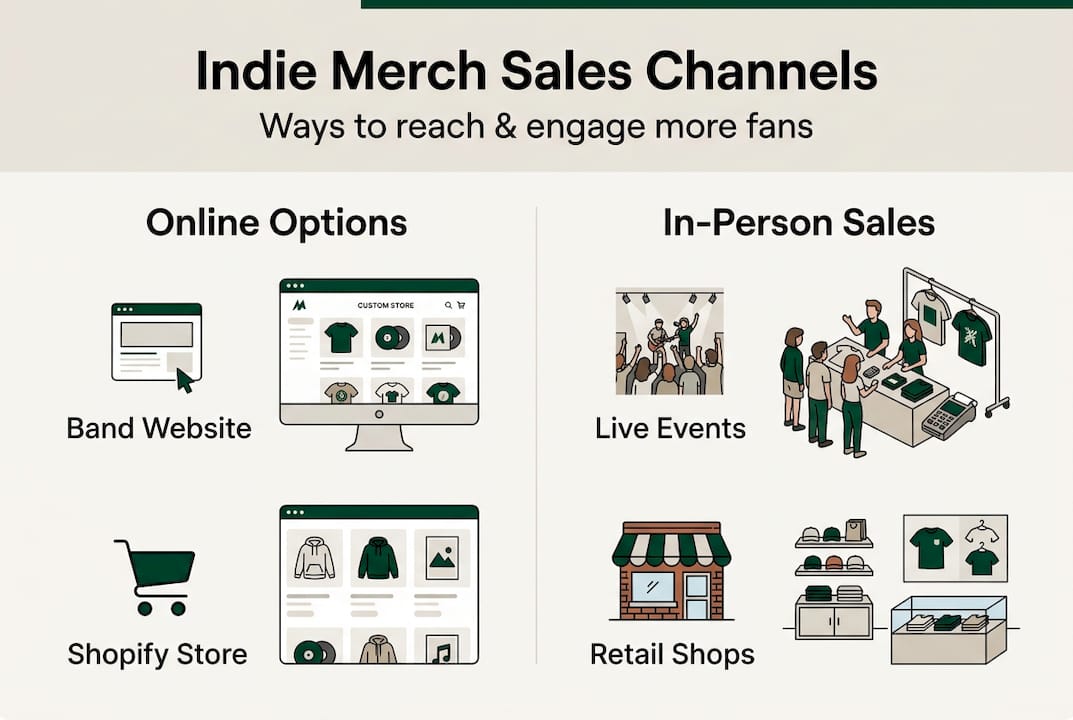
Online store platforms provide 24/7 availability and global reach without geographical limitations. Shopify, Big Cartel, and Bandcamp offer artist-friendly interfaces with reasonable fees. Print-on-demand services like Printful or The Inner Sanctum Group eliminate upfront inventory costs by producing items only after orders arrive, though per-unit costs run higher than bulk manufacturing.
Live events remain the highest-converting sales environment because fans are emotionally engaged and want tangible mementos of the experience. Gig merchandise typically sells at premium prices since fans accept higher costs in the moment. However, you need reliable helpers to manage sales whilst you perform, proper cash handling systems, and efficient packing to transport stock between venues.
Retail partnerships and consignment arrangements place your merchandise in physical shops frequented by your target audience. Independent record stores, vintage clothing boutiques, and local arts venues often welcome artist collaborations. You typically provide stock upfront and receive payment after items sell, minus the shop’s commission. This expands visibility but requires tracking inventory across multiple locations.
Selling merch via multiple channels, including online and physical venues, increases visibility and revenue potential by meeting fans where they already spend time and money.
| Sales channel | Reach potential | Setup cost | Profit margin | Best for |
|---|---|---|---|---|
| Online store | Global | Low to medium | Medium to high | Consistent passive income |
| Live events | Local/touring | Low | High | Immediate cash flow |
| Print-on-demand | Global | Very low | Low to medium | Testing designs risk-free |
| Retail consignment | Local/regional | Low | Medium | Building local presence |
| Social commerce | Follower-dependent | Very low | Medium | Direct fan engagement |
Preparing for each channel requires specific steps:
- Research platform fees, payment processing costs, and shipping options thoroughly before committing
- Create professional product photography with consistent lighting and backgrounds
- Write detailed descriptions including materials, sizing, and care instructions
- Establish inventory management systems to track stock levels across channels
- Set up reliable shipping processes with tracking and reasonable delivery timeframes
- Prepare backup plans for payment processing failures or stock shortages
- Test the complete customer journey yourself before launching publicly
Promoting your merchandise to engage and grow your fanbase
Effective promotion transforms merchandise from passive inventory into active conversation starters that deepen fan relationships. Social media platforms offer free promotional channels when used strategically rather than as constant sales pitches.
Showcase new merchandise through storytelling that reveals the creative process behind designs. Film short videos explaining the inspiration for artwork, the significance of specific colours or symbols, or how designs connect to particular songs or experiences. Fans invest emotionally when they understand the meaning behind products, making purchases feel like supporting art rather than buying commodities.
Limited editions and exclusive offers create urgency whilst rewarding your most dedicated supporters. Release special colourways available only during album launches. Offer early access to new designs for email subscribers. Create tour-specific items available only at shows in particular cities. Scarcity drives action when genuine rather than manipulative.
Collaboration multiplies your promotional reach exponentially:
- Partner with complementary artists for co-branded merchandise that introduces you to their fanbase
- Work with local businesses to cross-promote through in-store displays and social media features
- Engage micro-influencers whose audiences align with your music for authentic endorsements
- Coordinate with venues and promoters to feature your merchandise in event marketing
Creative promotion elevates merch visibility and fan engagement, boosting sales and brand loyalty through memorable experiences that transcend transactional relationships.
Giveaways and contests generate excitement whilst expanding your reach when structured strategically. Require participants to follow your accounts, tag friends, or share content to enter. This organic growth costs only the wholesale price of merchandise whilst building genuine interest. Winners become enthusiastic brand ambassadors who share their prizes across their own networks.
Email newsletters remain surprisingly effective for merchandise promotion because subscribers have already demonstrated interest in your updates. Segment your list to send targeted messages to fans who have purchased previously versus those who haven’t. Personalise communications by referencing their location, past purchases, or engagement history to make offers feel relevant rather than generic.
Pro Tip: Create an exclusive Facebook group or Discord server for fans who have purchased merchandise. This VIP community receives first access to new designs, behind-the-scenes content, and special discounts. The sense of belonging justifies the initial purchase and encourages repeat buying whilst building a core supporter base that amplifies your promotional efforts organically.
Explore customisable merch options at The Inner Sanctum Group
Bringing your merchandising vision to life requires reliable production partners who understand independent artists’ unique needs and budget constraints. The Inner Sanctum Group specialises in helping musicians create professional merchandise without upfront stock investments that strain limited resources.
The ISG Creator 2.0 T-Shirt offers a versatile foundation for custom designs with comfortable 180 GSM fabric that balances quality and affordability. For artists seeking premium options, the ISG E220 Oversized T-Shirt delivers contemporary styling with substantial 220 GSM weight that appeals to fashion-conscious fans.
Beyond apparel, The Inner Sanctum Group provides tote bags, accessories, and comprehensive customisation support that simplifies the entire production process. Their print-on-demand model eliminates inventory risk whilst maintaining quality standards that protect your reputation. Explore available discounts and services designed specifically for independent creators building sustainable merchandise operations.
Frequently asked questions about merchandising for independent musicians
How much initial investment is typical for merch production?
Print-on-demand services require zero upfront investment since items are produced only after orders arrive, making them ideal for testing designs. Bulk manufacturing typically requires £200-£500 minimum orders but reduces per-unit costs significantly. Start small with one or two proven designs before expanding your range.
What are best practices for pricing merchandise?
Calculate your total costs including production, shipping, payment processing, and platform fees, then multiply by 2.5-3 for sustainable margins. Research competitor pricing within your genre to ensure you remain competitive. Remember that fans at live events typically accept 10-20% premiums over online prices due to convenience and emotional connection.
Can indie artists manage merch sales without a team?
Absolutely. Print-on-demand platforms handle production, fulfilment, and shipping automatically. For live events, recruit reliable friends or family members to manage sales tables in exchange for free entry or small payments. As revenue grows, reinvest in part-time help or virtual assistants to scale operations sustainably.
How to handle shipping and inventory efficiently?
Print-on-demand eliminates inventory management entirely. For self-fulfilled orders, invest in postal scales, bulk packaging supplies, and shipping software that compares carrier rates. Establish clear processing timeframes and communicate them prominently to manage customer expectations and reduce support enquiries.
What are popular merchandise items amongst indie music fans?
T-shirts remain the foundation of most merch operations due to universal appeal and reasonable pricing. Tote bags have surged in popularity as practical, visible items that fans use regularly. Enamel pins and patches attract collectors whilst offering affordable entry points. Limited edition vinyl and cassettes appeal to dedicated supporters willing to invest in premium formats.
Recommended
- How merch supports team branding for indie musicians – The Inner Sanctum Group
- How merch supports independent artists’ brand and revenue – The Inner Sanctum Group
- Boost your personal brand with creative merch ideas in 2026 – The Inner Sanctum Group
- Master the design process for indie artist merch in 2026 – The Inner Sanctum Group
- How to arrange live music nights in London: 75% success