
Maximise your band's merch earnings with e-commerce
The merch table at the back of the venue has served bands well for decades, but 2026 marks a genuine turning point. Online sales now rival venue sales for the first time, with web baskets averaging £55 compared to just £30 at gigs. That gap matters enormously for independent musicians trying to build sustainable income without label backing. This article covers how e-commerce has reshaped band merch, which production model suits your situation, what actually sells, and the tactics that consistently drive revenue for independent artists in 2026.
Table of Contents
- How e-commerce has transformed band merch sales
- Print-on-demand (POD) versus bulk production: what every band should know
- Top-selling merch items and smart pricing strategies
- Tactics to maximise sales: bundles, scheduled drops, and social shopping
- Why hybrid strategies outperform pure e-commerce
- Ready to boost your band’s merch with e-commerce?
- Frequently asked questions
Key Takeaways
| Point | Details |
|---|---|
| E-commerce doubles earning potential | Bands can now make as much selling online as at live events, with higher basket values and no regional limits. |
| POD minimises risk, bulk maximises profit | Print-on-demand lets you launch safely, while bulk works best for proven sellers and bigger margins. |
| Best sellers are simple and creative | T-shirts, vinyl and CDs consistently top merch sales, so focus your designs and bundles here. |
| Social tactics boost merch visibility | Limited drops, bundles and platforms like TikTok Shop help capture new fans and impulse buyers. |
| Hybrid sales outperform pure online | Combining venue and e-commerce merch ensures you maximise both fan engagement and profits. |
How e-commerce has transformed band merch sales
Not long ago, selling merch meant hauling boxes to venues, handling cash, and hoping you ordered the right sizes. The shift online has changed every part of that equation. In 2023, roughly 80% of band merch sales happened at venues, with only 15% through websites and 5% via social platforms. By 2026, those figures have shifted dramatically to approximately 50% venue, 25% web, and 25% social. That is not a minor adjustment. That is a structural change in how fans buy.
The financial case for going online is equally compelling. The artist merchandising market was valued at $6.8 billion in 2024 and is projected to reach $13.2 billion by 2033, growing at a compound annual rate of 7.8%. For independent bands specifically, merch can account for up to 30% of total earnings. That figure alone should make every independent musician take their online store seriously.
Understanding merch brand and revenue as interconnected is essential. Your merch is not just a revenue stream. It is a walking advertisement, a loyalty signal, and a community builder.
“The online basket is nearly double the venue basket. Every fan who buys online is spending more, not less.”
Here is what a well-run artist e-commerce guide approach unlocks for independent bands:
- Global reach beyond your local touring circuit
- 24/7 availability so fans can buy at any hour
- Higher average order values compared to venue sales
- No physical stock required with print-on-demand models
- Data on your buyers to inform future designs and campaigns
- Passive income between tours and releases
| Channel | 2023 share | 2026 share | Median basket |
|---|---|---|---|
| Venue | 80% | 50% | £30 |
| Website | 15% | 25% | £55 |
| Social | 5% | 25% | £45 |
The trend is clear. Bands that treat e-commerce as a secondary channel are leaving significant money on the table.
Print-on-demand (POD) versus bulk production: what every band should know
Choosing how your merch gets made is one of the most consequential decisions you will make as an independent artist. The two main models are print-on-demand and bulk production, and each suits a different stage of your career and risk appetite.
With print-on-demand, items are only produced when a fan places an order. There is no upfront investment, no warehouse full of unsold hoodies, and no guessing on sizes. The trade-off is margin. POD profit margins for band merch t-shirts typically sit between 30% and 50%, and hoodies between 35% and 55%. Bulk production, by contrast, can yield margins of 50% to 80%, but requires capital upfront and carries the very real risk of dead stock.
For most independent musicians starting out, POD is the smarter entry point. You can test ten different designs without risking a penny on stock. If one design takes off, that is your signal to consider a bulk run for that specific item.
Understanding the full merch process explained from design to delivery helps you see where costs enter the chain. Bulk orders introduce warehousing, fulfilment logistics, and size forecasting. POD removes all of that complexity.
| Factor | Print-on-demand | Bulk production |
|---|---|---|
| Upfront cost | None | High |
| Profit margin | 30–55% | 50–80% |
| Inventory risk | Zero | Significant |
| Design flexibility | High | Low |
| Best use case | Testing, variety | Proven bestsellers |
| Fulfilment speed | Slightly slower | Faster |
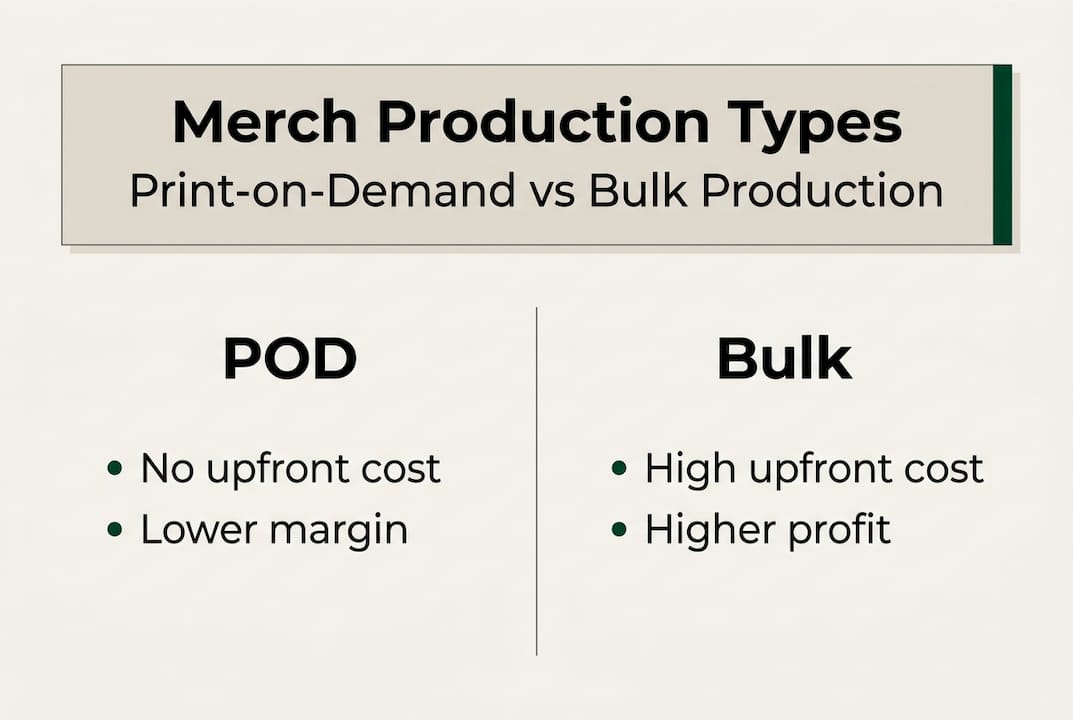
The merchandising for musicians approach that works best at scale often combines both. POD for your experimental or limited designs, and bulk for the two or three items your fanbase consistently buys.
Pro Tip: Run your first three designs via POD and track which sells fastest. After 60 days, bulk order only that winner. You will protect your cash flow and improve your margin at the same time.
Top-selling merch items and smart pricing strategies
Knowing what to sell is just as important as knowing how to sell it. The data here is reassuring because the bestsellers are not complicated. T-shirts account for 38% of band merch bestsellers, followed by vinyl at 32% and CDs at 30%, with a median t-shirt price of around $25. These are not niche products. They are everyday items with genuine demand.
Hoodies, tote bags, and accessories round out a solid catalogue. The key is not stocking everything but curating a focused range that reflects your brand and appeals to your specific audience. A metal band and an acoustic folk duo will have very different fan expectations.
Exploring fan engagement merch ideas can help you think beyond the obvious and connect products to moments in your fan relationship. A lyric-printed tote, a limited tour hoodie, or a signed art print can all command premium prices when positioned correctly.
Top items to offer in your online store:
- Classic crew-neck t-shirts with album or tour artwork
- Hoodies for colder months and higher average order values
- Vinyl records for collectors and dedicated fans
- Tote bags as low-cost, high-visibility everyday items
- Enamel pins and keyrings as affordable impulse purchases
- Signed prints or exclusive bundles for superfans
Steps for setting effective prices:
- Calculate your base cost including production and fulfilment
- Research what comparable bands charge for similar items
- Apply a minimum 40% margin before considering perceived value
- Price premium or limited items 20 to 30% above your standard range
- Test a small price increase on your bestseller and monitor conversion
Pricing is also where your personal brand merch ideas come into play. Fans who feel a strong connection to your story will pay more. Scarcity, storytelling, and quality all justify higher price points without alienating your core audience.
Tactics to maximise sales: bundles, scheduled drops, and social shopping
Having great products at fair prices is only half the job. How you sell them determines whether your store ticks over quietly or generates real income spikes. Three tactics consistently outperform everything else for independent bands: bundles, scheduled drops, and social commerce.
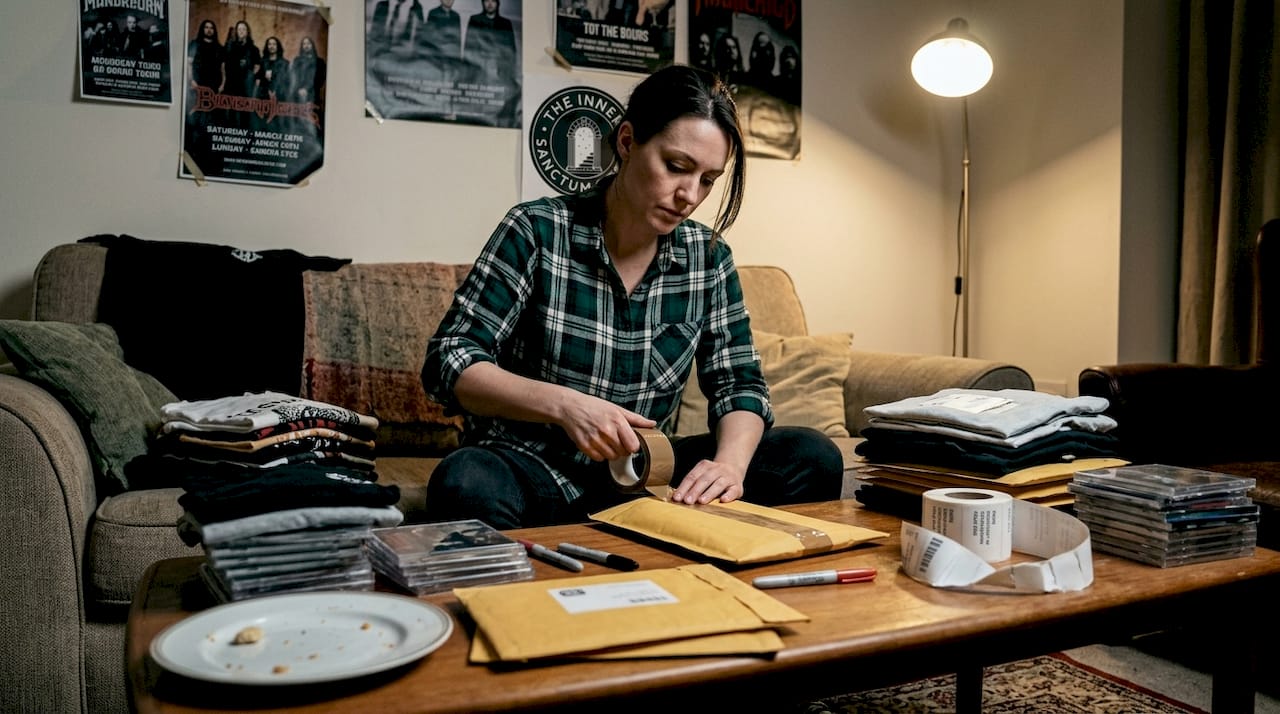
Bundles work because they raise the average order value while giving fans a sense of getting more for their money. Pair a t-shirt with a tote and a pin at a combined price that is 15% less than buying separately. The fan feels rewarded. You move more items per transaction.
Drops every 6 to 8 weeks, combined with buy-now-pay-later options and TikTok Shop, are particularly effective for reaching Gen Z fans who respond to scarcity and impulse buying. A scheduled drop creates urgency. Fans know the item will sell out, so they act quickly rather than bookmarking it for later.
For a broader understanding of how product presentation affects sales, the workwear merch guide offers useful context on how positioning changes buyer behaviour.
Pro Tip: Announce your drop date at least one week in advance across all your channels. Build anticipation with behind-the-scenes content showing the design process or the items arriving. Fans who feel involved are far more likely to buy on launch day.
A simple drop campaign structure:
- Announce the drop date one week out with a teaser image
- Share a behind-the-scenes story or design detail three days before
- Send an email reminder the morning of the drop
- Post live on social media as the drop goes live
- Share fan photos and reviews within 48 hours to sustain momentum
Platforms worth activating for social commerce:
- TikTok Shop for Gen Z impulse purchases
- Instagram Shopping for visual catalogue browsing
- Your own website for full margin and data ownership
- Bandcamp for music-first fans who expect merch alongside releases
You can find broader merch tactics for musicians that cover the full spectrum from physical to digital selling strategies.
Why hybrid strategies outperform pure e-commerce
There is a temptation, especially for newer bands, to go entirely digital and abandon the venue merch table altogether. We think that is a mistake, and the data backs it up.
Live events create emotional peaks. A fan who just watched you play an incredible set is primed to buy in a way that no online ad can replicate. That impulse is real and valuable. The smart move is not to choose between live and online but to design a strategy where both reinforce each other.
POD is ideal for testing designs and building a broad catalogue, while a hybrid approach using bulk production for your proven hits maximises earnings across both channels. Sell your experimental designs online via POD. Bring your core bestsellers to every show in bulk. Fans who discover you at a gig and then visit your online store should find the same items available, creating a seamless experience.
The team branding and merch perspective reinforces this. Consistency across live and digital touchpoints builds recognition and trust. Fans who see the same quality and branding at a venue and on your website develop a stronger sense of your identity as an artist.
Hybrid is not a compromise. It is the most effective model available to independent musicians right now.
Ready to boost your band’s merch with e-commerce?
If you have been putting off setting up a proper online merch store, the strategies above show just how much revenue you could be generating right now. The barrier to entry has never been lower, and the potential returns have never been higher.
At The Inner Sanctum Group, we handle the entire process for you, from design preparation through to printing, packing, and shipping. You can start with our ISG Creator 2.0 T-shirt or explore the Output Logo T-Shirt as a starting point for your range. No upfront stock costs, no fulfilment headaches. Visit The Inner Sanctum Group to set up your store and start earning commission on every sale your fans make.
Frequently asked questions
What merch products sell best for independent bands online?
T-shirts lead at 38% of bestsellers, followed by vinyl at 32% and CDs at 30%, making them the safest starting point for any new online store.
Are print-on-demand services worth it for independent musicians?
Yes. POD removes upfront costs entirely, though margins of 30 to 55% are lower than bulk production. It is the ideal model for testing designs without financial risk.
How much can merch contribute to a band’s income?
Merch can account for up to 30% of earnings for touring bands, making it one of the most significant income streams available to independent musicians.
What are today’s trends for selling band merch?
Bundles, drops every 6 to 8 weeks, and TikTok Shop are the standout tactics in 2026, particularly for reaching younger fans who respond to scarcity and social discovery.
Recommended
- How merch supports team branding for indie musicians – The Inner Sanctum Group
- Merchandising for independent musicians: create and sell fan favourite – The Inner Sanctum Group
- How merch supports independent artists’ brand and revenue – The Inner Sanctum Group
- Boost your personal brand with creative merch ideas in 2026 – The Inner Sanctum Group