
Workwear merchandising explained: a guide for musicians
Many independent musicians believe launching a workwear merchandise line requires massive upfront investment and complex logistics. This misconception stops talented creators from tapping into a powerful revenue stream that strengthens fan connections whilst generating consistent income. The reality is far more accessible. Modern merchandising platforms have eliminated traditional barriers, allowing you to design, produce, and sell custom workwear without purchasing stock upfront. This guide walks you through every essential step, from initial design concepts to effective sales strategies, showing you exactly how workwear merchandising can transform your artistic brand into a thriving business.
Table of Contents
- Key takeaways
- What is workwear merchandising and why it matters
- Key elements of designing and producing custom workwear merchandise
- Effective merchandising strategies to maximise sales and brand impact
- Discover the Inner Sanctum Group’s custom workwear collection
- How much does custom workwear merchandise cost to produce?
- What are the best materials and printing methods for workwear merch?
- How can I effectively promote my workwear merchandise to fans?
Key Takeaways
| Point | Details |
|---|---|
| Low upfront investment | Modern platforms handle design, production and fulfilment so you can launch workwear without stocking costs. |
| Walking billboard | Every garment acts as mobile advertising that can grow your audience beyond online metrics. |
| High per item profits | Hoodies and T shirts offer strong per item profits compared with streaming royalties. |
| Stronger fan engagement | Consistent branding and accessible merchandise deepen fan engagement and loyalty. |
What is workwear merchandising and why it matters
Workwear merchandising refers to creating and selling branded clothing items that fans can wear in everyday situations, not just at concerts or events. For independent musicians, this means transforming your logo, artwork, or signature aesthetic into wearable products like t-shirts, hoodies, polo shirts, and sweatshirts that supporters proudly incorporate into their regular wardrobes.
Unlike traditional band merchandise limited to gig venues, workwear creates walking advertisements for your brand. Every person wearing your design becomes a mobile billboard, sparking conversations and introducing new audiences to your music. This organic exposure builds recognition far beyond what social media algorithms or streaming platforms can achieve alone.
The financial implications are equally compelling. Merchandising supports independent artists’ brand and revenue by creating income streams that don’t rely on streaming royalties or ticket sales. Whilst Spotify pays fractions of pennies per play, a single hoodie sale can generate £15 to £25 in profit, making merchandise one of the most lucrative aspects of an independent music career.
Typical workwear products for musicians include:
- Classic crew neck t-shirts in various weights and fits
- Hooded sweatshirts for year round appeal
- Polo shirts offering a smarter casual option
- Long sleeve shirts for cooler seasons
- Tank tops and sleeveless options for summer festivals
Beyond revenue, workwear merchandising strengthens the emotional bond between artists and supporters. Fans who invest in your merchandise demonstrate commitment beyond passive listening. They’re making a statement about their identity and values, choosing to align themselves publicly with your artistic vision. This deeper engagement translates to more dedicated supporters who attend shows, share your content, and champion your work within their social circles.
The barrier to entry has never been lower. Modern platforms handle production, inventory, and shipping, meaning you can launch a professional merchandise line with minimal upfront investment. This democratisation allows emerging artists to compete with established acts, levelling the playing field in ways previously impossible.
Key elements of designing and producing custom workwear merchandise
Creating effective workwear merchandise requires balancing artistic expression with practical considerations that determine whether fans actually purchase and wear your products. The design process shapes everything from production costs to long term brand perception.
Start with your visual identity. Your merchandise should feel like a natural extension of your existing aesthetic rather than an afterthought. Examine your album artwork, social media presence, and stage visuals to identify recurring colours, typography, and imagery. Consistency across these touchpoints reinforces brand recognition, making your merchandise instantly identifiable to existing fans whilst intriguing potential new supporters.
Fabric selection dramatically impacts both customer satisfaction and production costs. Cotton remains the gold standard for comfort and breathability, though cotton polyester blends offer improved durability and colour retention at lower price points. Heavier weights (180 to 220 GSM) feel more premium and justify higher retail prices, whilst lighter fabrics work better for budget conscious lines or summer specific designs.
Print methods fundamentally alter both appearance and longevity:
- Screen printing delivers vibrant, durable results ideal for bold designs with limited colours, offering the lowest per unit cost for larger orders
- Direct to garment (DTG) printing enables full colour photographic quality designs without setup fees, perfect for complex artwork or small initial runs
- Embroidery adds perceived value and permanence, working brilliantly for logos on polo shirts or hoodies where subtle branding suits the context
- Heat transfer vinyl creates clean, professional results for text heavy designs or metallic finishes that other methods struggle to replicate
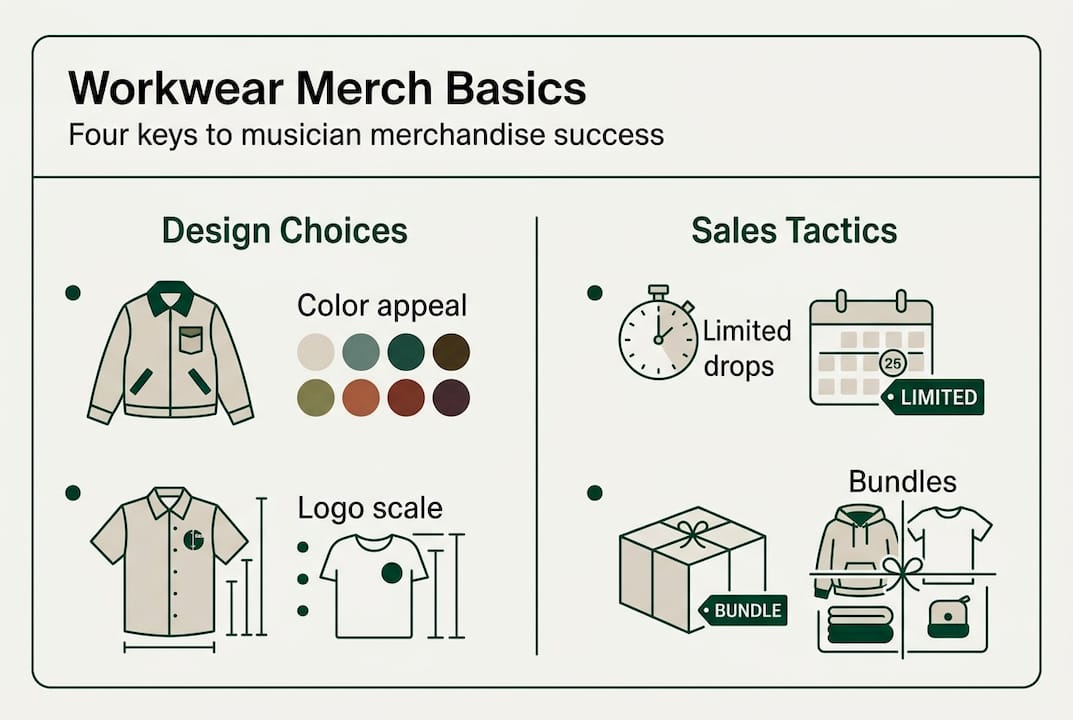
Colour psychology influences purchasing decisions more than most creators realise. Black remains the safest choice, appealing to the widest audience whilst hiding stains and wear. However, mastering the design process means understanding when strategic colour choices can differentiate your merchandise in crowded markets. Unexpected options like forest green, burgundy, or slate grey often outperform standard colours by offering something genuinely different.
Messaging matters as much as visuals. Overly promotional text dates quickly and limits when fans feel comfortable wearing items. Cryptic phrases, song lyrics, or abstract concepts create intrigue whilst maintaining versatility. The goal is designing pieces people genuinely want to wear, not just items they buy to support you then leave in drawers.
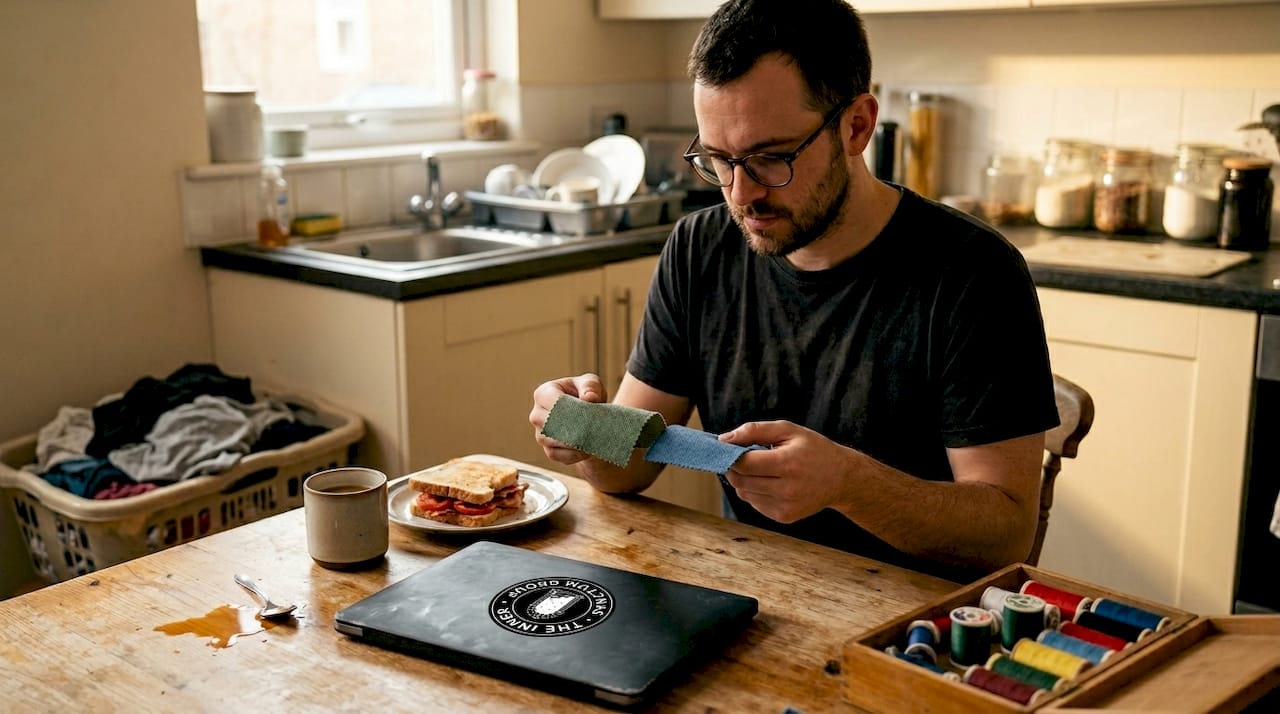
Pro Tip: Order samples before committing to full production runs. Colours appear differently on screens versus fabric, and sizing varies dramatically between manufacturers. Wearing the actual product reveals fit issues, print quality concerns, and comfort problems that specifications alone cannot communicate.
Common pitfalls sabotage otherwise promising merchandise lines. Oversized logos scream “merch” rather than fashion, limiting where fans feel comfortable wearing items. Poor quality blanks undermine even brilliant designs, as uncomfortable or ill fitting garments gather dust regardless of artwork appeal. Ignoring your audience’s actual style preferences in favour of what you personally prefer creates disconnect between product and market.
Effective merchandising strategies to maximise sales and brand impact
Creating brilliant workwear merchandise means nothing if fans never see it or understand why they should purchase. Strategic merchandising transforms products into sales through deliberate presentation, channel selection, and promotional tactics tailored to independent artists’ unique circumstances.
Visual merchandising begins with photography that showcases products as desirable lifestyle items rather than flat product shots. Capture merchandise in real world contexts: fans wearing your hoodie at a coffee shop, your t-shirt at a festival, your polo shirt during casual Friday at work. These contextual images help potential buyers envision themselves wearing the items, dramatically increasing conversion rates compared to standard product photography.
Your sales channel strategy should leverage multiple touchpoints rather than relying on a single platform:
| Channel | Advantages | Considerations |
|---|---|---|
| Own website | Complete control over branding, customer data, and profit margins | Requires driving traffic through your own marketing efforts |
| Social media shops | Built in audiences and discovery features reduce marketing burden | Platform fees and algorithm changes impact visibility and costs |
| Live events | Face to face interaction builds emotional connections driving impulse purchases | Limited to performance schedules and requires inventory management |
| Third party marketplaces | Established traffic and trust signals lower customer acquisition costs | Higher fees and less brand control compared to owned channels |
Building a successful merch store setup requires understanding that each channel serves different purposes within your overall strategy. Your website acts as the permanent home base, social media creates awareness and engagement, live events forge personal connections, and marketplaces capture search traffic from people discovering your music through streaming platforms.
Marketing on limited budgets demands creativity over capital. Behind the scenes content showing design processes, production facilities, or packaging preparations builds anticipation whilst demonstrating quality and care. User generated content from fans wearing your merchandise provides authentic social proof more convincing than any advertisement you could create. Encourage supporters to tag you in photos, then reshare this content to create a virtuous cycle of visibility and validation.
Exclusive merchandise drops generate urgency and scarcity that drive immediate action. Limited edition designs tied to album releases, tour dates, or seasonal themes create fear of missing out that overcomes purchase hesitation. Numbering items or creating deliberately small runs transforms merchandise from commodities into collectibles, appealing to fans’ desire for unique items that signal their status as early supporters.
Bundling strategies increase average order values whilst providing perceived discounts that overcome price resistance. Pairing a t-shirt with a digital album download, offering hoodie and hat combinations, or creating tiered packages at different price points gives fans options whilst maximising revenue per transaction.
Pro Tip: Track which designs, colours, and styles sell best through basic analytics. This data informs future production decisions, helping you double down on what works rather than guessing based on personal preferences that may not align with market demand.
Storytelling elevates merchandise from products to meaningful artefacts. Share the inspiration behind specific designs, explain symbolic elements within artwork, or connect items to particular songs or experiences. This narrative context transforms a simple t-shirt into a tangible piece of your creative journey that fans can own and wear.
Measuring success requires looking beyond simple sales figures:
- Conversion rates reveal how effectively your presentation turns browsers into buyers
- Average order values indicate whether bundling and upselling strategies work
- Customer acquisition costs show whether marketing spend generates profitable returns
- Repeat purchase rates demonstrate long term brand loyalty versus one time transactions
- Social media engagement around merchandise content signals audience interest and organic reach
Adapt your approach based on these metrics rather than assumptions. If certain designs consistently outperform others, expand that aesthetic direction. When specific marketing channels drive disproportionate sales, allocate more resources there. Successful merchandising requires constant iteration based on real world feedback rather than static strategies.
Discover the Inner Sanctum Group’s custom workwear collection
Transforming merchandising concepts into tangible products becomes straightforward when you partner with suppliers who understand independent creators’ unique needs. The Inner Sanctum Group offers customisable workwear options specifically designed for musicians and artists building their brands without massive upfront investments.
The ISG Creator 2.0 T-shirt provides a versatile foundation for your merchandise line, featuring 180 GSM fabric weight that balances comfort with durability. This customisable option lets you apply your designs to a quality blank that fans will actually want to wear repeatedly. The Output logo t-shirt demonstrates how clean, minimalist branding creates sophisticated merchandise that transcends typical band shirt aesthetics. For creators seeking premium options, the ISG E220 Oversized T-shirt offers contemporary fit and heavier 220 GSM construction that justifies higher retail prices whilst delivering exceptional perceived value.
These products eliminate the guesswork from garment selection, providing tested options that work across diverse design styles and audience preferences. Browse the full collection to identify pieces that align with your brand aesthetic and budget parameters.
How much does custom workwear merchandise cost to produce?
Production costs vary significantly based on garment type, order quantities, and printing methods you select. Basic t-shirts using print on demand services typically cost £8 to £12 per unit including printing, whilst bulk orders of 50 or more can reduce costs to £5 to £8 per shirt. Hoodies and sweatshirts range from £15 to £25 for small quantities, dropping to £12 to £18 for larger runs.
Print on demand eliminates upfront inventory investment, making it ideal for testing designs or serving niche audiences without financial risk. You only pay production costs when customers place orders, though per unit prices remain higher than bulk manufacturing. Bulk ordering reduces per item costs substantially but requires capital investment and storage space, making it suitable once you’ve validated demand through initial sales.
Design complexity directly impacts printing expenses. Single colour screen prints cost less than multi colour designs, whilst full colour DTG printing charges similar rates regardless of colour count. Simple, bold graphics often prove more cost effective than intricate illustrations, though the design process considerations should prioritise visual impact over minor cost savings that compromise quality.
Budget comprehensively by including production, marketing, packaging, and distribution expenses. Shipping costs, payment processing fees, and platform commissions reduce your net profit per sale by 15% to 30% depending on channels used. Factor these expenses into retail pricing to ensure sustainable profit margins that support ongoing merchandise operations.
What are the best materials and printing methods for workwear merch?
Cotton and cotton polyester blends dominate workwear merchandise for good reason. Pure cotton offers unmatched comfort and breathability, creating a premium feel that justifies higher retail prices. Cotton polyester blends (typically 65/35 or 50/50 ratios) provide improved durability, better colour retention through repeated washing, and resistance to shrinkage that pure cotton struggles to match.
Screen printing delivers exceptional durability and vibrant colours for designs with limited colour palettes, making it the industry standard for bold graphics and text. Direct to garment printing excels at reproducing photographic quality images and complex artwork with unlimited colours, though it works best on lighter coloured garments. The design process fundamentals help you match printing methods to your specific artwork requirements.
Choose materials that align with your brand positioning and audience expectations. Emerging artists often start with mid weight cotton blends that balance quality and affordability, whilst established acts can justify premium pure cotton or organic options that command higher prices. Consider your fans’ actual lifestyles and preferences rather than imposing your personal fabric preferences onto products they’ll ultimately wear.
How can I effectively promote my workwear merchandise to fans?
Social media platforms provide powerful free promotion when you create engaging visual content that showcases merchandise in authentic contexts. Share photos and videos of yourself wearing the items, capture fan reactions at shows, and document the design and production process to build anticipation before launches. Instagram Stories, TikTok videos, and Facebook posts reach existing followers whilst hashtags and tagging expand discovery to new audiences.
Live events create unmatched opportunities for merchandise sales through face to face interaction that builds emotional connections. Fans attending shows are already invested in your work, making them prime candidates for impulse purchases. Display merchandise prominently near entrances or merch tables, wear your own products on stage, and mention new designs during performance breaks to drive awareness.
Limited editions and exclusive bundles generate urgency that overcomes purchase hesitation. Announce time limited designs, create tour specific items only available at certain venues, or bundle merchandise with music downloads and exclusive content. These tactics transform merchandise from commodities into collectibles that fans must acquire immediately or risk missing permanently. Effective merch store strategies leverage scarcity and exclusivity to drive consistent sales without constant hard selling that alienates supporters.
Recommended
- How merch supports team branding for indie musicians – The Inner Sanctum Group
- Merch store setup guide for independent artists 2026 – The Inner Sanctum Group
- Master the design process for indie artist merch in 2026 – The Inner Sanctum Group
- How merch supports independent artists’ brand and revenue – The Inner Sanctum Group