
How to create tattoo studio merchandise for revenue growth
Many tattoo studios leave money on the table by focusing solely on appointments whilst overlooking a powerful revenue stream: custom merchandise. Your unique artwork and brand identity can generate consistent income through print-on-demand services that eliminate upfront costs and inventory risk. This guide walks you through preparing designs, setting up an automated online store, marketing effectively, and verifying results to turn your tattoo art into profitable merchandise that strengthens your brand and diversifies revenue.
Table of Contents
- Preparing To Create Tattoo Studio Merchandise
- Setting Up Your Online Merch Store With Print-On-Demand Integration
- Marketing And Selling Your Tattoo Studio Merchandise For Maximum Revenue
- Verifying Success And Optimising Your Merchandise Sales
- Explore Custom Apparel And Accessories For Your Studio
- Frequently Asked Questions About Tattoo Studio Merchandise
Key takeaways
| Point | Details |
|---|---|
| Zero upfront investment | Print-on-demand services eliminate inventory costs by producing items only after customers order |
| Quick store integration | Connect POD platforms with Shopify or Etsy for automated fulfilment and product syncing |
| Popular product types | T-shirts, hoodies, posters, mugs, and stickers showcase tattoo designs effectively |
| Bundling increases value | Pairing merchandise with tattoo services or aftercare boosts transaction amounts by 5-10% |
| Quality samples essential | Testing products before launch prevents returns and builds customer trust |
Preparing to create tattoo studio merchandise
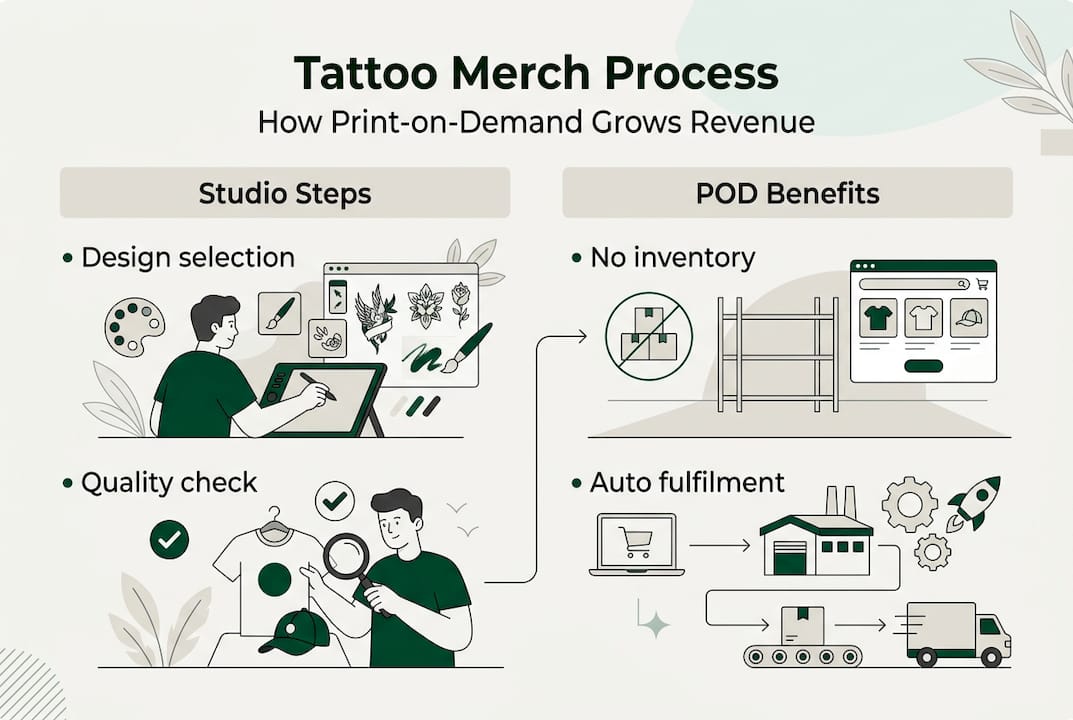
Before launching merchandise, you need to select the right products and suppliers that align with your tattoo studio’s artistic style and customer expectations. Print-on-demand services like Printify, Printful, or Gelato enable you to create and sell custom merchandise with no upfront inventory, making them ideal for tattoo studios testing the market. These platforms handle production, packaging, and shipping automatically once customers place orders.
Start by identifying products that showcase your tattoo designs effectively. T-shirts and hoodies work brilliantly for bold, graphic tattoo art, whilst posters and canvas prints suit intricate flash designs. Mugs, stickers, and tote bags offer affordable entry points for customers who want to support your brand without committing to apparel. Consider your existing client base: if you specialise in traditional Japanese tattoos, products featuring those motifs will resonate strongly. If your studio is known for minimalist linework, clean designs on customisable t-shirt options create cohesive brand merchandise.
Design consistency matters enormously. Your merchandise should reflect the same artistic quality clients see in your tattoo portfolio. Use high-resolution artwork files, typically 300 DPI or higher, to ensure crisp prints. Adapt existing flash designs or create merchandise-specific artwork that translates well to fabric and other materials. Avoid overly complex designs with fine details that might blur on smaller products.
Always order quality samples before launching publicly. Test print quality, material weight, colour accuracy, and durability through washing. This step prevents customer disappointment and costly returns. Compare samples from multiple POD suppliers to find the best match for your quality standards and price points.
Pro Tip: Create a merchandise mood board featuring your top five tattoo designs alongside potential product mockups to visualise how your art translates across different items before committing to production.
| Product Type | Best For | Typical Profit Margin |
|---|---|---|
| T-shirts | Bold graphics, studio logos | 45-60% |
| Hoodies | Premium offerings, detailed designs | 50-65% |
| Posters | Flash collections, wall art | 60-75% |
| Mugs | Simple logos, single motifs | 40-55% |
| Stickers | Small designs, pack bundles | 65-80% |
Understanding the automation benefits helps you appreciate why POD suits busy tattoo studios. Once integrated, your store operates independently: customers browse, order, and receive products without you touching inventory. You focus on tattooing whilst merchandise revenue flows in passively. This zero-touch model scales effortlessly as demand grows.
Setting up your online merch store with print-on-demand integration
Choosing the right e-commerce platform determines how smoothly your merchandise operation runs. POD and e-commerce integration works seamlessly with platforms like Shopify, Etsy, or Printify Pop-Up Store for easy setup and automated fulfilment. Shopify offers the most customisation and professional appearance, Etsy provides built-in traffic from craft shoppers, and Printify Pop-Up Store requires zero website management.
Follow these steps to launch your store efficiently:
-
Select your e-commerce platform based on technical comfort and budget. Shopify costs around £25 monthly but offers complete control. Etsy charges per listing plus transaction fees but delivers immediate marketplace exposure. Printify Pop-Up Store is free but limits branding customisation.
-
Connect your chosen POD service through the platform’s app marketplace or integration settings. Most connections take under ten minutes and sync your product catalogue automatically.
-
Create product listings featuring your tattoo designs with compelling descriptions. Write titles that include searchable terms like “traditional rose tattoo art t-shirt” or “Japanese dragon sleeve design poster.” Describe the design inspiration, material quality, and size options clearly.
-
Configure shipping settings and pricing structures. POD services calculate shipping automatically, but you control retail pricing. Factor in production costs, platform fees, and desired profit margins when setting prices.
-
Test the complete customer journey by placing a sample order yourself. Verify that order notifications work, payment processing functions smoothly, and fulfilment triggers correctly.
Your merch store setup guide should prioritise mobile optimisation since many tattoo clients browse on phones. Ensure product images load quickly and checkout flows smoothly on smaller screens. High-quality product photography matters: use lifestyle shots showing people wearing or using your merchandise alongside flat product images.
Pro Tip: Create collection pages grouping merchandise by tattoo style, such as “Traditional Collection” or “Blackwork Series,” making it easier for fans of specific aesthetics to find relevant products quickly.
| Platform | Monthly Cost | Best For | Setup Time |
|---|---|---|---|
| Shopify | £25-£79 | Complete control, professional branding | 2-4 hours |
| Etsy | £0.16 per listing | Immediate marketplace traffic | 1-2 hours |
| Printify Pop-Up | Free | Quick launch, minimal management | 30 minutes |
Automatic order fulfilment represents the biggest advantage of POD integration. When customers order, the POD service receives specifications instantly, produces the item, and ships directly to the buyer. You receive profit minus production and platform fees without handling physical products. This automation means your merchandise business scales without additional labour or storage space.
Brand consistency across your online store strengthens recognition. Use your studio’s colour scheme, logo, and visual style throughout the store design. Write product descriptions in your studio’s voice, whether that’s edgy and bold or refined and artistic. Customers should feel they’re shopping with your tattoo studio, not a generic merchandise retailer.
Marketing and selling your tattoo studio merchandise for maximum revenue
Your existing client base represents your most valuable marketing audience. Clients who trust you with permanent body art will readily support your merchandise. Display sample products prominently in your studio waiting area or reception desk. Wear your own merchandise during appointments to spark conversations naturally. Mention new designs when clients follow up about tattoo aftercare, creating organic sales opportunities.

Bundling strategies significantly boost transaction values and customer satisfaction. Merch and aftercare bundling increases revenue by 5-10%, adding substantial annual income for studios. Offer a t-shirt featuring the client’s new tattoo design at a discount when purchased with aftercare products. Create package deals combining appointments with exclusive merchandise items. Bundle flash design posters with booking deposits for upcoming tattoo sessions.
Pricing merchandise strategically balances profitability with customer accessibility. Research shows tattoo studio merchandise performs best between £25 and £40 for apparel items. This range feels premium enough to reflect quality but remains accessible for impulse purchases. Price stickers and smaller items at £5 to £12 to encourage multiple purchases. Hoodies and premium items can reach £45 to £55 whilst maintaining strong conversion rates.
Limited edition drops create urgency and exclusivity that drives immediate sales. Release seasonal designs available for just two weeks or one month. Announce “flash Friday” merchandise featuring a different tattoo design each week. Number special edition prints to enhance collectability. Scarcity motivates fence-sitters to purchase now rather than later.
Leverage social media to showcase merchandise authentically:
- Post customer photos wearing your merchandise alongside their tattoos
- Share behind-the-scenes content showing design creation processes
- Run Instagram Stories polls letting followers vote on next merchandise designs
- Create TikTok videos demonstrating product quality and fit
- Tag customers who share merchandise photos to build community
Email marketing to your client list delivers impressive returns. Send monthly newsletters featuring new merchandise alongside tattoo portfolio updates. Offer email subscribers early access to limited editions or exclusive discount codes. Segment your list by tattoo style preferences to send targeted merchandise recommendations.
Quality maintenance builds trust and reduces returns dramatically. Consistently delivering products that meet or exceed expectations encourages repeat purchases and word-of-mouth referrals. Monitor customer feedback closely and address quality concerns immediately. One poor experience can damage your studio’s reputation more severely than merchandise profit justifies.
“Merchandise transforms one-time tattoo clients into ongoing brand ambassadors who promote your studio every time they wear your designs in public.”
Collaborate with other local artists or businesses for cross-promotion opportunities. Partner with nearby record shops, coffee houses, or alternative clothing stores to display your merchandise. Offer commission splits for sales generated through their locations. These partnerships expand your reach beyond your immediate client base whilst supporting your local creative community.
Explore creative merch ideas that differentiate your studio from competitors. Consider unconventional products like enamel pins, patches, or temporary tattoo sheets featuring your flash designs. Unique offerings attract collectors and gift buyers who might not wear traditional apparel.
Verifying success and optimising your merchandise sales
Tracking performance data reveals what works and what needs adjustment in your merchandise strategy. Most e-commerce platforms provide detailed analytics showing which products sell best, where traffic originates, and which marketing efforts drive conversions. Review these metrics monthly to identify trends and opportunities.
Follow this verification process systematically:
-
Calculate merchandise revenue as a percentage of total studio income. Tattoo shop revenue statistics indicate merchandise typically accounts for 3-7% of overall revenue with POD profit margins of 40-70%. Compare your performance against these benchmarks.
-
Analyse individual product performance to identify bestsellers and underperformers. Discontinue designs that generate fewer than five sales quarterly. Double down on popular items by creating variations or related products.
-
Monitor customer feedback through reviews, social media comments, and direct messages. Address quality concerns immediately and use positive feedback in marketing materials.
-
Compare profit margins across different POD suppliers and product types. Some suppliers offer better pricing on specific items, so optimising your supplier mix maximises profitability.
-
Order periodic quality control samples, especially after supplier updates or new product launches, to ensure standards remain consistent.
Customer acquisition cost determines whether your marketing investments deliver positive returns. Calculate how much you spend on advertising, promotions, and platform fees divided by new customers acquired. If acquiring a customer costs £15 but their average purchase is £30, you’re building a sustainable business. If acquisition costs exceed purchase values, adjust your marketing approach.
Pro Tip: Create a simple spreadsheet tracking monthly merchandise revenue, costs, and profit margins to spot trends quickly and make data-driven decisions about inventory expansion or marketing budget allocation.
| Metric | Target Range | Action If Below Target |
|---|---|---|
| Merchandise revenue percentage | 3-7% of studio income | Increase in-studio promotion, expand product range |
| Profit margin per item | 40-70% | Negotiate supplier rates, adjust retail pricing |
| Conversion rate | 2-4% of store visitors | Improve product photography, simplify checkout |
| Average order value | £35-£50 | Create bundles, suggest related products |
| Return rate | Under 3% | Order quality samples, update product descriptions |
Seasonal patterns affect merchandise sales significantly. Summer months typically see higher apparel sales whilst winter favours hoodies and long-sleeve items. Plan product launches and marketing campaigns around these patterns. Introduce new summer designs in April and May, winter collections in September and October.
Customer lifetime value extends beyond single purchases. Clients who buy merchandise once often return for new designs or recommend your studio to friends. Calculate the average number of purchases per customer and their total spending over time. This metric justifies higher customer acquisition costs when building long-term relationships.
Experimentation drives continuous improvement. Test different product descriptions, pricing points, and promotional strategies on small scales before full implementation. Run A/B tests comparing two product photo styles or headline approaches. Small optimisations compound into significant revenue increases over time.
Explore merch revenue optimisation strategies that align with your studio’s growth goals. Consider whether expanding into wholesale opportunities with local retailers makes sense once you’ve proven demand. Evaluate whether investing in custom packaging enhances perceived value enough to justify costs.
Stay informed about POD industry developments and new product offerings. Suppliers regularly introduce innovative items and improved production techniques. Being early to market with trending products like sustainable materials or unique formats gives you competitive advantages.
Explore custom apparel and accessories for your studio
Now that you understand how to build a profitable merchandise operation, consider the quality and customisation options that elevate your brand presence. The Inner Sanctum Group specialises in helping creative professionals like tattoo artists produce distinctive merchandise that reflects their unique artistic vision. The ISG Creator 2.0 T-Shirt offers premium 180 GSM fabric perfect for showcasing bold tattoo designs with exceptional print clarity.
Diversify your merchandise portfolio with versatile options like the Output Logo T-Shirt for studio branding or the Black tote bag for practical everyday items clients love. Quality materials and reliable production ensure your merchandise represents your studio’s standards whilst building lasting customer relationships.
Frequently asked questions about tattoo studio merchandise
How does print-on-demand reduce upfront costs?
Print-on-demand eliminates the need to purchase inventory before selling by producing items only after customers order. You pay production costs from customer payments, removing financial risk and storage requirements. This model lets tattoo studios test merchandise viability without significant capital investment.
What types of merch sell best for tattoo studios?
T-shirts and hoodies featuring bold tattoo designs consistently perform best, followed by posters showcasing flash collections and smaller items like stickers and mugs. Products that display your distinctive artistic style attract clients who want to wear or display your work beyond their tattoos.
How can merch boost revenue and client loyalty?
Merchandise creates ongoing revenue streams beyond appointment-based income whilst turning clients into walking advertisements for your studio. Customers wearing your designs generate organic promotion and feel deeper connections to your brand. Bundling merchandise with tattoo services increases transaction values by 5-10%.
What should be checked before launching merch?
Order quality samples to verify print clarity, material durability, colour accuracy, and overall construction before making products available publicly. Test washing instructions and assess whether products meet your studio’s quality standards. Compare samples from multiple suppliers to find the best quality-to-cost ratio.
Can I bundle merch with tattoo services or aftercare?
Bundling merchandise with tattoo appointments or aftercare products significantly increases transaction values and customer satisfaction. Offer discounted t-shirts featuring clients’ new tattoo designs with aftercare kit purchases, or include exclusive merchandise items with booking deposits. These bundles feel valuable whilst boosting revenue per client.
How long does it take to see profitable merchandise sales?
Most tattoo studios see initial merchandise sales within the first month of launching, with profitability achieved within three to six months as marketing efforts gain traction. Success depends on promotion consistency, product quality, and leveraging your existing client base effectively through in-studio displays and social media engagement.
Recommended
- Boost your personal brand with creative merch ideas in 2026 – The Inner Sanctum Group
- Fitness merch design guide 2026: create custom gear – The Inner Sanctum Group
- How merch supports independent artists’ brand and revenue – The Inner Sanctum Group
- Master the design process for indie artist merch in 2026 – The Inner Sanctum Group
- Za Kreatore – Online merch bez muke | A+Majice